
Screened Porch Ceiling Fans: Blow Away Summer Heat in Style
Choose the Right Screened Porch Ceiling Fan
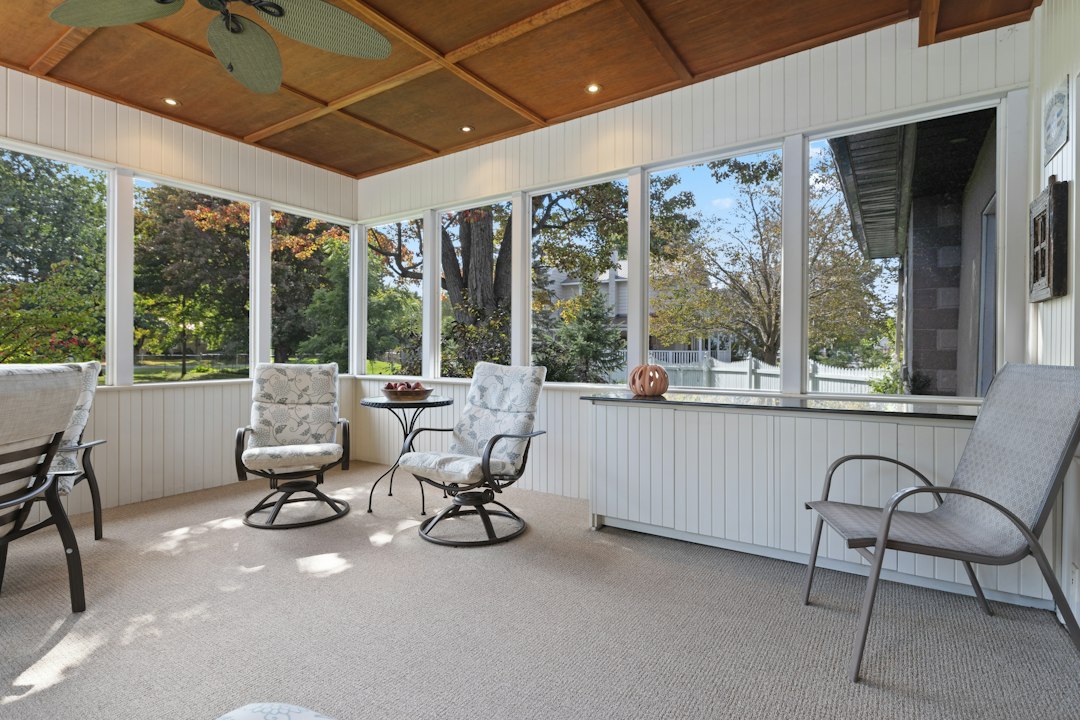
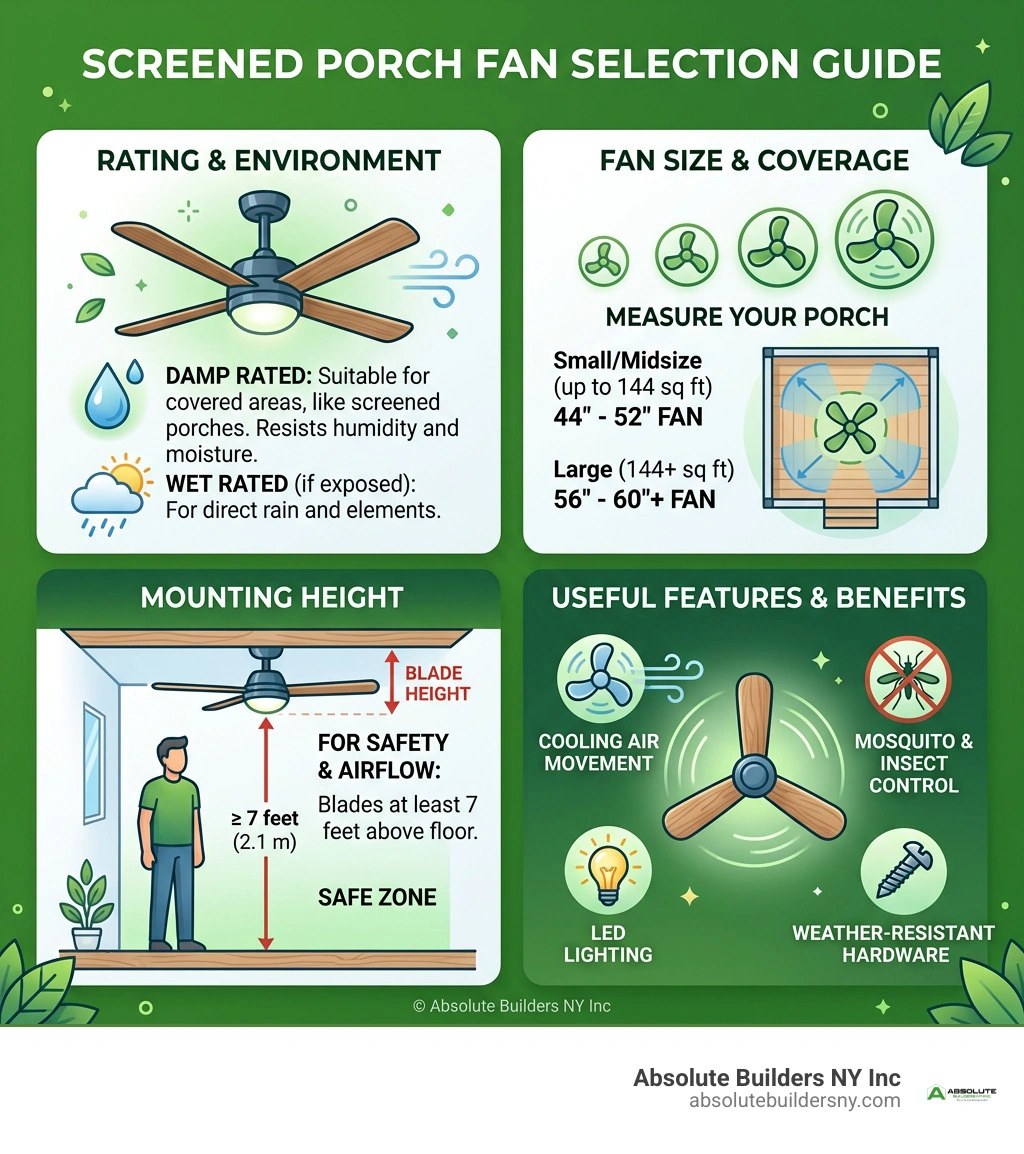
The best screened porch ceiling fans are damp-rated models sized to the porch, mounted with blades at least 7 feet above the floor, and equipped with weather-resistant hardware. For most small to midsize porches, a 44- to 52-inch fan is a practical starting point; larger spaces may need a 56- to 60-inch fan or more than one unit.
A well-chosen fan makes a porch feel cooler through steady air movement, helps disrupt the flight of mosquitoes and other small insects, and can add useful LED lighting for evenings. Choose a wet-rated fan instead if wind-driven rain can reach the installation area. This roundup covers the styles, smart controls, airflow, sizing, and mounting choices worth comparing before you buy.
I’m Jacolyn Gleason, a public relations professional with experience translating home, lifestyle, and consumer product details into clear guidance. Here, I apply that practical research approach to help Long Island homeowners compare screened porch ceiling fans with confidence.
Basic screened porch ceiling fans glossary:
Key Benefits of Installing Screened Porch Ceiling Fans
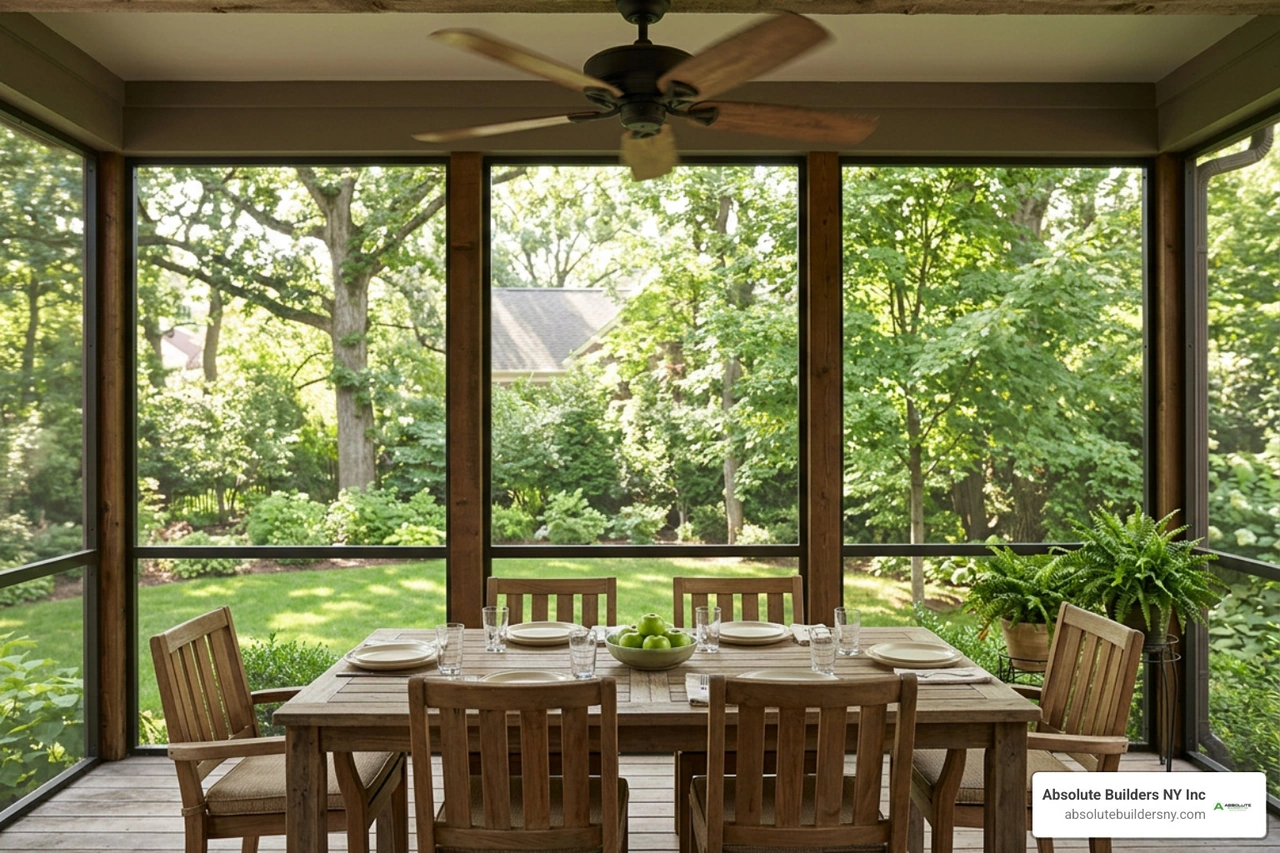
Screened porches offer the best of both worlds: fresh outdoor air without the annoyance of unwanted wildlife. However, during hot summer afternoons across Long Island—from Huntington to Massapequa—still air can quickly turn an enclosed space stuffy. Adding an overhead fan transforms the environment into a breezy retreat.
When you plan dedicated porches & porticos, incorporating overhead circulation provides an immediate wind-chill effect. Moving air across your skin enhances natural evaporative cooling, making the ambient temperature feel several degrees cooler without lowering the actual thermometer reading.
Beyond summer cooling, overhead airflow balances humidity levels, prevents stagnant odors, and keeps your outdoor furniture cushions fresh.
How Screened Porch Ceiling Fans Deter Mosquitoes and Pests
While porch screens block the majority of insects, gnats and mosquitoes occasionally sneak past doorways. A ceiling fan acts as an invisible barrier.
Mosquitoes are weak fliers. Generating consistent downward velocity creates a hostile flight path for small insects. Advanced airflow technology, such as Hunter's SureSpeed design, produces over 33% higher air velocity than leading competitors, easily overpowering insect wings. Furthermore, the downward breeze rapidly disperses the carbon dioxide and body heat humans emit, masking the primary scent trails pests use to locate you.
Energy Savings and Year-Round Temperature Control
Modern outdoor fans deliver impressive energy efficiency. Energy Star certified ceiling fans are up to 60 percent more efficient than conventional fixtures, with Hunter’s ENERGY STAR® certified ceiling fans averaging 64% greater efficiency.
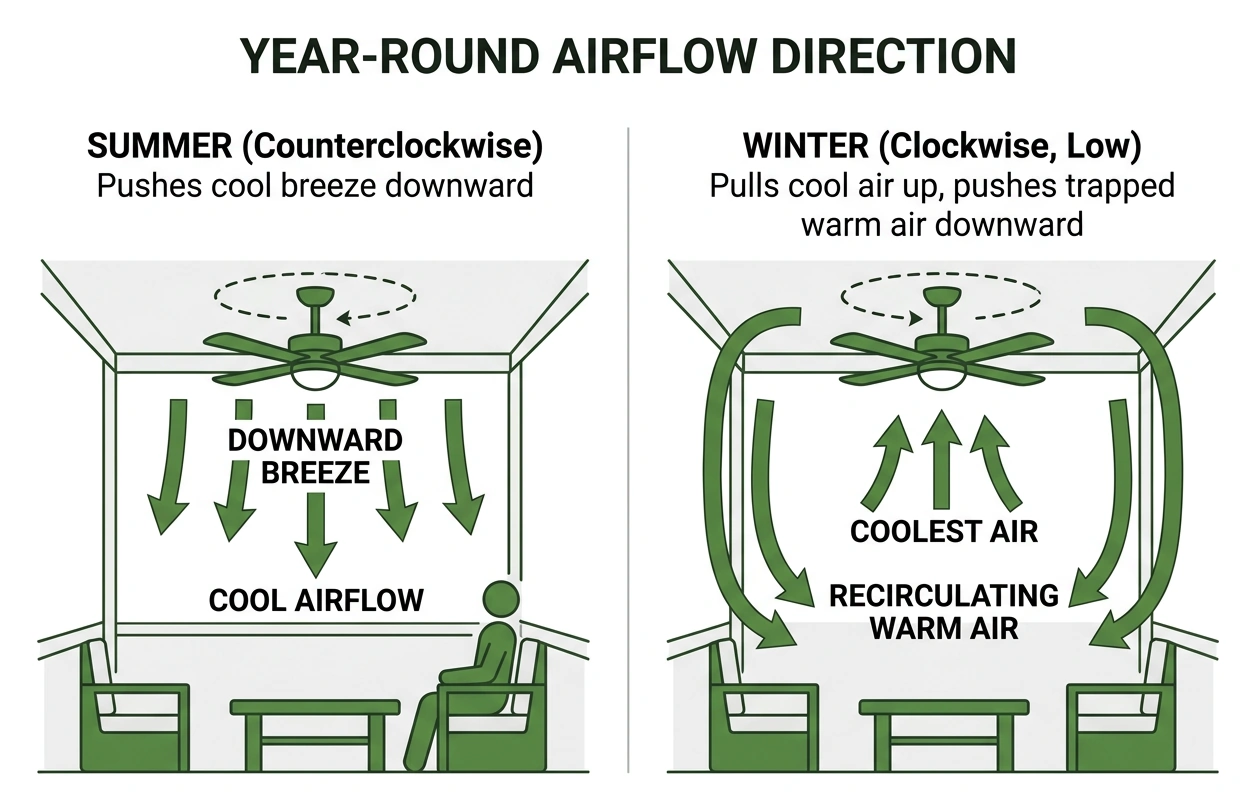
Equipped with reversible DC motors, quality units from major outdoor ceiling fan collections function effectively in every season:
- Summer Operation: Set blades to rotate counterclockwise at medium-to-high speeds to generate a cooling downdraft.
- Winter Operation: Switch rotation to clockwise at low speed to pull cooler air upward, displacing trapped warm air along the ceiling and recirculating it downward into the seating area.
Choosing the Right Fan: Damp-Rated vs. Wet-Rated and Sizing Rules
Selecting an overhead fixture for an outdoor room requires strict attention to moisture ratings. Even if your porch features innovative porch with retractable screens, ambient humidity and coastal fog across Nassau and Suffolk County can penetrate the space.
| Feature / Rating | Damp-Rated Fans | Wet-Rated Fans |
|---|---|---|
| Moisture Exposure | High humidity, vapor, condensation | Direct rain, snow, hose washdown |
| Best Locations | Fully covered screened porches, covered patios | Open pergolas, exposed gazebos, open decks |
| Motor Casing | Moisture-sealed motor housing | Completely waterproof sealed enclosure |
| Blade Construction | Moisture-resistant ABS or treated composites | Waterproof all-weather composite or high-grade ABS |
| Safety Certification | ETL / UL Damp Listed | ETL / UL Wet Listed |
If your porch roof overhang fully shelters the fixture from blowing rain, a damp-rated fan is the standard choice. If seasonal storms allow wind-driven rain to reach the ceiling, choose a wet-rated option like the Gazebo III 52 in. Indoor/Outdoor Wet Rated White Ceiling Fan with LED Bulbs Included.
Sizing and Airflow Guide for Screened Porch Ceiling Fans
Choosing the right blade diameter ensures optimal air circulation without overwhelming your porch structure.
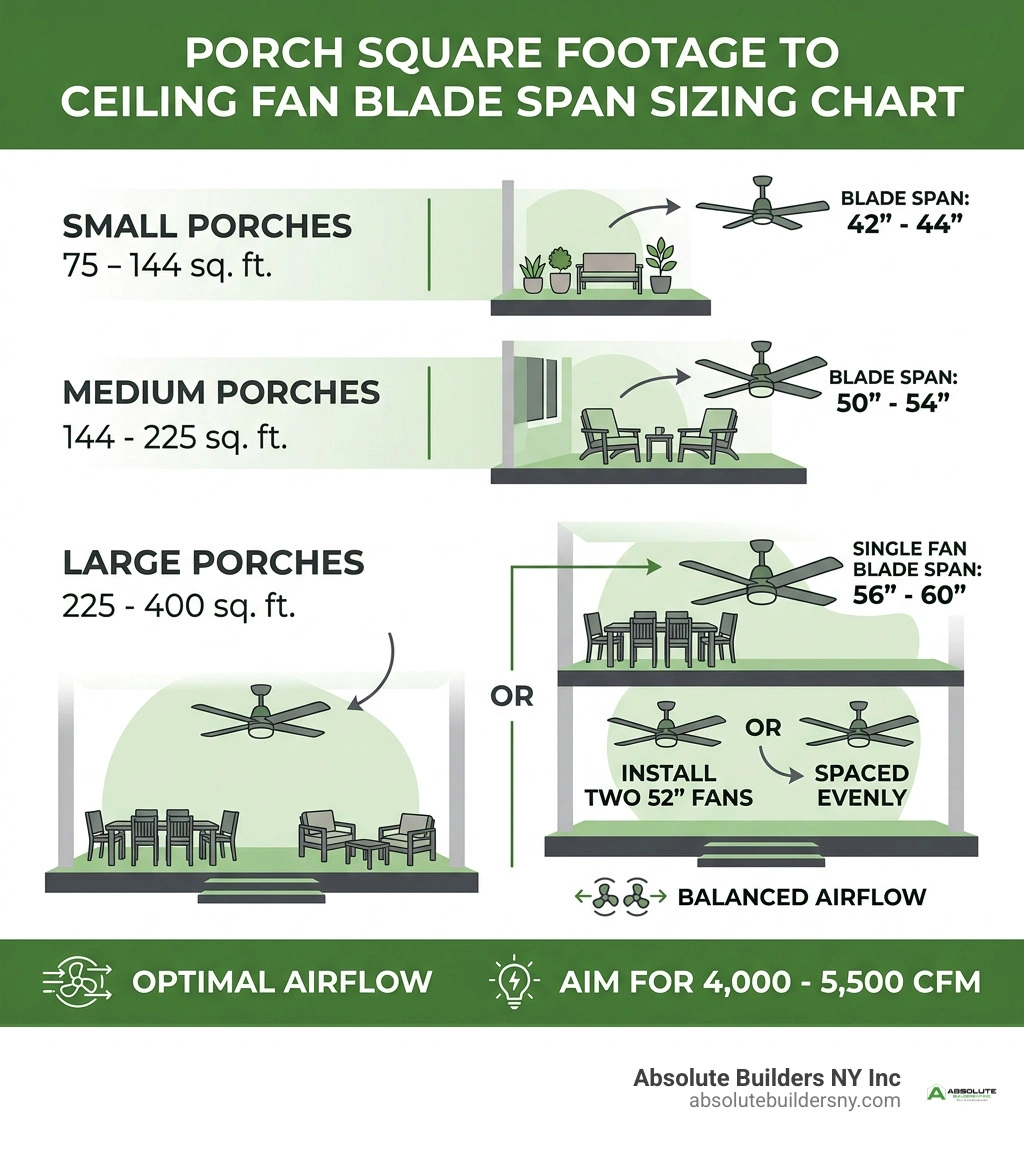
- Small Porches (75 to 144 sq. ft.): Choose a blade span between 42 and 44 inches.
- Medium Porches (144 to 225 sq. ft.): Opt for a 50- to 54-inch blade span, such as the Hunter Gilmour Outdoor with LED Light 52 inch and Remote or the 52 in. Corwin Indoor/Outdoor Matte White LED Ceiling Fan with Light Kit.
- Large Porches (225 to 400 sq. ft.): Select a 56- to 60-inch model, or install two 52-inch units spaced evenly to ensure balanced airflow across multiple seating zones.
For airflow performance, aim for a fan delivering between 4,000 and 5,500 CFM (Cubic Feet per Minute) on high speed. Models like the Hunter Port Royale with Light 52 inch and Remote generate up to 5,340 CFM while drawing only 52 watts of electricity.
Mounting Heights and Ceiling Angle Considerations
Proper vertical placement directly dictates comfort and safety:
- Clearance: Building safety codes require fan blades to hang at least 7 feet above the porch floor.
- Optimal Airflow: An elevation between 8 and 9 feet provides the most efficient air movement.
- Low Ceilings: For flat ceilings under 8 feet, use a low-profile flush-mount (hugger) unit.
- Vaulted or Sloped Ceilings: Vaulted beadboard ceilings require a downrod and an angled mounting bracket to provide adequate clearance between the spinning blades and the sloped roofline.
Top Screened Porch Fan Styles, Smart Features, and Materials
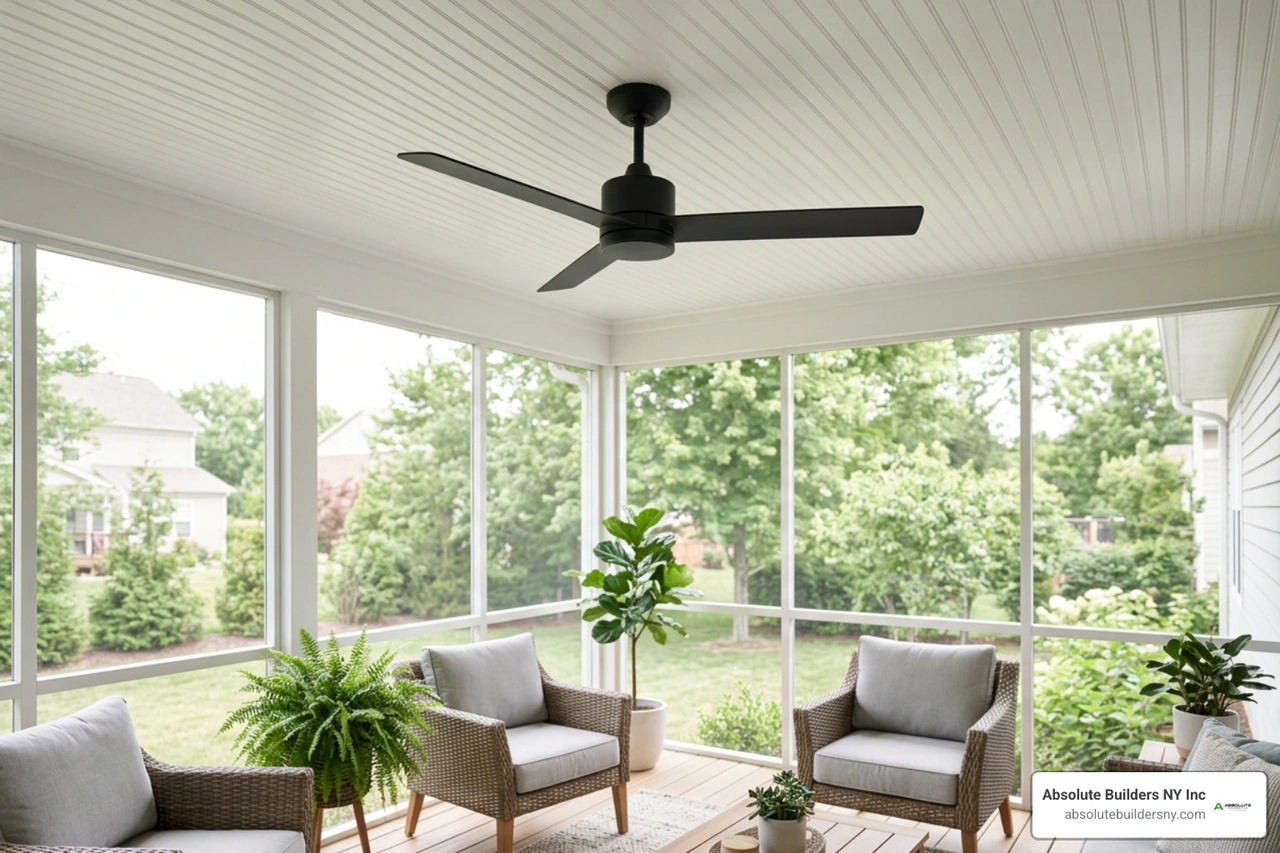
A ceiling fan should complement your architectural detailing. Whether your home features a coastal aesthetic in Westhampton, a historic look in Bayville, or a classic suburban exterior in West Babylon, there are designs to match every motif. Explore our porches & porticos complete guide for design inspiration that pairs lighting and millwork seamlessly.
Smart Automation and Lighting Controls
Modern exterior fans incorporate smart home technology for effortless control:
- Voice and App Control: Wi-Fi enabled platforms like HunterSMART™ connect with Apple HomeKit, Amazon Alexa, and Google Home, allowing hands-free voice adjustments.
- Automated Scheduling: Set daily operating timers via smartphone apps to start circulating air right before you step outside for dinner.
- Integrated Dimmable LED Lighting: Energy-efficient LED modules offer customizable color temperatures and dimming capabilities from 100% down to 1%, creating the perfect ambiance for evening entertaining.
Popular options like the Fallsburg 52 in. Integrated LED Indoor/Outdoor Natural Iron Ceiling Fan with Light and Remote Control and the Hunter 52 inch Port Royale Natural Black Iron Damp Rated Ceiling Fan with LED Light Kit integrate handheld remotes to control fan speed and dimming from anywhere on your deck.
Weather-Resistant Blade Materials and Hardware Finishes
Standard indoor wooden blades absorb humidity, leading to drooping and dynamic imbalance. Screened porch fans utilize specialized components:
- Blade Materials: Heavy-duty ABS plastic, UV-resistant composites, and marine-grade treated finishes resist warping, cracking, and fading.
- Hardware & Finishes: Stainless steel fasteners, galvanized internal components, and powder-coated natural iron, matte black, or bronze exterior finishes prevent rust and corrosion in humid coastal air.
Installation Steps and Electrical Safety Requirements
Installing a ceiling fan in an exterior structure requires strict adherence to electrical safety practices.
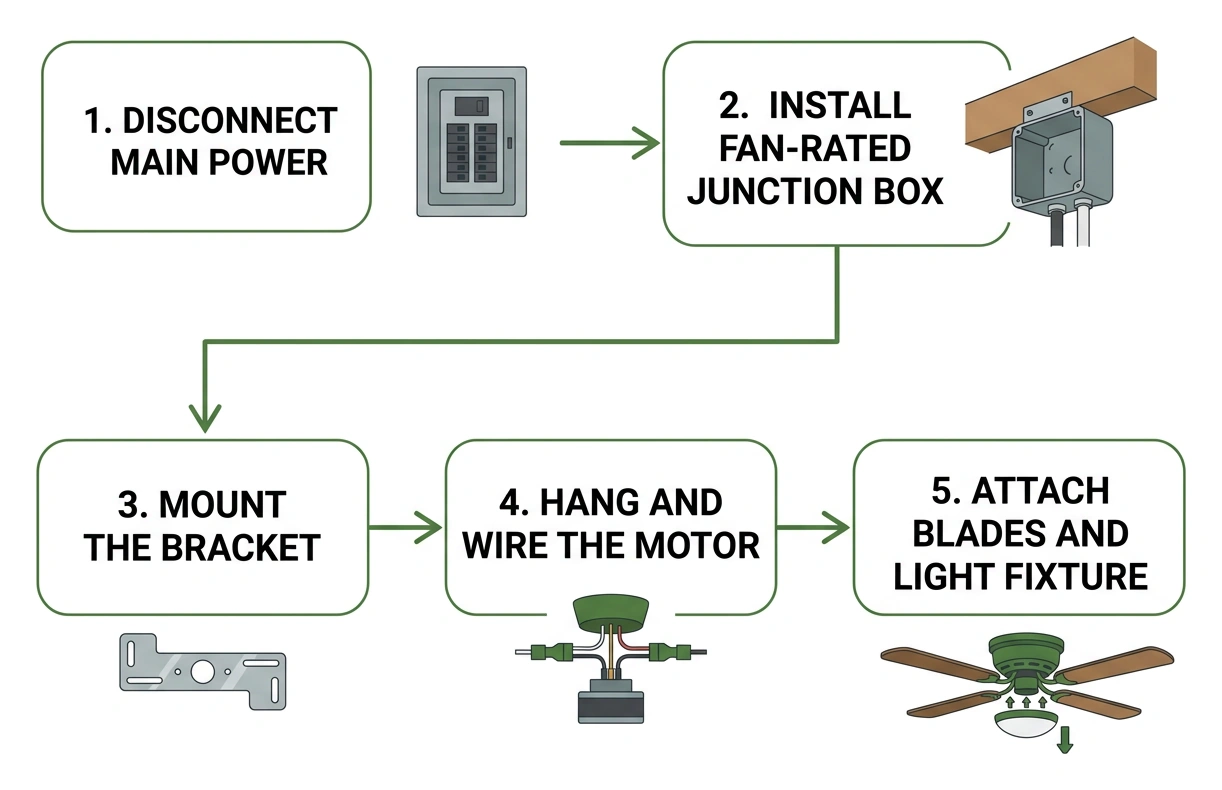
- Disconnect Main Power: Turn off power to the porch lighting circuit at the main breaker panel and verify zero voltage using a non-contact tester.
- Install a Fan-Rated Junction Box: Standard plastic or lightweight metal fixture boxes cannot support dynamic rotational loads. Secure a heavy-duty, UL-listed, fan-rated electrical box directly to a structural ceiling joist or install an approved structural mounting brace.
- Mount the Bracket: Attach the manufacturer’s heavy-duty hanging bracket to the fan-rated box using the provided corrosion-resistant machine screws and lock washers.
- Hang and Wire the Motor: Seat the downrod ball into the mounting bracket socket. Connect the ground wires, neutral (white) wires, and hot (black/blue) conductors using waterproof, exterior-rated wire connectors.
- Attach Blades and Light Fixture: Fasten the composite blades to the motor hubs using balanced torque. Connect the LED light assembly wiring harnesses, secure the housing trim, restore power, and test all speeds and directional settings for smooth, wobble-free operation.
Frequently Asked Questions about Screened Porch Fans
Can I use an indoor ceiling fan on a screened porch?
No. Indoor ceiling fans lack sealed motor housings, corrosion-resistant hardware, and moisture-sealed wiring. Installing an indoor fan in a screened porch exposes its electrical connections to humidity, creating short-circuit hazards and voiding manufacturer warranties. Additionally, indoor MDF or pressed-wood blades will absorb moisture from the air, warp, and cause severe motor wobbling.
How high should a ceiling fan hang on a screened porch?
For optimal safety and performance, fan blades must hang at least 7 feet above the porch floor, with 8 to 9 feet providing the ideal balance of vertical clearance and air velocity. If your porch ceiling is 10 feet or higher, attach an extended downrod to position the blades within the optimal 8- to 9-foot range.
How do I clean and maintain an outdoor screened porch fan?
Turn off power at the wall switch before cleaning. Wipe down the blades and motor housing once or twice per season using a soft microfiber cloth dampened with warm water and mild dish soap. Avoid harsh chemical cleaners or abrasive scouring pads. Periodically check and tighten blade mounting screws to prevent mechanical vibrations and maintain balanced, quiet operation.
Conclusion
Upgrading your outdoor living area with a high-performance ceiling fan creates a breezy, comfortable retreat that keeps summer heat and flying pests at bay. Selecting the proper moisture rating, sizing the blade span to your square footage, and ensuring structural mounting protects your home improvement investment for years to come.
At Absolute Builders NY Inc, we specialize in high-end dormer additions, custom enclosures, and exterior home transformations across Long Island. Explore our porches & porticos construction services to discover how our dedicated partnership and precision craftsmanship can bring your architectural vision to life.