
Stop and Stare with These Gorgeous Front Porch Portico Designs
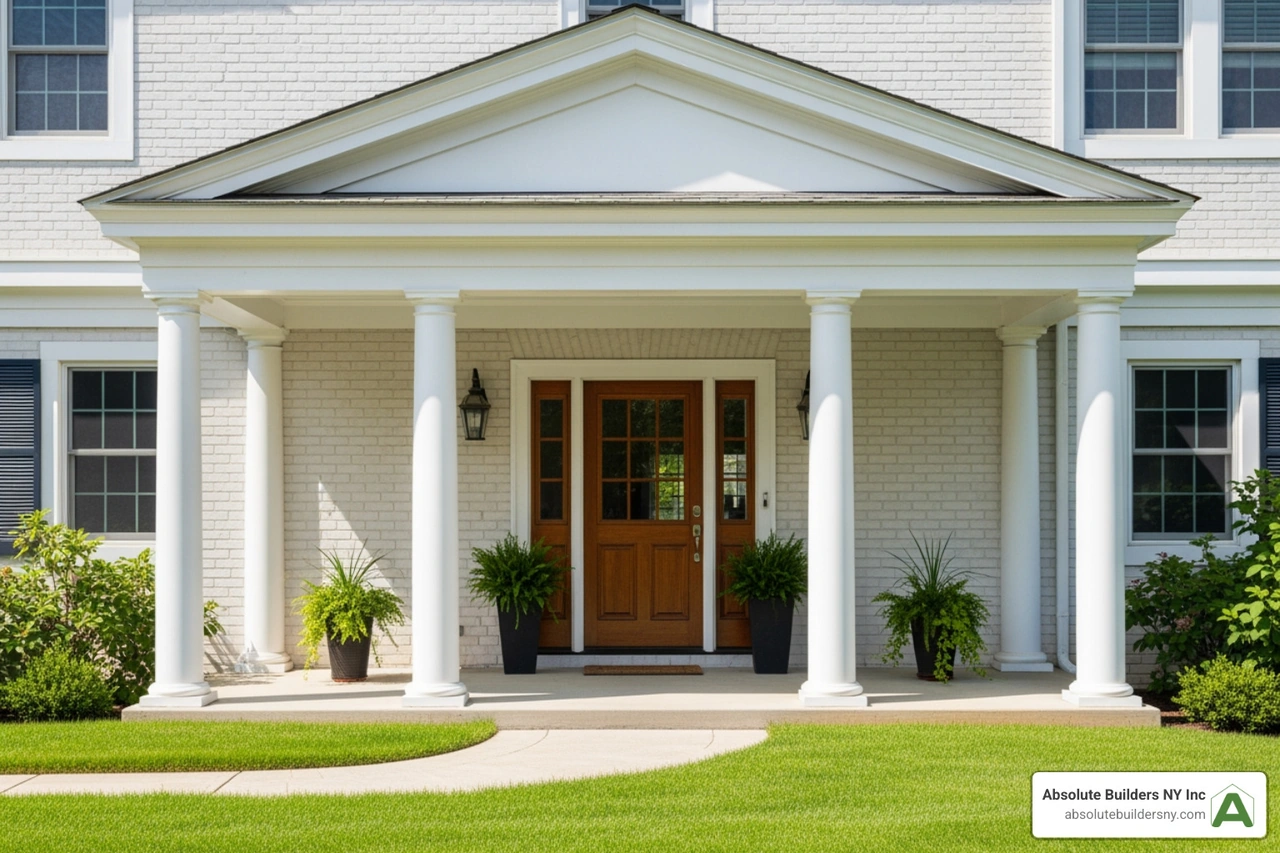
Why Front Porch Portico Pictures Are the Best Starting Point for a Curb Appeal Upgrade
Front porch portico pictures are one of the fastest ways to figure out what you want for your home's entrance — before spending a single dollar.
Here's a quick look at the most popular portico styles homeowners search for:
| Style | Key Features |
|---|---|
| Traditional / Colonial | Gable roof, white columns, brick facade, symmetrical layout |
| Farmhouse / Modern | Square posts, black trim, clean lines, wood ceiling |
| Craftsman | Tapered columns, wood brackets, shingle details |
| Southern | Arched ceiling, double white pillars, formal presence |
| Cape Cod | Compact overhang, simple trim, solid stain finish |
| Victorian | Decorative molding, painted details, ornate brackets |
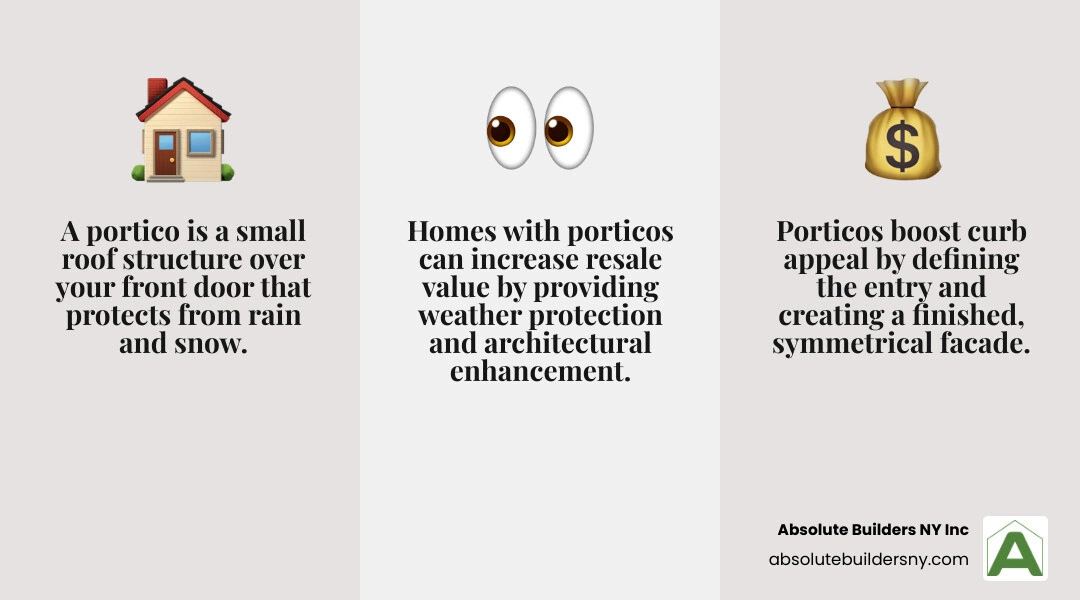
A portico is simply a small roof structure built over a front door. It protects you from rain and snow, defines your entry, and — most importantly — makes your home look finished. Houzz alone features over 1,600 portico photos, ranging from compact 66-square-foot entries to large, expansive designs.
A front porch without a portico can look flat and uninviting. One homeowner who renovated a colonial home described the house as looking "silly" after the old portico was removed — and said the new one became their favorite feature of the entire project.
Whether you're on Long Island or anywhere else, the right picture can unlock the perfect design for your home.
I'm Jacolyn Gleason, a communications professional with years of experience translating complex home improvement projects — including front porch portico pictures and design inspiration — into clear, actionable ideas for homeowners. In the sections below, I'll walk you through 21 real design examples to help you find the look that works for your home.
21 Front Porch Portico Pictures That Instantly Elevate Curb Appeal
If your goal is visual inspiration, this is the fun part. Below are 21 design directions we see homeowners save again and again when collecting front porch portico pictures.
- A compact white portico with simple square posts
- A colonial-style gable portico with round columns
- A brick-front entry with a pediment roof
- A black-and-white farmhouse portico with wood ceiling
- A modern flat-roof overhang with clean trim
- A Cape Cod entry with shallow projection
- A Craftsman portico with tapered supports
- A Southern-style portico with double white pillars
- An arched portico over a formal front door
- A two-column entry for a narrow facade
- A wider four-column design for a grand entrance
- A shed-roof portico for a simple modern home
- A portico with beadboard ceiling and sconces
- A brick-and-stone mixed-material portico
- A slate-look roof with copper-style accents
- A portico that balances a two-story front elevation
- A split-level makeover with a defined entry
- A ranch home refresh with a centered overhang
- A Victorian-inspired entry with ornate trim
- A portico with railings and steps for extra presence
- A minimalist design with bold lighting and dark trim
Small front porch portico pictures with big impact
Small porticos are proof that you do not need a mansion-sized facade to get a dramatic upgrade. A shallow projection, compact roofline, and a pair of clean supports can completely change how the front of a house reads from the street.
These designs work especially well when:
- Your front door sits close to the walkway
- Your house has a narrow entry wall
- You want weather protection without building a full porch
- You need a budget-friendlier curb appeal improvement
On Cape Cod and smaller traditional homes, a modest overhang often looks more natural than a huge structure. In inspiration boards, we also see tiny-house and seaside-style homes using small "roofette" entries. They are simple, charming, and surprisingly effective.

Traditional and colonial front porch portico pictures
Traditional and colonial porticos are some of the most timeless options for Long Island homes. These usually feature:
- A gable roof or pediment
- Symmetry around the front door
- White trim against brick or siding
- Round or Tuscan-style columns
- Layered molding for a finished look
This style is especially strong on colonial facades because it adds formality and reinforces balance. Even a relatively modest entry can look far more substantial once a proper roofline and columns are added.
A good example of this classic look is this traditional portico entrance addition, which shows how detailed trim, a gable roof, and a more defined entry can upgrade a plain facade.
We also like how colonial porticos can feel either formal or slightly updated depending on the columns:
- Round columns feel more classic
- Square wrapped posts feel a bit cleaner and more current
- Tuscan columns bring a simple, elegant profile without too much ornament

Modern and farmhouse front porch portico pictures
Modern and farmhouse entries usually lean on simpler geometry. Think:
- Square posts
- Straight fascia lines
- Dark trim or black accents
- Wood ceilings for warmth
- Minimal decorative molding
Farmhouse designs often mix crisp painted trim with natural wood texture. Modern entries strip things back even more and focus on proportion, shadow lines, and materials. A flat or shed roof can look great here, especially if the rest of the house already has clean contemporary lines.
For homeowners who like the warmth of farmhouse style but want a polished result, this mix tends to work well:
- White siding or light exterior walls
- Black light fixtures
- Natural wood soffit or beadboard ceiling
- Simple square columns sized generously enough to feel substantial
The key is restraint. If colonial porticos dress up for dinner, modern porticos wear a great black T-shirt and somehow still look expensive.
Southern, Craftsman, Cape Cod, and Victorian inspirations
Some of the most eye-catching front porch portico pictures fall outside the standard colonial look.
Southern-inspired porticos often include:
- Arched or curved ceilings
- Double white pillars
- A formal, welcoming feel
This Southern front porch with curved arch ceiling and double white pillars is a great visual example of that softer, more graceful profile.
Craftsman porticos usually feature:
- Tapered columns
- Wood brackets
- Visible trim details
- A more handcrafted appearance
Cape Cod entries tend to stay compact and practical:
- Smaller overhangs
- Simple trim
- Painted or stained finishes that suit the house
- Less fuss, more charm
Victorian-inspired designs go the other direction and embrace detail:
- Decorative brackets
- More elaborate molding
- Painted accents
- A stronger ornamental look
The best style is not necessarily the fanciest one. It is the one that looks like it belonged on your house all along.
What a Front Porch Portico Is and Why It Works So Well
A front porch portico is a covered entry structure attached over a front door. It can be as small as a roof and two posts or as substantial as a mini porch cover with steps, railings, lights, and finished trim.
Why does it work so well? Because it solves two problems at once:
- It improves function
- It improves curb appeal
Curb appeal benefits you can see immediately
A portico changes the front elevation in ways that are instantly visible:
- It creates a focal point
- It gives the front door more importance
- It adds depth to a flat facade
- It improves proportions on tall or blank walls
- It makes the home feel finished
This is especially helpful on:
- Split-level homes with recessed or awkward entries
- Two-story homes with tall, empty front walls
- Ranch homes that need a stronger central feature
- Colonial homes that benefit from symmetry
In resale terms, a front entry that looks intentional and well-designed makes a better first impression. Buyers may not always say, "Nice portico," but they absolutely notice when the entrance feels polished.
Functional perks beyond the photos
Porticos are not just for good looks. They also make day-to-day life easier.
A well-designed portico can provide:
- Rain and snow protection at the front door
- Safer footing on steps during wet weather
- A dry spot while unlocking the door
- Better shelter for guests and deliveries
- A logical place for sconces, recessed lights, or even a fan on larger designs
On Long Island, weather protection matters. A covered entry helps keep water away from the door area and reduces that awkward sprint from car to keyhole. We are big fans of anything that saves homeowners from juggling groceries in the rain.
Portico vs porch: what’s the difference?
People often use these words interchangeably, but they are not the same.
| Feature | Portico | Porch |
|---|---|---|
| Main purpose | Cover and define the entry | Create covered outdoor living space |
| Size | Usually compact | Usually larger |
| Seating space | Limited or none | Often includes seating |
| Footprint | Small | Larger, extends across more facade |
| Construction scope | Focused at the front door | Broader structural addition |
A portico can sometimes feel like a mini porch, but the main job is entry protection and architectural definition.
Design Features That Change the Look of a Portico
The reason some porticos feel perfectly matched while others feel off comes down to a few core design choices.
Roof shapes that define the whole design
The roof is the biggest style signal.
Common portico roof shapes include:
- Gable roof: classic, symmetrical, and popular on traditional homes
- Flat roof: crisp and modern
- Arched roof: softer and more decorative
- Shed roof: simple, practical, and clean-lined
- Shingled roof: common and easy to blend with the main house
- Slate-look or copper-accented roof: more upscale and formal
A gable roof is one of the most popular choices because it naturally centers the front door and creates visual height. Arched entries can soften a straight facade and feel elegant. A good visual reference is this two-column arched portico with gable roof, which shows how a curved opening changes the whole personality of the entry.
Some photo galleries also show specialty roof treatments like metal shed roofs, copper-style roofs, and decorative upper details. These can be beautiful, but they need to match the home rather than steal the whole show.
Columns and supports: square, round, and Tuscan
Columns do a lot of visual heavy lifting.
- Square columns feel clean, sturdy, and often more modern
- Round columns feel classic and formal
- Tuscan columns offer a traditional shape with simple detailing
- Tapered supports often lean Craftsman
- Wrapped posts can bridge traditional and farmhouse styles
Proportion matters just as much as style. Skinny columns under a heavy roof look wrong. Oversized columns on a tiny house can look equally awkward. We always recommend making supports feel substantial enough for the roof above them and scaled to the width of the entry.
Materials that shape style and maintenance
Materials affect both appearance and upkeep. Common portico materials include:
- Wood trim and framing
- Brick bases or surrounding facade
- Stone or stone veneer accents
- Metal roofing details
- Composite or low-maintenance trim
- Beadboard ceiling panels
- Painted finishes in white, black, or house-matched colors
Traditional examples often use trim-rich wood details, beadboard ceilings, and layered molding. More modern designs may simplify the trim and rely on color contrast and cleaner materials.
When reviewing inspiration photos, notice not just the big shape but the material mix:
- Does the roof match the house roofing?
- Do the trim boards align with existing window trim?
- Do the columns repeat the width and style of other exterior elements?
- Is the finish practical for your climate and maintenance goals?
Lighting, railings, and decorative details
These details are often what turn a basic entry cover into a polished design.
Helpful add-ons include:
- Wall sconces flanking the door
- Recessed can lights in larger porticos
- Ceiling fans in deeper porch-style designs
- Railings and balusters when steps need definition
- Brackets for Craftsman or cottage character
- Decorative molding for traditional homes
- Coordinated mailbox placement near the entry
Lighting is especially important. It improves safety, makes the entry glow at night, and highlights the architecture you just paid for. Railings can also change the look dramatically, though not every compact portico needs them. In some arched or very simple entries, adding railings can make the design feel busier than necessary.
Before-and-After Front Porch Portico Pictures That Show the Transformation
Before-and-after projects are often the most useful inspiration because they show what actually changed.
What changes most in a portico remodel
When a house gets a portico addition, the biggest improvements are usually:
- Better emphasis on the front door
- More depth and shadow
- Improved symmetry
- Stronger roofline at the entry
- Upgraded columns and trim
- Better connection between steps, walkway, and door
A plain front elevation can go from forgettable to memorable with a relatively focused change at the entrance.
Real-world makeover ideas to borrow
Some of the most effective makeover ideas include:
- Split-level update: Add a small roof over the door to create a more obvious entry point
- Colonial refresh: Replace an outdated or undersized portico with one that better matches the window trim and proportions
- Ranch enhancement: Use a centered overhang to anchor a long, low facade
- Two-story balance: Add a portico or shallow porch roof to break up vertical wall space and make the house feel more inviting
- Front door overhang: Upgrade a basic overhang into a true architectural feature with columns and finished trim
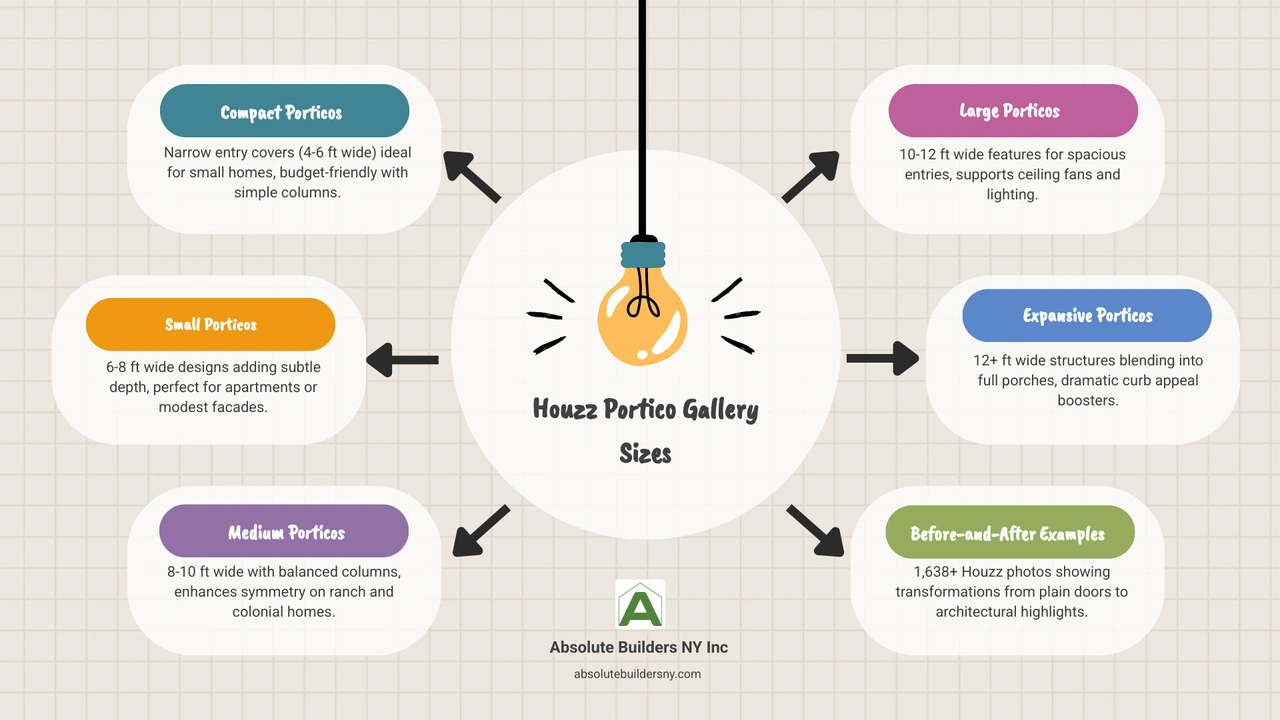
Visual galleries can be helpful for this stage. Houzz reports 1,638 portico idea photos, including compact, medium, large, and expansive examples, so there is a wide range of before-and-after inspiration available.
Mistakes to avoid before building
A portico can dramatically improve a home, but poor planning shows fast. Common mistakes include:
- Choosing a roof that is too large for the house
- Using columns that are too thin or too bulky
- Mixing styles that clash with the home
- Ignoring drainage and gutter details
- Skipping a proper lighting plan
- Overlooking permits and code requirements
- Using cheap materials in a high-visibility area
One more mistake: copying a picture exactly without checking whether it fits your home. A beautiful Southern portico on the wrong facade can feel like a costume. Great design should look natural, not pasted on.
Planning Your Portico: Size, Cost, DIY, or Professional Build
This is where inspiration turns into an actual project.
How size affects budget and design
Porticos generally fall into a few rough size categories:
- Compact: just enough to cover the doorway and a small landing
- Medium: deeper projection and more visible architectural presence
- Large: closer to a mini porch cover with room to breathe
- Expansive: broad entry structures that shape much of the facade
Houzz size filters show how common each scale is, with many more compact and medium designs than truly expansive ones. That makes sense: most homeowners want a defined entry, not necessarily a full front-porch addition.
Size affects:
- Material quantity
- Structural requirements
- Foundation or footing needs
- Roof tie-in complexity
- Lighting and trim scope
- Overall visual weight
Typical portico costs in 2026
In 2026, portico pricing can vary widely depending on size, materials, roof type, trim detail, and site conditions. For Long Island homeowners, key cost drivers usually include:
- Labor rates
- Roofing choice
- Column style and material
- Trim complexity
- Foundation or step work
- Electrical for lighting
- Water management details like gutters and flashing
- Custom design work to match the house
A very simple entry cover will cost far less than a fully custom portico with masonry, premium roofing, decorative trim, and upgraded steps. As a practical rule, the more a portico needs to tie seamlessly into the existing architecture, the more planning and craftsmanship it requires.
DIY kits vs custom construction
Some homeowners explore portico kits or prefab options. These can make sense when:
- The design is simple
- The dimensions are standard
- The site conditions are straightforward
- The homeowner understands structural and permit requirements
But DIY has limits. Porticos are not just decorative awnings. They often involve:
- Structural attachment to the home
- Roof integration
- Flashing and drainage
- Footings or posts
- Code compliance
A custom-built portico usually offers:
- Better fit to the house
- More flexibility in style and size
- Stronger architectural integration
- Fewer compromises on proportion
For a visible front-entry feature, custom often wins.
Smart design tips for blending with your home
To make a portico look original to the house, we recommend:
- Match or complement the main roof pitch
- Repeat trim details already used on windows or fascia
- Echo shapes from shutters, windows, or dormers
- Align columns with the width and scale of the entry
- Respect the architecture rather than forcing a trendy style
If you are in Long Island, West Babylon, or Huntington and want help planning a portico that fits your home, our Porches & Porticos page is a good next step.
Where to Find More Front Porch Portico Pictures and How to Turn Ideas Into a Real Project
Inspiration is everywhere, but a little organization makes it much more useful.
Best places to keep collecting front porch portico pictures
Good places to keep gathering ideas include:
- Pinterest boards, including this portico inspiration board
- Houzz galleries and saved ideabooks
- Screenshots from homes you pass in your neighborhood
- Folders labeled by style, like colonial, farmhouse, or Craftsman
- Saved examples sorted by roof type, columns, or materials
Research shows one Pinterest board has 56 saved portico pins over five years, while another has 440 pins in a year. Translation: homeowners really, really like collecting these photos before making decisions.
We suggest saving images with notes like:
- "Love the roof shape"
- "Not the columns"
- "Good size for our house"
- "Too formal"
- "Like the lights and ceiling"
That makes it easier to communicate clearly once the project planning starts.
Final checklist before choosing a design
Before settling on your favorite from all those front porch portico pictures, run through this quick checklist:
- Does it match your home's architecture?
- Is the size appropriate for your facade?
- Will it provide enough weather protection?
- Do you have a lighting plan?
- Are the materials durable for Long Island conditions?
- Will the roofline tie in cleanly?
- Do the columns feel proportional?
- Have you considered drainage, flashing, and permits?
- Are you building a simple entry cover or something closer to a porch?
A beautiful portico should do more than look good in a saved photo. It should work for your home, your climate, and your daily life.
If you are ready to move from inspiration to execution, our team at Absolute Builders NY Inc can help you create an entry that looks intentional, protects your doorway, and adds lasting curb appeal. Learn more on our Porches & Porticos service page.