
A Comprehensive Guide to Porch and Portico Differences

What's the Difference Between Porches and Porticos?
When it comes to porches and porticos, homeowners often use the terms interchangeably — but they're actually quite different structures with distinct purposes, sizes, and design roles.
Here's a quick breakdown:
| Feature | Porch | Portico |
|---|---|---|
| Size | Large | Small |
| Seating space | Yes | Rarely |
| Primary purpose | Outdoor living | Entrance shelter |
| Typical location | Front, side, or rear | Front entryway only |
| Structural support | Posts, columns, or walls | Columns or pillars |
| Cost range | Higher | $3,000–$10,000+ |
The short version:
- A portico is a compact, column-supported roof over your front door. It shelters you from rain and adds architectural character — but it's not a place to sit.
- A porch is a larger covered structure that extends your living space. Think rocking chairs, morning coffee, and room to breathe.
Both add curb appeal and protect your home's entry. Your choice depends on your available space, budget, and how you want to use the area.
Whether you're trying to fix a flat, bare front door left over from an 1980s build or you want a full wraparound porch that becomes your favorite room, understanding these two structures is the first step toward making the right call for your Long Island home.
I'm Jacolyn Gleason, a PR and communications professional with deep experience translating complex topics — including home improvement and construction — into clear, actionable guidance for homeowners navigating decisions about porches and porticos. In this guide, I'll walk you through everything you need to know before breaking ground.

Understanding the Core Differences Between Porches Porticos
To make the right choice for your home, it helps to look closely at how these two architectural features function. While both structures attach to the exterior of your house and offer protection at an entrance, their everyday utility is completely different.
A portico is highly focused on entrance design. It is a compact, elegant roofed structure designed to frame the front door, protect arriving guests from a sudden downpour, and keep packages dry. It has a very small footprint and is structurally supported by columns, pilasters, or heavy decorative brackets anchored directly to the wall. Because of its size, a portico rarely accommodates seating.
A porch, on the other hand, is a true extension of your indoor living area. It is built with a deep floor plan specifically designed to house furniture—whether that is a couple of classic rocking chairs, a porch swing, or an entire outdoor dining set. Porches can wrap around the side of your home or sit quietly in the backyard, whereas porticos are strictly reserved for entryways. Both options boost your home value, but they do so in different ways: a portico offers a cost-effective curb appeal transformation, while a spacious porch expands your home's functional square footage.
Architectural History of Porches
To understand our modern love affair with the front porch, we have to travel back in time. The Porch history reveals that these structures are actually a ancient Persian invention. The concept evolved through the Greek "peristyle"—a continuous porch formed by a row of columns—and eventually found its way into medieval European architecture. In medieval Britain, church porches served important liturgical functions; they were designated spaces for baptisms, weddings, and community business before participants entered the main sanctuary.
In North America, the porch became a cultural phenomenon during the 19th century, heavily popularized by Queen Anne style architecture. Homeowners wanted a comfortable place to cool off during hot summer evenings before the invention of air conditioning. This trend culminated in grand architectural statements, such as the world’s longest front porch located on the Grand Hotel on Mackinac Island, Michigan, which stretches an incredible 660 feet.
In today's neighborhoods across Nassau and Suffolk counties, the porch remains a symbol of hospitality and community building. The New Urbanism movement continues to champion front porches because they encourage neighbors to chat, children to play within sight, and families to enjoy the coastal breeze.
Classical Origins of Porticos
If a porch is a relaxed community space, a portico is its formal, classical cousin. According to the historical records of Portico architecture, these grand entryways originated in ancient Greece and Rome. They served as the monumental entrance porches to temples and public buildings, characterized by a heavy triangular pediment supported by a series of stately columns.
Classical porticos are traditionally categorized by the number of columns they feature:
- Tetrastyle: Four columns (a classic example is the Temple of Portunus in Rome or the North Portico of the White House).
- Hexastyle: Six columns (commonly seen on Greek Doric temples like the Parthenon's inner porches).
- Octastyle: Eight columns.
- Decastyle: Ten columns (reserved for massive public buildings).
The inner area of a classical portico is known as the pronaos, the sacred vestibule between the outer colonnade and the entrance to the building's interior. Renaissance architects like Andrea Palladio later adapted these temple-front designs for private residential villas. Today, when we install a portico on a Long Island home, we are directly borrowing from this rich classical lineage to bring symmetry, balance, and timeless dignity to modern residential facades.
Design Elements and Materials for Modern Entrances
When designing a new entryway, the goal is to make the addition look like it was built with the house, rather than tacked on as an afterthought. Viewing Front Porch & Portico Pictures can help you visualize how different styles integrate with various home designs.
Whether you select a gable, flat, or arched roofline, the columns, railings, ceilings, and trim work must harmonize with your home’s existing architecture. For example, a Craftsman home looks best with tapered square columns resting on stone piers, while a Colonial Revival demands classical round columns with detailed capitals.
The ceiling is another area where you can inject character. Using a beadboard ceiling finish adds texture and warmth. In keeping with a beloved coastal and southern tradition, painting the porch ceiling a soft, pale blue can make the space feel brighter and keep the transition from indoors to outdoors feeling natural and open.
Choosing Materials for Porches Porticos
Selecting the right materials is the key to ensuring your new entrance survives our wet Long Island winters and humid summers. According to the home improvement experts at All About Porticos - This Old House, choosing the right materials from the start prevents rot and structural failure down the road.
While natural wood like cedar or heart redwood offers unmatched organic beauty, it requires regular sealing, staining, and painting. For a low-maintenance alternative, many homeowners opt for composite decking and cellular PVC trim.
That you should expect to budget 25–30% more for composite decking material for your front porch compared to standard pressure-treated wood. However, this upfront investment pays off over time because composite materials do not warp, splinter, or rot, and they never require staining. If you do choose classic hollow wood columns, ensure your builder coats the interiors with waterproofing material and installs proper ventilation passages in the base and capital to allow trapped moisture to escape.
Custom Features for Porches Porticos
Modern technology and custom design elements allow us to turn a simple entrance into a highly functional, beautiful outdoor room. We can find inspiration in historic designs, such as the Monticello | Venetian Porches, where Thomas Jefferson designed innovative, double bi-fold louvered doors with movable slats to control airflow, light, and privacy.

For your modern home, custom features can include:
- Integrated Lighting: Low-voltage recessed LED ceiling lights provide safety, while a hanging statement pendant or classic lantern adds visual warmth.
- Ceiling Fans: Installing a damp-rated outdoor ceiling fan keeps the air moving on sticky July afternoons and helps deter mosquitoes.
- Decorative Brackets and Corbels: For smaller porticos without columns, heavy timber brackets or ornate corbels can support the roof structure while adding a historic touch.
- Premium Step Materials: Replacing basic concrete steps with natural bluestone, granite, or herringbone brick creates a luxurious path to your front door.
Practical Considerations: Costs, Permits, and Timelines
Before diving headfirst into your project, it is essential to plan the logistics. Reviewing our Home Addition Plans Guide is an excellent way to understand how to align your design dreams with practical construction realities, budgeting, and local guidelines.
Cost and Construction Timelines
The cost and duration of your project will depend heavily on the size, complexity, and materials you choose.
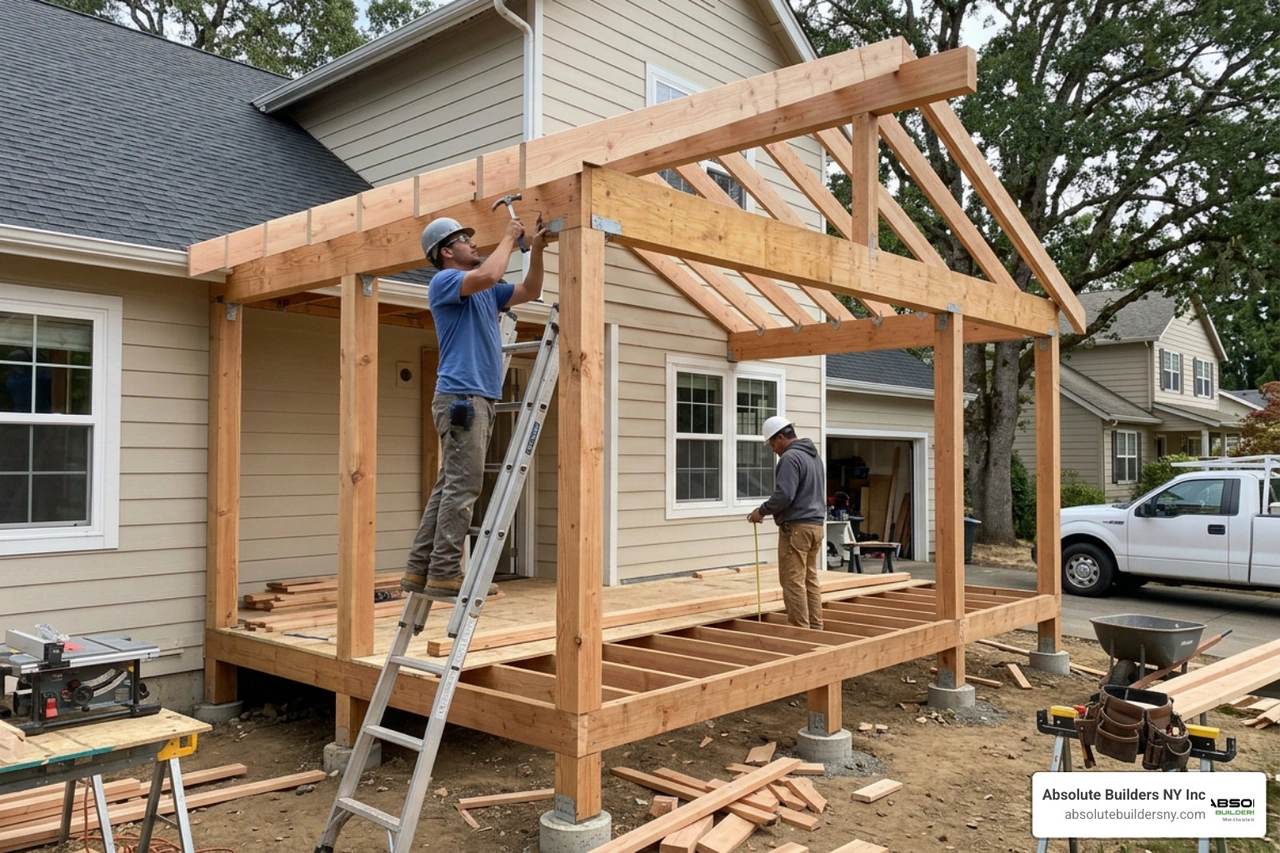
Generally, standard porticos cost between $3,000 and $10,000. These are typically smaller structures (such as a popular 5x8 foot footprint) supported by two columns or wall brackets. If you choose an elaborate design with complex curved archways, copper standing-seam roofing, or extensive masonry steps, the price can exceed $10,000.
A full-sized front porch is a larger structural undertaking, requiring a complete deck frame, footings, and a substantial roof tie-in. These projects typically range from $15,000 to $40,000+ depending on the square footage.
In terms of timelines:
- Porticos: A straightforward portico addition can be built relatively quickly, often taking anywhere from 1 day to 1 week once materials are on-site.
- Porches: A full front porch addition requires excavation, concrete footings, framing, roofing, and detailed trim work, typically taking 2 to 4 weeks to complete.
Permits and Architectural Integration
Any time you alter the footprint or roofline of your home, you must navigate the local regulatory landscape. For any major Home Addition, obtaining the proper building permits is a non-negotiable step.
On Long Island, local zoning boards and building departments in towns like Huntington, Massapequa, or Westhampton enforce strict rules regarding property line setbacks. Because front porches and porticos extend toward the street, we must carefully verify that your new structure will not violate local front-yard setback requirements.
Additionally, structural engineering is required to ensure the new roofline integrates seamlessly with your home's existing roof. The connection must be properly flashed and sealed to prevent water from backing up under the shingles during winter snowstorms. Working with an experienced local contractor ensures that all paperwork, HOA guidelines, and structural codes are handled correctly from day one.
Frequently Asked Questions About Front Entrances
Do I need a permit to build a portico or front porch?
Yes, in almost all cases across Nassau and Suffolk counties, you will need a building permit. Because these structures involve structural framing, roof connections, and concrete footings that extend below the frost line, local municipalities require building plans to be reviewed for safety.
Your builder should handle the entire permitting process, including drafting architectural plans, submitting the paperwork to the town hall, and scheduling the required inspections during construction. Skipping this step can result in heavy fines, delays, and major headaches when you eventually try to sell your home.
How do porches and porticos affect home value and curb appeal?
Adding a covered front entrance is one of the most effective ways to boost your home’s resale value and curb appeal. Real estate agents routinely cite porches and covered entries as high-demand features that drive immediate buyer interest.
A covered entry addresses a very common design flaw found in many Long Island homes built in the 1980s and 1990s: a flat, unprotected front facade with zero architectural interest. By adding depth and shadow lines, a portico or porch completely transforms the look of your home.
Beyond aesthetics, these additions also improve energy efficiency. By shading your front door and windows from direct summer sunlight, a covered entrance reduces heat gain and lowers your cooling bills, while protecting your expensive entry door and siding from sun fading and water damage.
What maintenance is required for different entrance materials?
Your maintenance routine will depend entirely on the materials used in construction:
- Natural Wood: Wood porches and columns must be stained or painted regularly. It is highly recommended to let new wood dry completely, apply a high-quality water repellent or sealer, and then apply stain or paint. Plan to inspect and reseal wood elements every 1 to 2 years.
- Composite and PVC: Composite decking and PVC trim require very little maintenance. An annual wash with mild soap, water, and a soft-bristle brush is usually all it takes to keep them looking brand new.
- Metal Elements: If your portico features iron railings or a standing-seam metal roof, inspect them annually for any signs of rust or paint chipping, and touch up those areas immediately to prevent corrosion.
- Column Ventilation: Regularly check that the small weep holes or ventilation gaps at the bottom of hollow columns remain clear of dirt and debris so air can circulate freely.
Conclusion
Whether you choose a compact, stately portico to shield your guests from the rain or an expansive front porch where you can spend warm summer evenings relaxing with family, upgrading your home's entrance is a decision you will enjoy for decades to come.
At Absolute Builders NY Inc, we specialize in high-quality home transformations across Long Island, NY. From West Babylon and Huntington to Massapequa and Westhampton, our team brings precision craftsmanship and a dedicated partnership to every project. Whether you are planning a complete Residential Construction Long Island project, a dormer addition, or a custom entrance, we are here to bring your vision to life.
Ready to transform your home's curb appeal? Explore our specialized Porches & Porticos services and contact us today to schedule your design consultation!