
The Ultimate Safety Net for Your NY Dormer Project
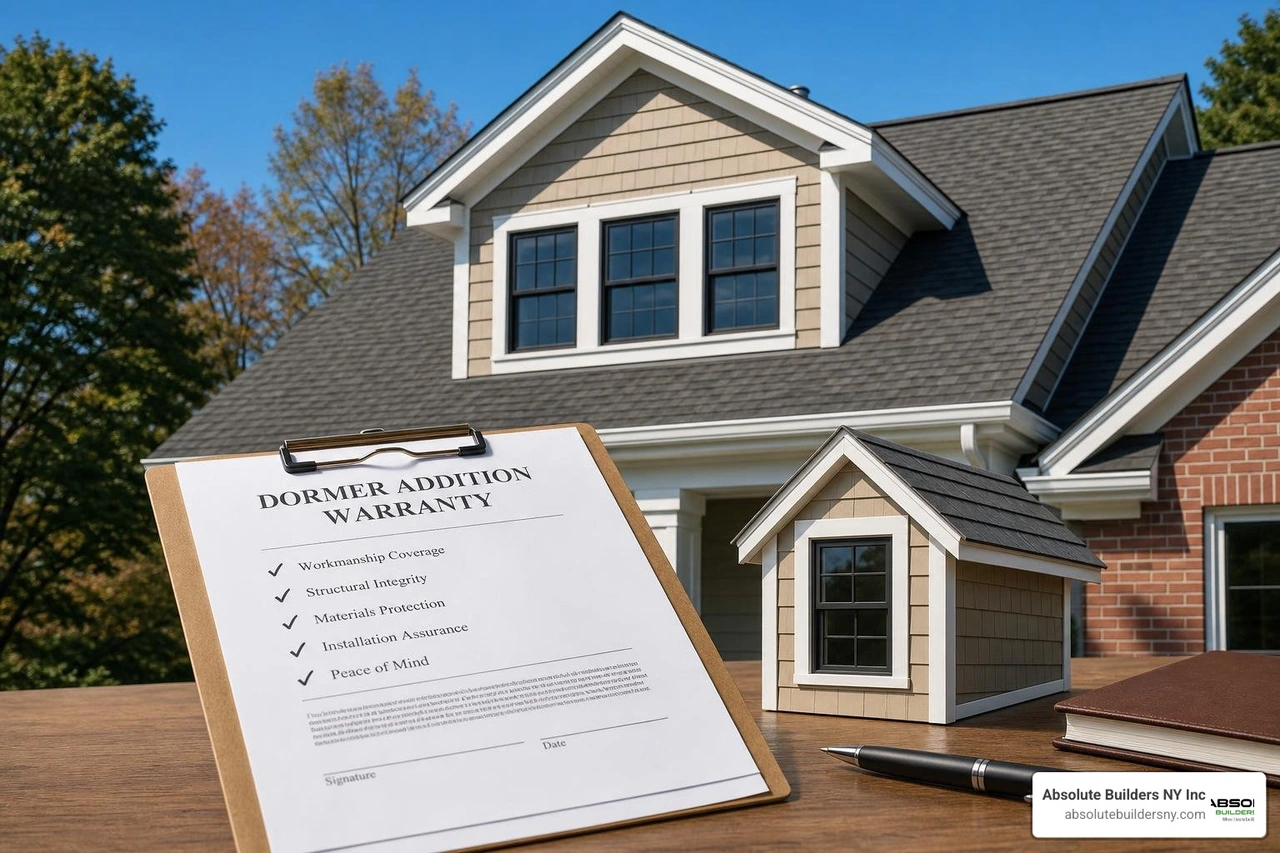
Why Dormer Addition Warranties in NY Can Make or Break Your Project
Understanding dormer addition warranties NY homeowners need is one of the most important steps you can take before signing a construction contract — yet most people skip it entirely.
Here's a quick overview of the key warranty protections available to you:
| Warranty Type | What It Covers | Duration |
|---|---|---|
| Implied Workmanship (GBL §777-A) | Defects from failure to build skillfully | 1 year |
| Implied Systems Warranty (GBL §777-A) | Plumbing, electrical, HVAC, ventilation | 2 years |
| Implied Material Defects (GBL §777-A) | Structural and material failures | 6 years |
| Standard Contractual Guarantee | Workmanship and materials per contract | Typically 1 year |
| Extended Contractual Warranty | Sealants, glazing, roofing per specs | Up to 10–20 years |
The stakes are real. A dormer addition on Long Island typically costs between $95 and $200 per square foot — and hidden costs like ridge-beam upgrades ($2,100–$3,800) and egress windows can push totals 20% higher than expected. When something goes wrong after the crew packs up, knowing which warranty applies — and how to enforce it — can save you tens of thousands of dollars.
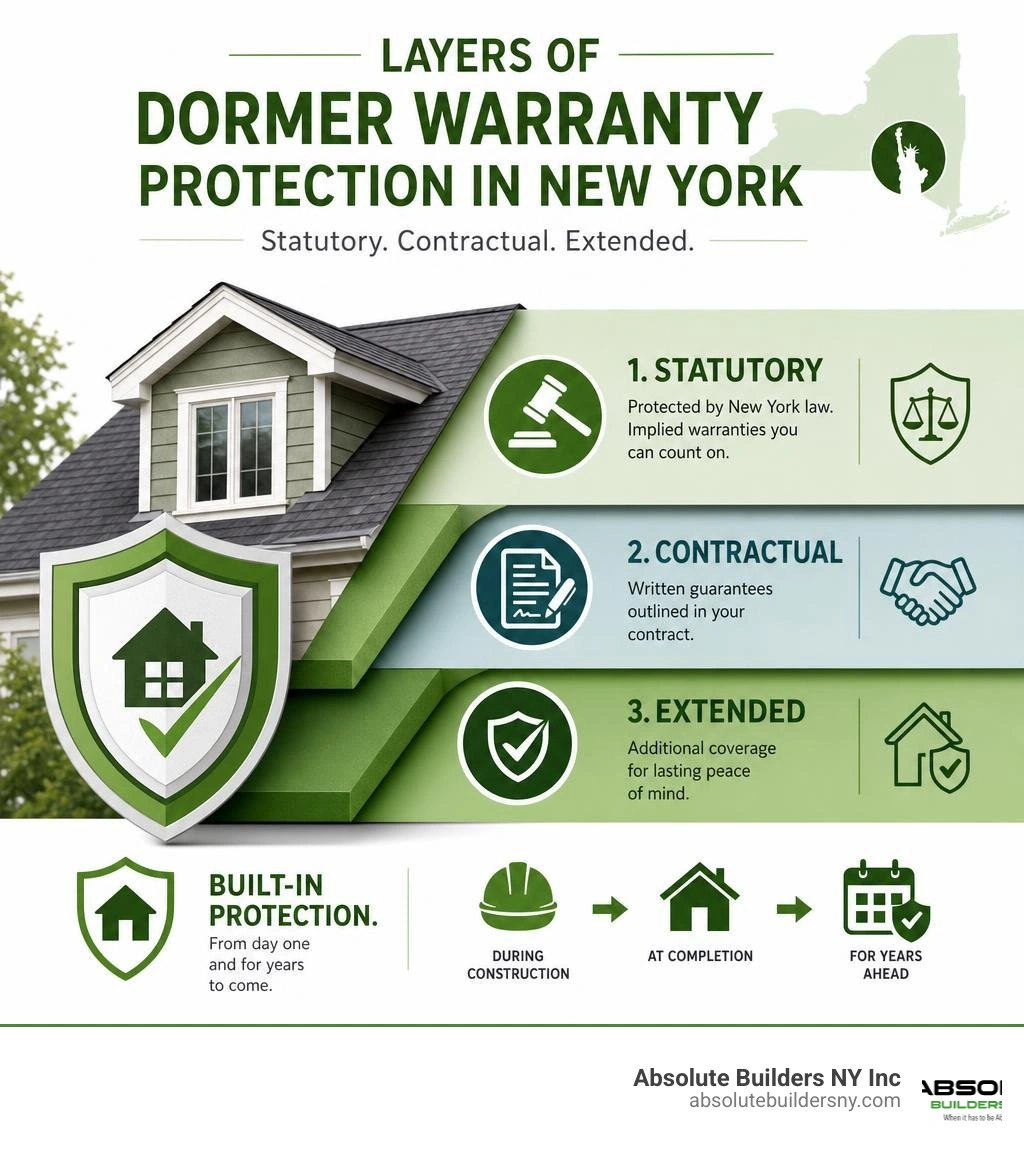
New York law provides multiple layers of protection, from statutory implied warranties to contractual guarantees and even court-established precedents that can extend a contractor's liability for years beyond the standard one-year callback period. But these protections only work if you know they exist and take the right steps to preserve them.
This guide walks you through every layer of that protection — clearly and without the legal jargon.
I'm Jacolyn Gleason, a Senior Vice President at 5W Public Relations with extensive experience translating complex regulatory and legal frameworks into actionable consumer guidance, including in the home improvement and construction space where dormer addition warranties NY homeowners depend on are frequently misunderstood. In the sections ahead, I'll break down exactly what your warranty rights are, what New York courts have said about enforcing them, and how to protect yourself from the moment you sign a contract to years after your dormer is complete.
Glossary for dormer addition warranties ny:
Statutory vs. Contractual Dormer Addition Warranties NY
When planning a dormer addition on Long Island, it is easy to get swept up in selecting window styles, choosing siding materials, or imagining how your new master suite will look. However, the legal backbone of your project lies in the distinction between statutory implied warranties and contractual guarantees.
Statutory warranties are those imposed automatically by New York State law, regardless of what your contract says. Contractual warranties, on the other hand, are the express promises and guarantees written directly into your agreement with your builder. Both play a vital role, but they operate under completely different rules.
The table below outlines how these two types of protection differ under New York law:
| Feature | Statutory Implied Warranties (GBL §777-A) | Contractual Guarantees (Express Contracts) |
|---|---|---|
| Source of Law | Imposed by NY General Business Law | Negotiated and written into the contract |
| Default Workmanship Term | 1 Year (must be constructed in a "skillful manner") | Typically 1 Year (often called a callback or correction period) |
| System Coverage | 2 Years for plumbing, electrical, and HVAC systems | Varies; often matches the general 1-year term unless specified |
| Structural/Material Term | 6 Years for major structural material defects | Varies; can be extended to 10–20 years in project specifications |
| Exclusions | Patent defects, normal wear and tear, abuse | Varies; typically excludes abuse, alterations, and lack of maintenance |
| Legal Framework | Warranties and Construction Defects — Muchmore & Hollander LLP | New York Civil Practice Law and Rules (CPLR) |
The Housing Merchant Implied Warranty (GBL §777-A) and Renovations
One of the most common points of confusion for Long Island homeowners is the application of the Housing Merchant Implied Warranty under New York General Business Law §777-A. This statute is incredibly powerful: it guarantees that a home is constructed in a skillful manner, free from defects in plumbing, electrical, and HVAC systems for two years, and free from material structural defects for six years.
However, there is a major catch. As New York courts have repeatedly clarified, GBL §777-A applies strictly to the sale of new homes. It does not automatically apply to custom homes built on land you already own, nor does it cover standard home renovations or additions—such as adding a dormer to your existing house.
Because a dormer addition is technically a home improvement rather than the purchase of a brand-new home, your primary legal shield is not GBL §777-A, but rather the contractual warranties you negotiate and New York's Home Improvement Business laws (GBL Article 36-A). This makes the drafting of your construction contract absolutely critical. If your contract doesn't explicitly outline your warranty rights, you may find yourself with far fewer statutory protections than you assume.
Standard Contractual Guarantees and AIA Clauses
To protect themselves, many homeowners and contractors turn to standard industry contracts, such as those drafted by the American Institute of Architects (AIA). These contracts typically include a "one-year correction period," often referred to as a callback or repair warranty.
Under a standard AIA clause, we as your contractor are obligated to return and correct any work found to be defective within one year of substantial completion. It is important to note that this one-year correction period is a remedy, not a statute of limitations. If a latent defect—such as a hidden structural issue or a slowly developing valley leak—surfaces after year one, you are not necessarily out of luck.
Under New York law, you still have the right to sue for breach of contract for up to six years from substantial completion, provided you can prove the work was defective when installed. However, having a clear, written contractual guarantee makes resolving these issues much simpler, as it defines exactly who is responsible for labor and materials without requiring a costly courtroom battle.
The Legal Landscape: Extended Warranties and NY Court Rulings
The legal rules surrounding construction warranties in New York are constantly evolving. Recent court rulings have shifted the balance of power, making it more important than ever for both homeowners and builders to read the fine print in their project specifications.
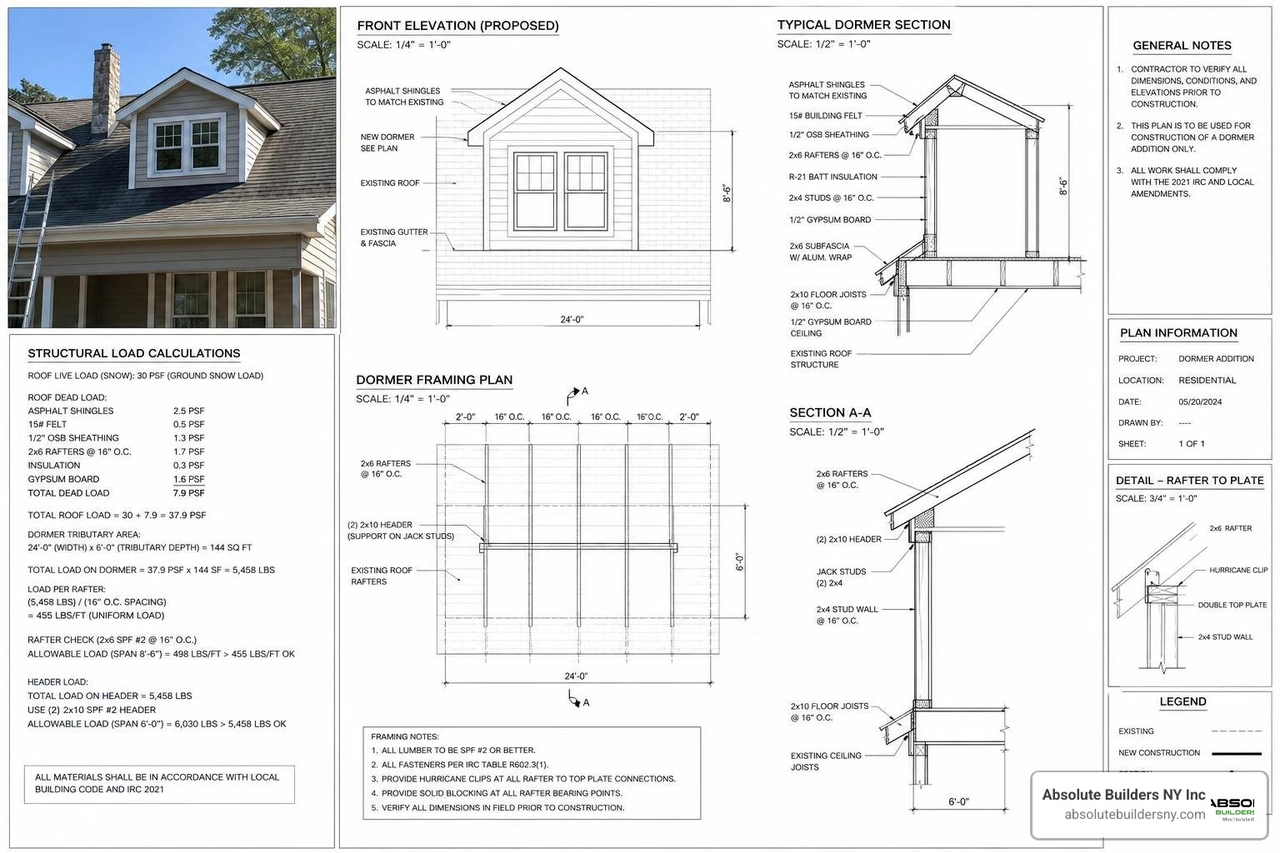
How Permasteelisa Impacts Dormer Addition Warranties NY
A landmark 2021 New York appellate court decision, HTRF Ventures, LLC v. Permasteelisa N. Am. Corp., fundamentally changed how contractors and homeowners view extended warranties. In this case, the court ruled that a contractor's general guarantee can bind them to much longer warranty periods if those periods are referenced anywhere in the project's plans or specifications.
Specifically, the court held that because the contractor’s contract incorporated "such longer period as may be provided in the Plans, Specifications, or other Contract Documents," the contractor was directly liable for a 10-to-20-year extended warranty on sealants and glazing that was buried deep in the project's technical specs.
For your Long Island dormer project, this ruling is highly relevant. If your architectural plans specify that your dormer's roofing underlayment, flashing, or window seals carry a 10- or 15-year performance warranty, we as your contractor may be held directly responsible for honoring that extended timeline if our contract incorporates those specifications. To learn more about how this ruling impacts your project, you can read the full legal analysis on Building on Promises: Under New York Ruling, Extended Warranties Go Further.
Arbitration Clauses and the East Coast Dormer Precedent
Another critical legal development occurred in the 2022 New York Appellate Division case, Ferarro v. East Coast Dormer, Inc. This dispute arose over a modular second-floor addition in Nassau County. The contractor attempted to force the homeowners into arbitration, pointing to an arbitration clause in an older home-purchase agreement from 2008.
The court ruled in favor of the homeowners, stating that an arbitration agreement must be clear, explicit, and contemporaneous. Because the later contract for the modular addition left the incorporation blanks empty and did not clearly reference the old arbitration clause, the court refused to compel arbitration without a framed-issue hearing to resolve the factual disputes.
For Nassau and Suffolk County homeowners, the takeaway from the Ferarro case is clear: never assume that old agreements or incomplete form contracts will protect you. Every contract for a new dormer project must be fully filled out, with all blanks completed and all warranty or arbitration terms explicitly stated.
Enforcing Your Rights: Statutes of Limitations and Remedies
Even the best-written warranty is only as good as your ability to enforce it. If you discover a defect in your dormer addition, you must act quickly and follow New York’s strict procedural rules to preserve your rights.
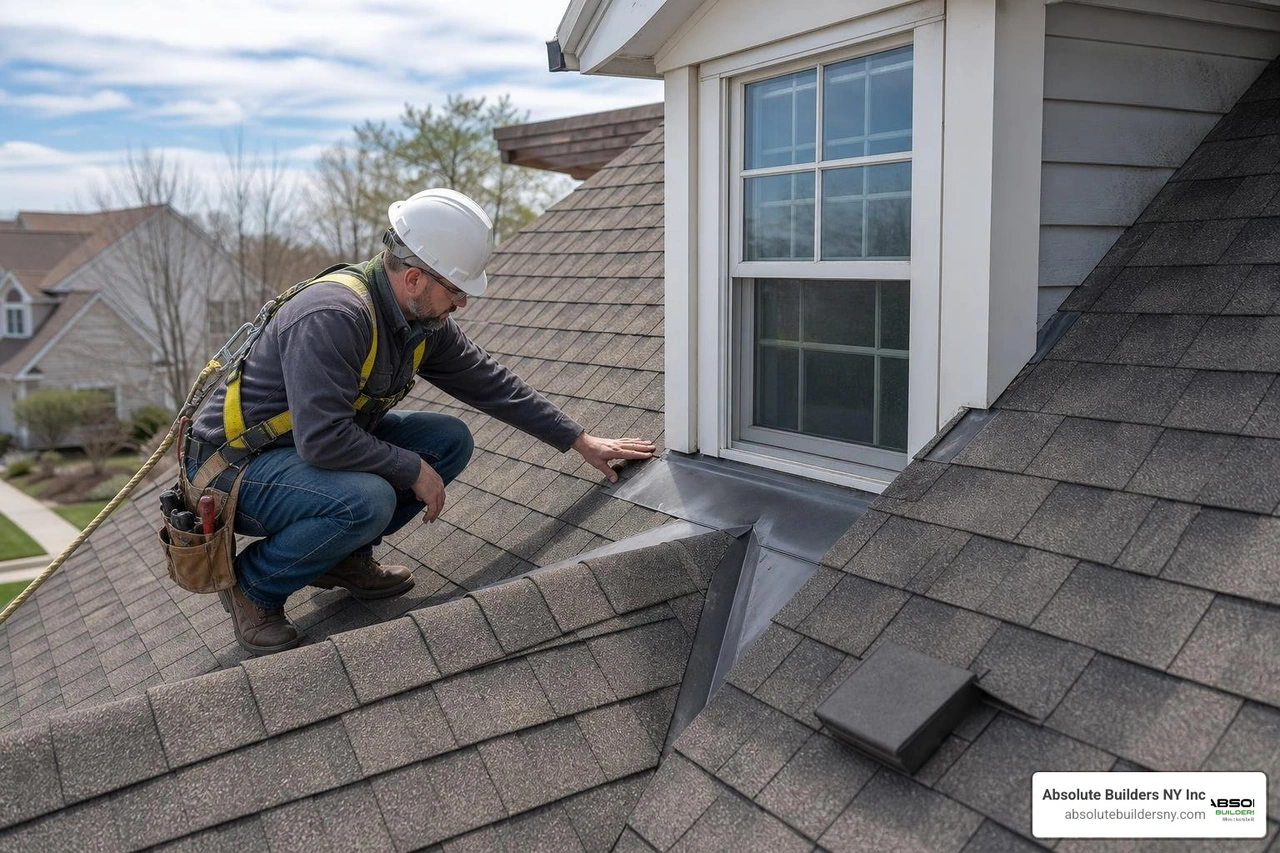
Notice Requirements and Timelines for Dormer Defects
In New York, the statute of limitations for a breach of contract action on a construction project is six years, measured from the date of substantial completion (CPLR 213). However, your contract will almost certainly contain strict notice requirements that you must satisfy long before that six-year limit approaches.
For example, if your contract includes a standard one-year correction period, you are typically required to give us written notice of any defects within a reasonable time after discovering them. If you fail to notify us and instead hire a third party to fix the issue without giving us an opportunity to inspect and repair the work, you may void your warranty and lose your right to recover damages.
Measuring Damages and Remedies for Breach of Dormer Addition Warranties NY
If a contractor refuses to honor a warranty on your dormer addition, New York law provides specific ways to measure the damages you are owed. In most cases, the court will apply the "cost of cure" rule. This means your damages will equal the actual, reasonable cost to repair or replace the defective work so that it conforms to the original contract.
However, if repairing the defect would require disproportionate economic waste—such as tearing down an entire structurally sound dormer just to correct a minor, non-structural cosmetic variance—the court may instead apply the "diminished value" rule. This measures the difference in the market value of your home with the defect versus its value if the work had been done perfectly.
Because we focus on precision craftsmanship and dedicated partnership, our goal is always to address any issues during the construction phase or callback period, ensuring you never have to navigate these complex legal remedies.
Safeguarding Your Investment: Bonds, Subcontractors, and Local Codes
A successful dormer project relies on a network of protection. Beyond your agreement with your general contractor, you must understand how subcontractor warranties, manufacturer guarantees, and local building codes work together to secure your home.
Subcontractor Warranties and Manufacturer Backstops
When we build a dormer, we often collaborate with specialized subcontractors for plumbing, electrical work, or roofing, and we install products from top-tier manufacturers. It is essential to ensure that your contract includes "pass-through" clauses. These clauses guarantee that all manufacturer warranties—such as a 30-year warranty on architectural shingles or a 10-year warranty on high-efficiency windows—are fully assigned to you when the project is complete.
For example, if we install a beautiful Gable Dormer on your home, the structural framing is backed by our workmanship guarantee, while the windows and shingles are backed by their respective manufacturers. This dual-layer protection ensures that even after our contractual callback period ends, you can still seek remedies directly from the manufacturer if a product fails prematurely.
Nassau and Suffolk County Building Codes and Permits
Local municipal rules play a massive role in your warranty protections. Towns across Long Island—including Hempstead, Oyster Bay, Babylon, and Huntington—have incredibly strict zoning laws, setback restrictions, and height limits.
Before any construction begins, we must secure the proper building permits. If a contractor builds a dormer without a permit, or fails to comply with the New York State Uniform Fire Prevention and Building Code, the local municipality can force you to tear down the addition. Furthermore, building without a permit will almost certainly void your homeowner's insurance policy and any warranties provided by your builder.
Working with a licensed, insured local specialist who handles all permitting is the single best way to protect your investment. To get an accurate idea of what to expect financially, check out our guide on the Cost to Dormer a House Long Island.
Frequently Asked Questions about Dormer Warranties
Does adding a dormer void my existing roof warranty?
Yes, it can. If your existing roof is still under a manufacturer’s warranty, cutting into it to frame a new dormer can void that warranty for the affected areas. To prevent this, we use a full tie-in system that integrates the new dormer roofing seamlessly with your existing shingles, ensuring the work is performed according to manufacturer guidelines to preserve your coverage. This is particularly important for larger projects like a Full Rear Dormer, where a significant portion of the roofline is altered.
What is the difference between a workmanship warranty and a material warranty?
A workmanship warranty covers the labor and installation methods used by your contractor. If a window leaks because it was flashed incorrectly, that is a workmanship defect. A material warranty, on the other hand, is provided by the manufacturer and covers defects in the product itself, such as a window seal failing or shingles cracking prematurely. Understanding this distinction helps you know exactly who to call if an issue arises. For a deeper look at how these elements come together, read our comprehensive guide, What Are Dormers: A Guide to Adding Space, Value and Functionality.
How long does a typical dormer addition warranty last in New York?
In New York, the industry standard for a contractual workmanship warranty is one year. However, high-quality builders will often offer extended warranties on specific structural elements, and manufacturers provide separate, long-term warranties on materials like siding and windows. To see what a professionally executed, fully warranted project looks like from start to finish, browse our gallery of Attic Dormer Before and After transformations.
Conclusion
Adding a dormer to your Long Island home is an exciting way to gain space, increase your property value, and fall in love with your home all over again. But because this is a major structural modification, you cannot afford to leave your warranty protections to chance.
At Absolute Builders NY Inc, we specialize in high-quality dormer additions and home construction across Long Island, including Nassau County, Suffolk County, West Babylon, and Huntington. Our business is built on a foundation of precision craftsmanship and dedicated partnership. We handle every phase of your project—from navigating local town permits to drafting clear, protective contracts that leave no room for doubt.
Ready to expand your living space with a team you can trust? Schedule a consultation for your dormer addition with us today, and let's build your dream space with the ultimate safety net.