
Full Rear Dormers Explained

Why a Full Rear Dormer Could Be the Best Home Expansion You Make
A full rear dormer is one of the most effective ways to transform a cramped, underused attic into real, livable space — without moving, building out, or digging new foundations.
Quick answer: What is a full rear dormer?
- A box-shaped structure built vertically from the rear roofline of a home
- Removes the back slope of the roof and replaces it with a flat (or near-flat) roof and vertical walls
- Creates significantly more headroom and usable floor space upstairs
- Can nearly double the square footage of an upper level
- Typically used to add bedrooms, bathrooms, or home offices
- Can increase property value by 5–10%
- In the UK, many fall under permitted development rights; in the US, local building codes apply
For Long Island homeowners with limited attic space or an outdated layout, this type of addition solves both problems in a single project — no cramped ceilings, no wasted corners, no compromise.
It's also one of the most popular home expansion choices for a reason: it delivers maximum space with minimal disruption to the front of your home or your yard.
I'm Jacolyn Gleason, a Senior Vice President at 5W Public Relations with deep experience communicating complex home improvement topics — including full rear dormer additions — in ways that help homeowners make confident, informed decisions. In the sections ahead, we'll walk you through everything you need to know, from design and materials to costs and timelines.

Quick look at full rear dormer:
What is a Full Rear Dormer and How Does It Work?
To understand how a full rear dormer works, it helps to look at the basic anatomy of a traditional sloped roof. In a standard story-and-a-half home—such as the classic Cape Cod houses that line the neighborhoods of Nassau and Suffolk County—the roof slopes down on both the front and back sides. This creates a triangular attic space where only the very center line has enough head height to stand up.
A rear dormer completely reimagines this layout. By opening up the rear slope of the roof and building vertical walls straight up from the existing wallplate, we construct a spacious, box-like structure. Instead of a steep, unusable angle, you get a flat roof with a highly engineered, subtle slope—specifically designed with a 1:50 fall to prevent water pooling and ensure proper drainage.
By extending the roofline horizontally across the back of the house, this structural alteration turns cramped, dark storage areas into bright, open living spaces. To get a foundational understanding of how these structures alter your roofline, check out our detailed guide on What Are Dormers: A Guide to Adding Space Value and Functionality.
Defining the Full Rear Dormer Loft Conversion
A full rear dormer loft conversion is characterized by its scale. Unlike small individual dormer windows that pop out of a roof to frame a single window, a full rear dormer spans almost the entire width of the house. It features flat, vertical walls built directly from the rear elevation, maximizing both headroom and floor space.
This design allows you to install full-sized vertical windows, glass doors, or even a Juliet balcony, flooding the new rooms with natural light. The structural transformation is incredibly dramatic. For a visual example of how a wide dormer integrates with an existing residential architecture, take a look at this Full width dormer window | Archetype Central project showcase.
Comparing a Full Rear Dormer to Other Roof Styles
When deciding how to expand your upper level, it is helpful to look at how a full rear dormer compares to alternative options. Homeowners often weigh the benefits of a full rear dormer against a classic Gable Dormer or even aesthetic-only options like Fake Dormers on Roof.
To help you visualize the differences in space, cost, and function, we have compiled a comparison below:
| Feature / Type | Full Rear Dormer | Gable Dormer | Fake Dormer |
|---|---|---|---|
| Primary Purpose | Maximize usable floor space & headroom | Add targeted light and architectural interest | Enhance curb appeal only (no interior change) |
| Interior Space Gained | Extreme (nearly doubles upstairs square footage) | Minimal (creates a small alcove or window nook) | None (does not open into the attic space) |
| Structural Complexity | High (requires framing, roof restructuring, support) | Moderate (requires local roof framing adjustments) | Low (mounted directly to the exterior roof surface) |
| Cost Range | High investment, maximum value return | Moderate investment | Low (see details on Fake Dormer Cost) |
| Best Suited For | Creating master suites, multiple rooms, or bathrooms | Adding light to a single bedroom or stairwell | Improving front exterior symmetry on a budget |
Key Benefits of a Full Rear Dormer Addition
Investing in a Dormer Addition is one of the most rewarding home improvement decisions you can make. If your family is growing, or if you simply need dedicated space to work from home, a full rear dormer serves as a highly functional Home Addition that avoids the need to sacrifice precious yard space.
The biggest advantage is the sheer versatility of the space you create. Homeowners frequently use this newly reclaimed square footage to design:
- A luxurious primary master suite with an ensuite bathroom and a walk-in closet.
- A quiet, sunlit home office separated from the noise of the main living areas.
- Two separate children’s bedrooms with a shared central bathroom.
- A dedicated creative studio, playroom, or home gym.
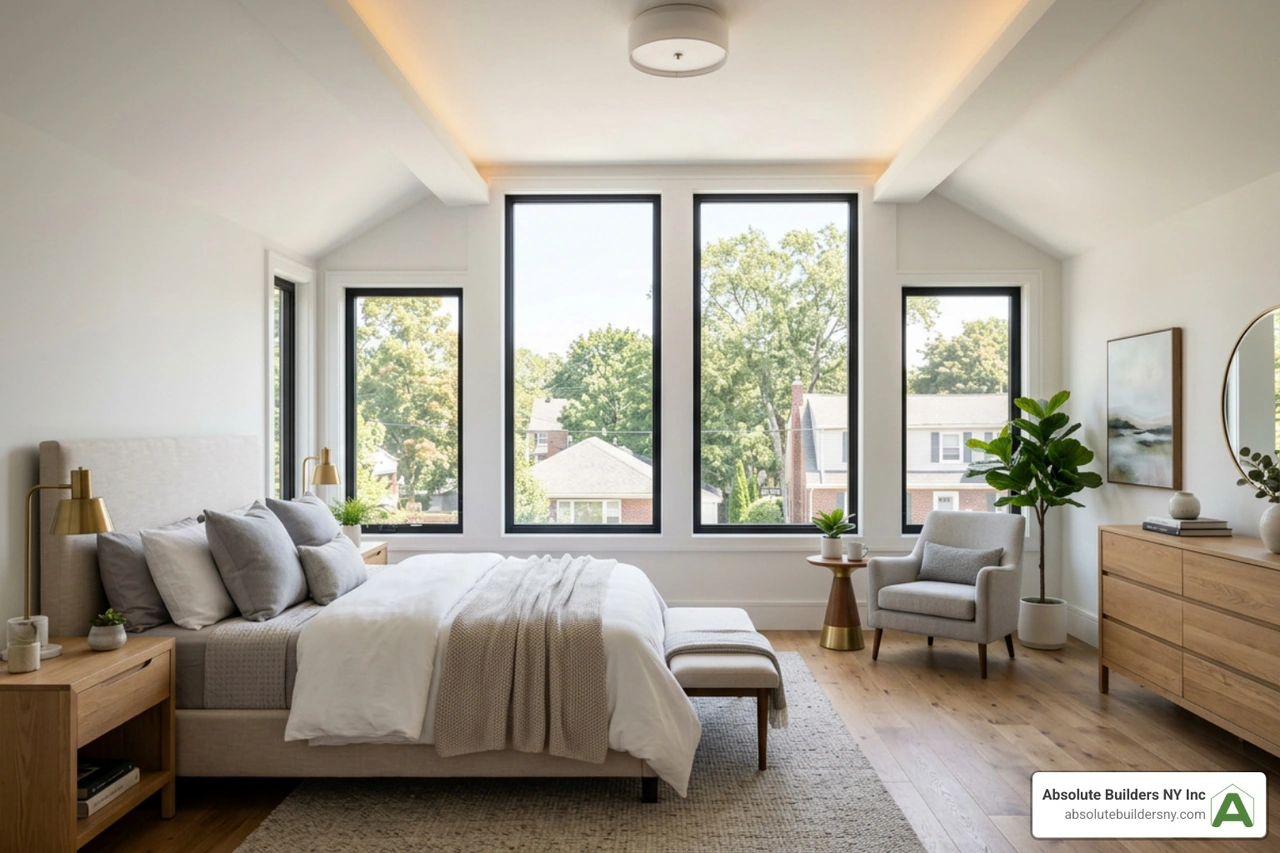
Because the rear dormer features vertical walls and standard-height ceilings, you are not limited to custom, low-profile furniture. You can place standard wardrobes, tall bookshelves, and king-sized beds directly against the walls. Furthermore, because you are placing large windows on the vertical rear wall, you get incredible natural light and cross-ventilation that skylights alone cannot match.
Maximizing Headroom and Usable Square Footage
How much space can you actually gain? In typical residential properties, a full rear dormer can add between 40 to 50 cubic meters of brand-new interior space. For a classic story-and-a-half home, this structural lift can almost double the usable square footage of your upper level.
One of the most critical aspects of this conversion is achieving the required head height. Building codes in areas like West Babylon, Huntington, and throughout Long Island require a minimum ceiling clearance of 6 feet 8 inches (6'8") for habitable rooms, hallways, and bathrooms (specifically around toilets, sinks, and showers).
Without a dormer, most attics simply cannot meet these clearances due to the steep slope of the roof. By raising the roofline vertically, we easily clear these code requirements, turning dark, cramped rafters into comfortable, code-compliant living areas. You can view some incredible transformations in our Attic Dormer Before and After gallery.
Boosting Property Value and Curb Appeal
Adding a high-quality full rear dormer is a proven way to boost your home's resale value. On average, a well-executed loft conversion can increase your property's value by 5% to 10%. By upgrading your home from a 2-bedroom, 1-bath to a 3-bedroom, 2-bath, you immediately position your property in a higher, more competitive market tier.
There is also a major zoning and land-use benefit. Traditional ground-level additions require navigating strict local zoning laws regarding "lot coverage" and setback requirements. If your backyard is already small, a ground addition might not even be legally permissible under Nassau or Suffolk County town ordinances. A rear dormer builds up, not out, preserving 100% of your backyard while staying completely within your home's existing footprint.
Because the structure is built on the back of the house, the front curb appeal of your home remains completely unchanged, maintaining the historic or traditional look of your neighborhood while hiding a massive, modern space upgrade inside.
Design, Materials, and Structural Considerations
When planning a high-end dormer, we always emphasize that technical correctness and structural integrity must come first. A successful project requires a deep understanding of Residential Construction Long Island standards, especially when dealing with coastal weather, heavy snow loads, and local municipal codes.

Integrating a massive vertical structure into an existing sloped roof requires careful architectural design. Key design elements we focus on include:
- Siding Integration: Matching the new dormer siding seamlessly with your existing home, or choosing a complementary accent material (such as modern vertical siding or cedar shakes) to make it look like a deliberate design choice.
- Window Alignment: Aligning the new upper-level windows with the windows on the floor below to maintain visual symmetry.
- Roof Load Points: Engineering the structural load points so the weight of the new dormer is safely distributed down to the home's load-bearing walls and foundation.
- Energy Efficiency: Utilizing modern insulation techniques (like spray foam) to ensure the new space remains warm in the winter and cool during humid Long Island summers.
Exterior Finishes and Architectural Integration
To ensure your new dormer looks like it was built with the original house rather than tacked on as an afterthought, matching exterior finishes is critical. Depending on your home's style, we can finish the dormer cheeks (sides) and face in slate hung, tile hung, brick, or high-quality vinyl and fiber-cement siding.
For homeowners looking to maximize their indoor-outdoor connection, a Juliet balcony with double French doors is an outstanding addition to a rear dormer. It allows you to open up the entire wall on beautiful spring days, letting in fresh air and unobstructed views. Additionally, because the flat roof of a rear dormer receives direct, unshaded sunlight throughout the day, it is the perfect location for installing solar panels to offset your home's energy bills.
To explore options for professional exterior integrations and extensions, working with an experienced local design-build team ensures that every detail—from structural engineering to the final trim—is handled seamlessly and complies with all local building regulations.
Structural Challenges and Building Codes
Building a full rear dormer is a complex engineering puzzle. One of the most common challenges we encounter in Long Island homes is a truss roof. Many modern homes are built using pre-fabricated "W-shaped" roof trusses. These trusses fill the attic space with diagonal support webs, making the attic completely unusable. To build a dormer, we must convert this truss system into an open, rafter-style roof. This involves installing heavy steel or laminated veneer lumber (LVL) beams to support the roof’s weight before we can cut away the old trusses.
Other common structural hurdles include:
- Water Tank and Mechanical Relocation: Old water tanks or HVAC equipment located in the attic must be carefully decommissioned and replaced with modern, low-profile systems tucked neatly into the eaves.
- Stairwell Integration: Designing a safe, comfortable staircase that meets code requirements (including headroom and landing sizes) often requires sacrifice on the floor below. We often aim to position the new staircase directly above the existing first-floor stairs to preserve as much main-level floor space as possible.
- Load-Bearing Support: Ensuring that the existing floor joists are strong enough to support the weight of a liveable second story. Often, we must "sister" existing joists (adding new, stronger joists alongside the old ones) to meet structural building codes.
Planning Your Full Rear Dormer: Costs and Timelines
A project of this scale requires careful financial and logistical planning. Understanding the true Cost to Dormer a House Long Island upfront prevents unexpected budget overruns and ensures a smooth, stress-free construction experience.
Typical Cost Breakdown and Financing
The cost of a full rear dormer varies depending on the size of your home, the complexity of your roof structure, and the level of interior finishes you choose.
In general, basic rear dormer conversions start in the £35,000 to £45,000 range in regions where standard loft conversions are highly standardized, with more complex, bespoke designs easily reaching £60,000 or more.
In the United States—and specifically on Long Island, NY—a comprehensive, high-end full shed dormer addition that includes structural re-engineering, premium insulation, plumbing for a master bath, and high-efficiency HVAC typically ranges from $150,000 to $260,000+. For example, a full-width shed dormer project in a story-and-a-half home frequently averages around $260,000 to complete from design to final paint. To get a sense of local pricing variations across our region, it is highly recommended to obtain a detailed, itemized estimate from a qualified local contractor who can assess your home's specific structural requirements.
To make a project of this scale manageable, we structure our contracts with clear, milestone-based staged payment plans:
- Deposit & Design Phase: Initial design, architectural drawings, and permit filing.
- Framing & Structural Phase: Delivery of steel/LVL beams, roof teardown, and framing of the new dormer structure.
- Enclosure & Weatherproofing: Roofing, siding, and window installation to make the home fully weather-tight.
- Rough-Ins: Electrical, plumbing, and HVAC ductwork installation.
- Insulation & Drywall: Hanging drywall, taping, plastering, and preparing walls for finish.
- Second Fix & Trim: Installing doors, trim, tile, and bathroom fixtures.
- Snagging & Final Inspections: Addressing final details and securing the municipal Certificate of Occupancy.
Many homeowners fund these major additions using home equity lines of credit (HELOC) or future-value construction loans, which allow you to borrow against what the home will be worth once the beautiful new square footage is added.
Construction Timeline from Planning to Completion
A typical full rear dormer project takes approximately 6 to 8 months from the initial consultation to final handoff.
Here is what you can expect during the journey:
[Month 1-2: Planning & Permits] ➔ [Month 3: Framing & Enclosure] ➔ [Month 4-5: Rough-ins & Drywall] ➔ [Month 6-8: Finishes & Inspections]- Months 1–2 (Design and Permitting): We work with our architects to draft precise structural plans, submit them to your local town hall (such as the Town of Babylon, Huntington, Hempstead, or Oyster Bay), and secure the necessary building permits.
- Month 3 (Demolition and Structural Framing): This is the most exciting phase! We open up the roof, install the heavy structural steel supports, and frame the new vertical walls and flat roof. We quickly wrap the structure to ensure your home remains completely protected from rain and wind.
- Months 4–5 (Rough-Ins, Insulation, and Drywall): Plumbers, electricians, and HVAC technicians run all the hidden infrastructure. Once inspected, we apply high-R-value insulation and hang drywall.
- Months 6–8 (Finishes, Trim, and Snagging): We install flooring, tile, vanities, doors, and custom trim. After a final walkthrough to address any minor touch-ups (snagging), we complete the final town inspections so you can move right in.
Frequently Asked Questions about Full Rear Dormers
Do full rear dormers require planning permission?
In the UK, many rear dormers fall under "Permitted Development" rights, meaning you do not need formal planning permission as long as the volume does not exceed 40 cubic meters for terraced homes or 50 cubic meters for detached/semi-detached homes, and stays below the existing ridge line.
However, on Long Island, NY, you must always obtain a building permit from your local town or village before starting construction. This process involves submitting architectural and structural engineering plans to ensure the addition complies with local zoning laws, height restrictions, and the residential building code. Working with an experienced local contractor ensures your permits are filed correctly, avoiding costly delays or fines.
What is the minimum ceiling height required for a dormer?
To legally convert an attic into a habitable bedroom or office, building codes generally require a minimum finished ceiling height of 6 feet 8 inches (about 2.03 meters) across at least half of the usable floor area. In some European contexts, a minimum of 2.2 meters of pre-conversion headroom is recommended to ensure the finished space is comfortable. If your existing attic roof peak is too low, we can often design structural solutions to maximize every inch of vertical clearance.
Can I add a bathroom to my rear dormer?
Absolutely! Adding an ensuite bathroom to a master bedroom is one of the most popular ways to utilize a full rear dormer. The flat roof design provides the necessary head height for showers and vanities.
During the design phase, we carefully plan the plumbing layout to align with your home’s existing wet walls, allowing us to connect the new bathroom drains directly to your existing soil stack and waste lines with minimal disruption.
Conclusion
A full rear dormer is a masterclass in space optimization. By turning a dusty, cramped attic into a gorgeous, sun-drenched second story, you can finally get the master suite, home office, or extra bedrooms your family needs—all while significantly increasing your home's equity.
At Absolute Builders NY Inc, we specialize in transforming architectural visions into beautiful, high-quality living spaces. Based in Long Island, New York, we pride ourselves on precision craftsmanship, structural expertise, and dedicated client partnership. From navigating complex local building codes in Nassau and Suffolk County to executing flawless framing and gorgeous interior finishes, we handle every step of your project with care.
Ready to unlock the hidden potential of your home? Contact us today to discuss your ideas and take the first step toward your dream Dormer Addition.