
Modern Farmhouse Dormers and Other Stunning Roof Designs
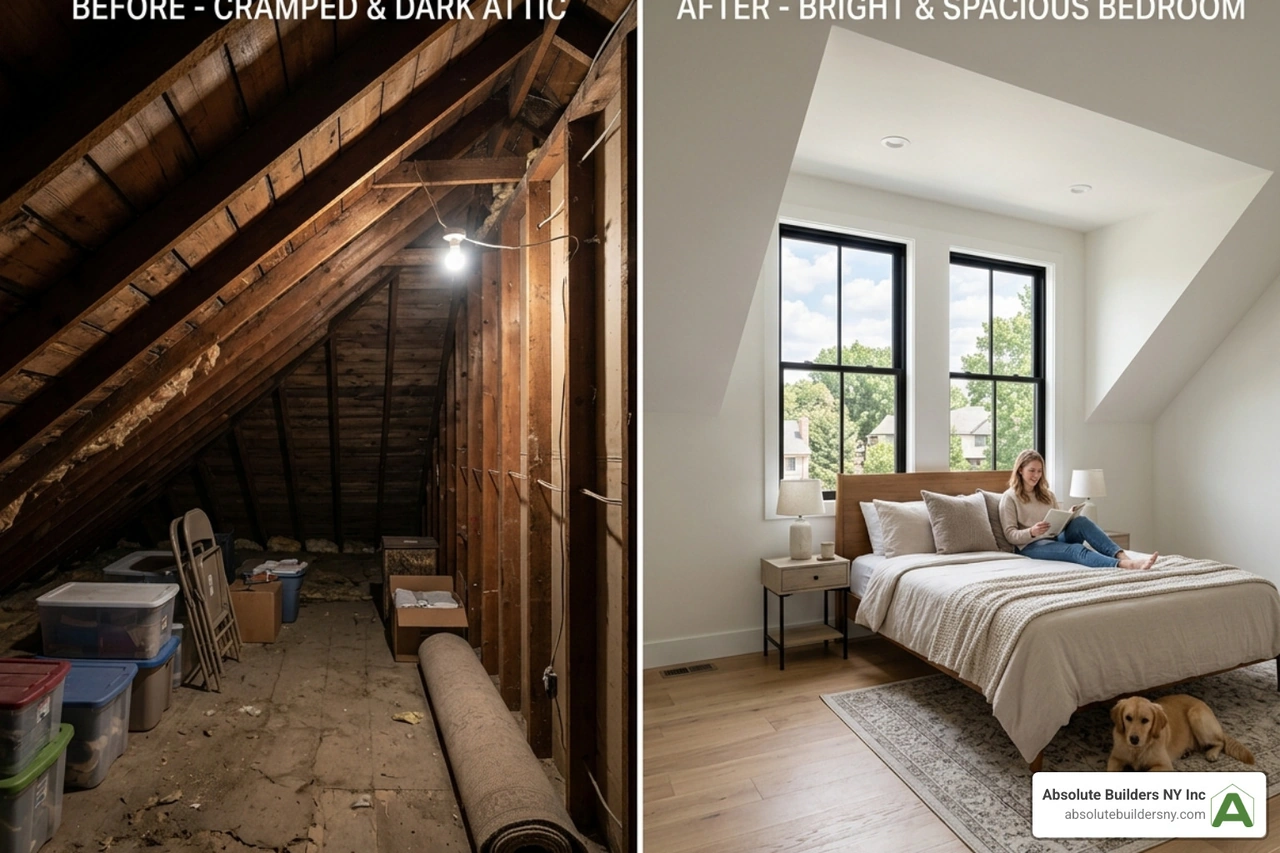
What an Attic Dormer Before and After Can Do for Your Home
Attic dormer before and after transformations are one of the most dramatic upgrades a homeowner can make — turning a cramped, unusable space into a bright, livable room without expanding your home's footprint.
Here's a quick look at what a dormer addition typically changes:
| Before | After | |
|---|---|---|
| Ceiling height | 5–6 ft at peak, unusable edges | Up to 9 ft full-height ceiling |
| Natural light | Little to none | Windows + optional skylights |
| Usable space | Storage only | Bedroom, bathroom, office, or more |
| Square footage | Minimal | Up to 200 sq ft gained |
| Curb appeal | Flat roofline | Architectural character |
| Home value | Baseline | Measurable ROI increase |
Simply put: a dormer cuts into a sloped roof, adds a vertical wall with a window, and transforms the wasted triangle of your attic into real living space.
This matters especially for Long Island homeowners. Older homes — capes, bungalows, ranches — often have attics that are technically there but practically useless. A dormer changes that equation entirely.
I'm Jacolyn Gleason, a communications professional with deep experience translating complex home renovation projects — including attic dormer before and after transformations — into clear, actionable guidance for homeowners. In the sections below, I'll walk you through everything you need to know to visualize, plan, and execute your own dormer project.

Popular Types of Attic Dormer Before and After Transformations
When we talk about an attic dormer before and after, the "after" depends heavily on the style of dormer you choose. Each type offers a different aesthetic and functional benefit. In Long Island, where architectural styles range from classic Cape Cods to modern farmhouses, selecting the right shape is the first step toward a successful Dormer Addition.

Shed Dormers
If your primary goal is maximizing square footage, the shed dormer is the undisputed king. Unlike other styles that peak, a shed dormer features a single-planed roof that slopes in the same direction as the main roof but at a much shallower angle.
- The Benefit: It allows for the most headroom across the widest area.
- The Transformation: We often see shed dormers used to gain up to 200 square feet of usable living space. It can raise sloped ceilings to a full 9-foot height, making it possible to place furniture against walls that were previously only three feet tall.
Gable Dormers
Often called "doghouse" dormers because of their shape, gable dormers feature a classic peaked roof. These are the go-to for homeowners looking to add Architectural interest.
- The Benefit: They offer incredible curb appeal and are perfect for creating cozy nooks or symmetrical window placements.
- The Transformation: While they don't add as much raw square footage as a shed dormer, they excel at bringing in natural light and providing essential ventilation to a previously "stuffy" attic.
Hip Dormers
A hip dormer has a roof that slopes back on all three sides. It is more subtle than a gable dormer and tends to blend into the existing roofline more seamlessly.
- The Benefit: It’s an elegant choice for traditional homes where you want the addition to look like it was part of the original 1950s or 1900s design.
- The Transformation: It provides a balanced increase in headspace while maintaining a low-profile exterior.
Regardless of the style, the goal of a Dormer Addition is to solve the "head-banger" problem. By extending the roof vertically, we create a space where you can actually walk, stand, and live comfortably.
Real-World Success Stories: From Cramped Storage to Master Suites
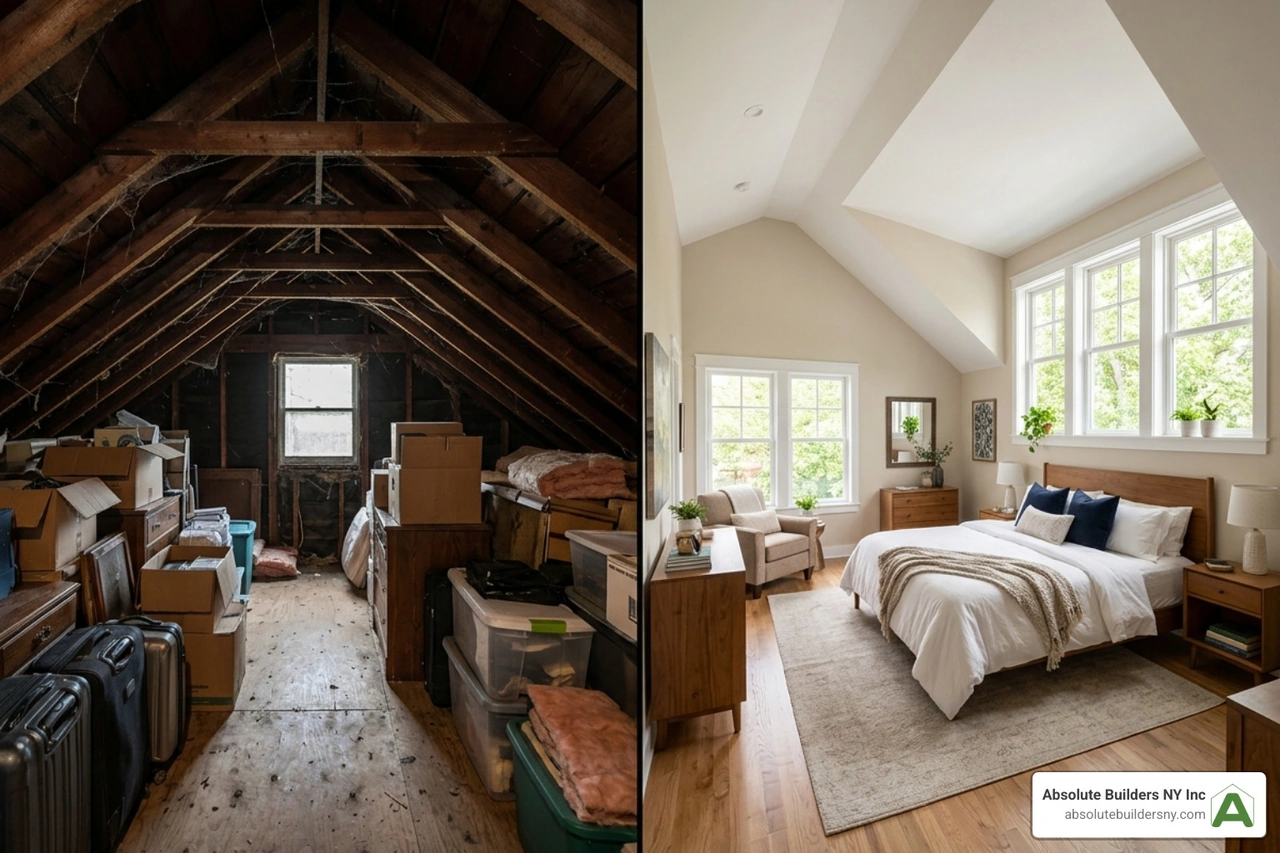
To truly understand the power of an attic dormer before and after, you have to look at the numbers and the narratives. Many attics start as "creepy" or "junk" spaces—places filled with old holiday decorations and, occasionally, a few dozen empty wasp nests.
The 200-Square-Foot Miracle
In one notable How One Couple Carved Out an Extra 200 Square Feet in an Attic Bedroom-Bathroom project, a couple transformed a cramped 84-inch high bathroom into a full primary suite. By adding two dormers, they achieved 9-foot ceilings. This wasn't just about aesthetics; it was about making the room functional for a king-sized bed and a double vanity.
From Junk Room to Primary Suite
We often see Long Island families who love their neighborhood but have outgrown their three-bedroom ranch. Instead of moving, they look up. Transforming an unfinished attic into a primary suite often involves:
- Primary Bedrooms: Reconfiguring the footprint to create "mini-wings" for privacy.
- Bathrooms: Moving plumbing into the walls to save floor space for soaking tubs.
- Nurseries: Providing "necessary relief" for older siblings who no longer want to share a room with a newborn.
An An Attic Bedroom (Before & After) – Skies of Parchment story highlights how a single large, dark room can be divided into three distinct functional zones: an office, a bedroom, and a foyer. By removing a non-functioning brick chimney during the process, homeowners can reclaim even more central square footage.
Whether you are looking for a Home Addition to accommodate a growing family or a quiet office suite, the "before" is almost always the same: dark, hot, and cramped. The "after" is a bright, temperature-controlled sanctuary that adds massive value to your daily life.
Structural Essentials: Framing, Insulation, and Permitting
Adding a dormer is more than just "popping a window" into the roof. It is a significant structural undertaking that requires precision. In places like West Babylon and Huntington, building codes are strict for a reason—safety and longevity.

The Framing Process
The first step in a Renovation attic: before the dormer - donebymyself project is often the most nerve-wracking for homeowners: cutting a giant hole in the roof.
- Support: Before the first shingle is removed, we install temporary interior walls for support.
- Materials: Exterior walls are typically framed with 2x6 lumber to allow for thick, high-performance insulation.
- Roof Pitch: For shed dormers, a 4-degree slope is often the minimum pitch to ensure water runoff while maximizing interior height.
Insulation and HVAC
Attics are notoriously difficult to heat and cool. To make the "after" comfortable, we prioritize the building envelope.
- Rigid Foam & Spray Foam: These are essential for sloped ceilings where traditional fiberglass batts might sag or fail.
- Energy Upgrades: Many successful projects include a minisplit heat pump to provide independent climate control for the new level.
Permitting and Codes in Long Island
You cannot skip the paperwork. In Long Island, you'll need city or township approval for your plans. Key considerations include:
- Egress Windows: For a space to be legally called a bedroom, it must have a window large enough for emergency exit. Casement windows are often the best choice for meeting these codes in tight dormer spaces.
- Staircase Clearance: Older homes often have "hobbit-sized" stairs. Building codes require specific rises and treads, and sometimes a skylight is installed at the top of the stairs just to provide the necessary legal head clearance.
Timeline and Costs
A typical dormer project can take several weeks from planning to completion. While material costs for the dormer structure itself might start around $6,000, the total project cost—including labor, windows, roofing, and interior finishes—is a significant investment. However, timing your dormer installation with a scheduled roof replacement can help minimize some of the overlapping costs.
Frequently Asked Questions about Attic Dormer Renovations
How much value does an attic dormer before and after project add?
Adding a dormer is one of the most reliable ways to increase home equity. By adding square footage without expanding the home's footprint, you are essentially creating "found money."
- Square Footage: You can gain up to 200 square feet of usable living space.
- Market Appeal: A 3-bedroom, 1-bath home becomes a 4-bedroom, 2-bath home. In the Huntington and West Babylon markets, that jump in "stats" can significantly increase the pool of potential buyers and the final sale price.
- ROI: While costs vary, the return on investment is high because you aren't paying for new foundations or landscaping—you're simply optimizing the structure you already own.
What are the best interior finishes for an attic dormer before and after?
The goal is to make the space feel large and intentional, not like a "converted attic."
- Color Palettes: An all-white or pale grey palette (walls, ceilings, and even floors) maximizes light reflection and makes small spaces feel expansive.
- Built-in Storage: Use the "knee-walls" (the short walls under the eaves) for built-in cabinets or bookshelves. This turns unusable floor space into a storage powerhouse.
- Exposed Elements: Stained poplar beams or reclaimed lumber from the original roof can add "Craftsman" character.
- Norwegian Minimalism: This style, focusing on clean lines and functional simplicity, pairs perfectly with the unique angles of a dormer.
What are the common pitfalls of adding a dormer to an attic?
- Roof Leaks: Dormers create "valleys" where the new roof meets the old. If flashing isn't installed with precision, these are prime spots for leaks.
- Staircase Head Clearance: We've seen many DIY attempts fail because they forgot that you need enough room to walk up the stairs without ducking.
- Insulation Gaps: If the "cheeks" (the sides) of the dormer aren't properly insulated, the room will be an icebox in the winter and a sauna in the summer.
- Permit Delays: Failing to account for local Long Island zoning codes can stall a project for months. Always work with a team that knows the local requirements.
Conclusion
An attic dormer before and after is more than just a renovation; it's a total reimagining of what your home can be. From the initial framing with 2x6 lumber to the final coat of white paint on a vaulted ceiling, every step requires a balance of structural engineering and design vision.
At Absolute Builders NY Inc, we specialize in these complex transformations. Based in Long Island, we understand the specific architectural needs of our community, from West Babylon to Huntington. Our USP is precision craftsmanship and a dedicated partnership with our clients—ensuring that your "after" is exactly what you envisioned.
Don't let your attic remain a "creepy" storage space. Whether you need a master suite, a home office, or a sun-drenched nursery, a dormer addition is the key to unlocking your home's hidden potential.
Transform your home with a professional dormer addition today and see the difference that precision craftsmanship can make.