
Score More Privacy for Less with Local In-Law Suite Rentals
Find a Private In-Law Suite Rental Near You
To find an in law suite for rent near me, search local rental sites and community groups using terms such as in-law suite, mother-in-law apartment, guest suite, basement apartment, and ADU. Then schedule an in-person tour, confirm whether the unit has a private entrance and kitchen, and ask for a written lease that clearly lists rent, utilities, deposits, parking, and shared-space rules.
In-law suites can offer more privacy than a standard apartment, often with a separate entrance, bathroom, kitchenette or full kitchen, and access to a quieter residential setting. Costs vary widely by location and size. For example, recent listings range from an $850 utility-included private-entry suite in Florida to roughly $2,000-$2,250 for two-bedroom, utility-included options in Northern Virginia. The right comparison is not just monthly rent - it is your total monthly cost, privacy, commute, and confidence that the rental is legal and safe.
I am Jacolyn Gleason, a public relations leader with experience translating housing, wellness, and consumer topics into clear, practical guidance. In this guide to finding an in law suite for rent near me, I will help you focus on the details that protect your budget and your privacy.
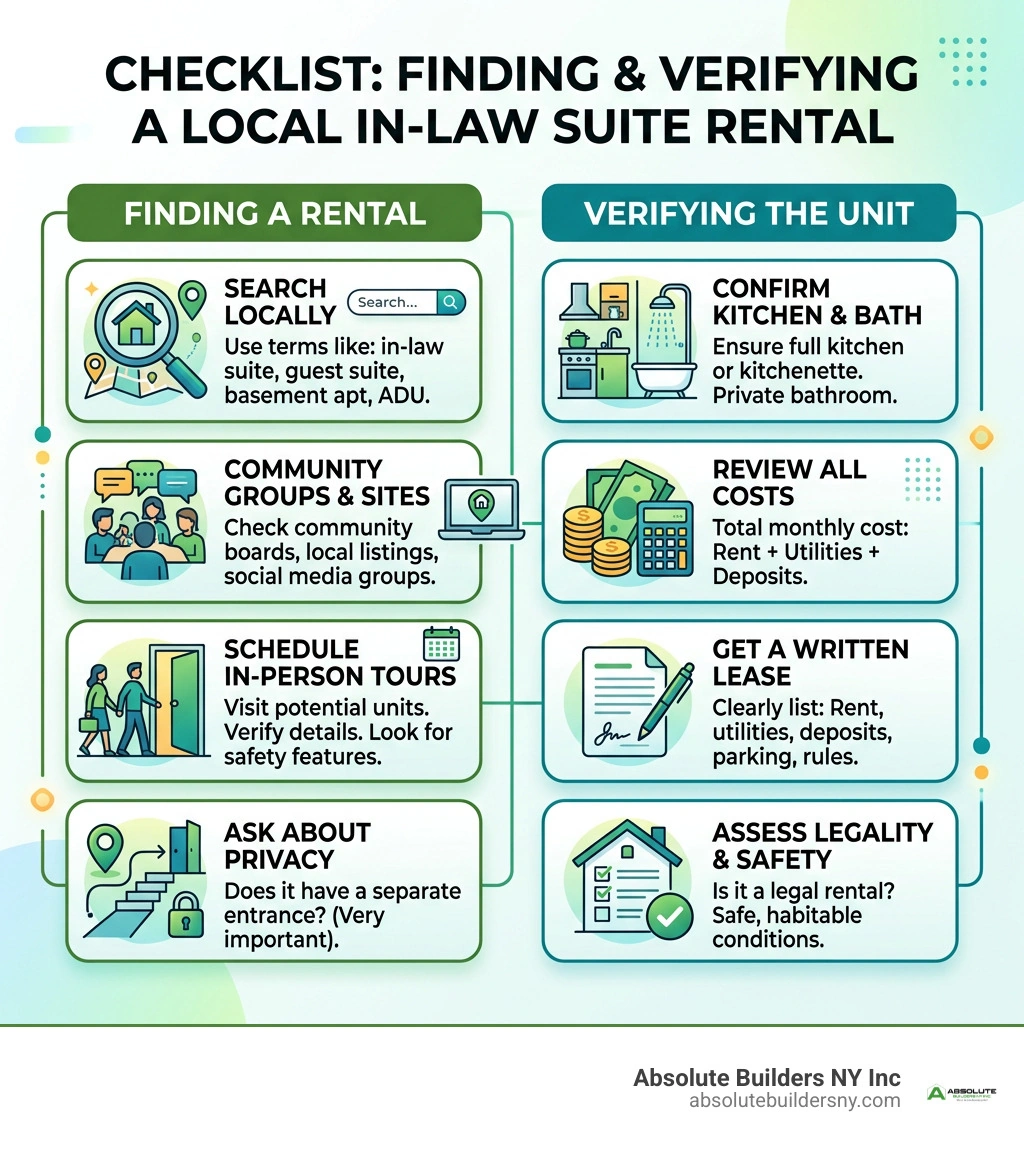
In law suite for rent near me terms simplified:
- adding mother in law suite to house
- homes with mother-in-law suites
- homes with mother-in-law suites for sale
What Is an In-Law Suite and How Does It Compare to Standard Rentals?
An in-law suite—historically known as a mother-in-law unit, secondary suite, or accessory dwelling unit (ADU)—is an independent, self-contained living space situated on the same lot as a primary single-family residence. To understand the architectural scope of these spaces, it helps to review what is a mother in law suite and the ways builders design them for independent living. Unlike a simple rented spare bedroom where tenants must walk through the primary homeowner’s living room, a genuine in-law suite offers dedicated amenities designed for autonomy:
- A dedicated private exterior entrance
- A separate bathroom (full bath or 3/4 shower bath)
- Dedicated cooking facilities (ranging from a well-equipped kitchenette to a complete, full-sized kitchen)
- A private sleeping area (studio open-concept or separate walled bedroom)
- Independent living and dining space
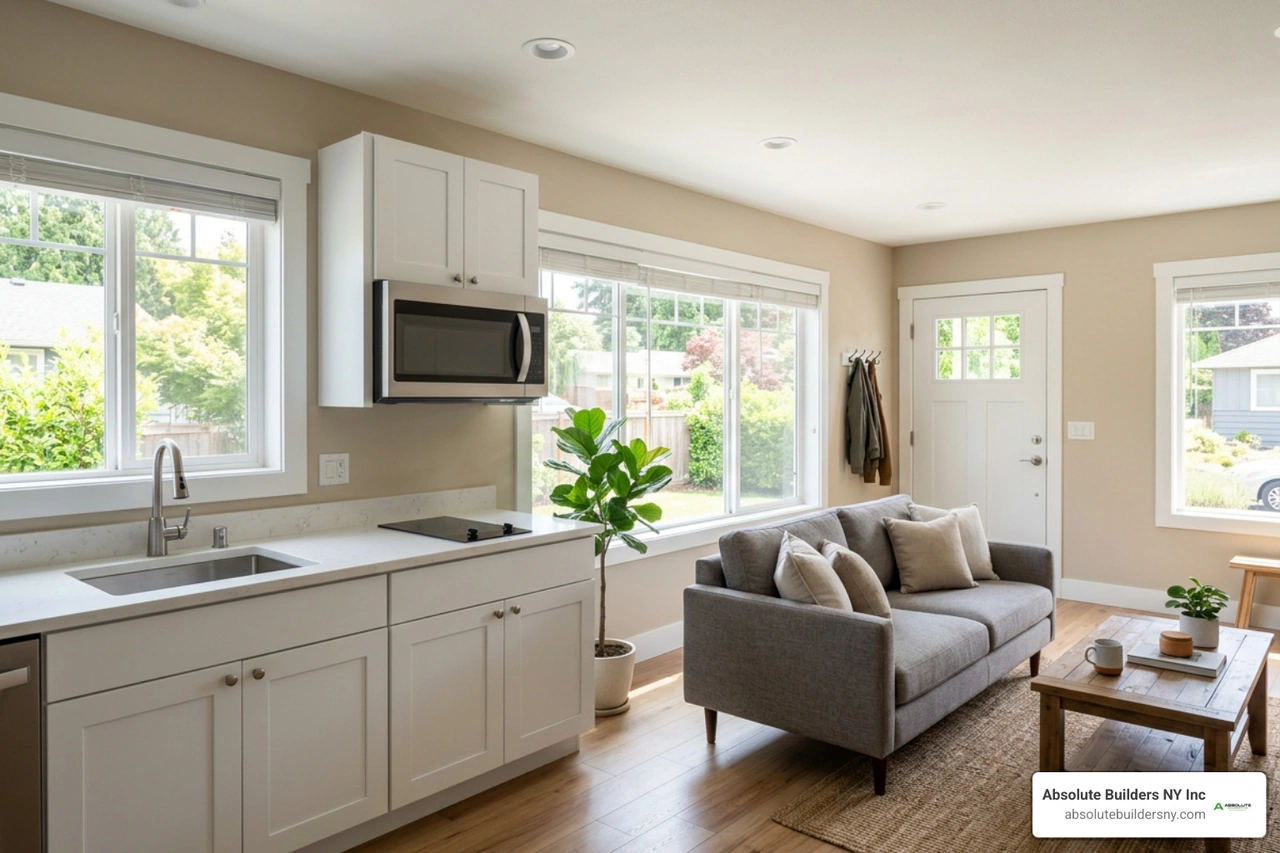
When comparing secondary suites to conventional multi-family apartment complexes or detached backyard homes, several distinct lifestyle and structural factors emerge:
| Feature / Rental Category | In-Law Suite (Attached / Basement) | Traditional Commercial Apartment | Detached ADU / Cottage |
|---|---|---|---|
| Typical Setting | Quiet suburban residential neighborhood | High-density urban or commercial corridor | Residential backyard or over garage |
| Exterior Entrance | Private side, rear, or garden entry | Shared common hallway or breezeway | Private standalone entry |
| Noise & Foot Traffic | Minimal; residential neighborhood sounds | High; common stairwells, elevators, neighbors above/below | Completely independent; no shared walls |
| Outdoor Space | Shared yard, private patio, or garden access | Communal courtyard, balcony, or public green space | Private garden or dedicated deck space |
| Utility Billing Structure | Frequently all-inclusive or fixed flat rate | Tenant pays separate metered electric, gas, water | Separate submeter or bundled flat fee |
| Landlord Relationship | Direct private homeowner management | Property management company or corporate office | Direct private homeowner management |
Attached vs. Detached Accessory Living Spaces
In-law suites fall into two primary structural categories: attached living spaces and detached structures.
Attached suites share one or more structural walls with the primary home. These commonly include converted walk-out daylight basements, first-floor side wings built through an in law suite addition, or finished suites built above an attached garage. Attached units often utilize shared structural insulation, meaning that acoustic baffling and double-layered drywall are vital to ensure quiet living for both the tenant and the homeowner.
Detached units, on the other hand, sit as freestanding auxiliary buildings on the residential parcel. Reviewing diverse detached mother in law suite floor plans reveals how these units prioritize complete physical separation, incorporating standalone roofs, exterior siding, and dedicated yard access. When renters browse homes with detached mother in law suites near me, they generally seek the absolute maximum level of physical isolation, as no shared interior walls exist between the tenant and the primary dwelling.
Privacy, Shared Spaces, and Noise Considerations
The lifestyle dynamics of renting an in-law suite are distinct from living in a multi-story apartment block. While you gain the peace of a leafy residential neighborhood, you also share a plot of land with the homeowner.
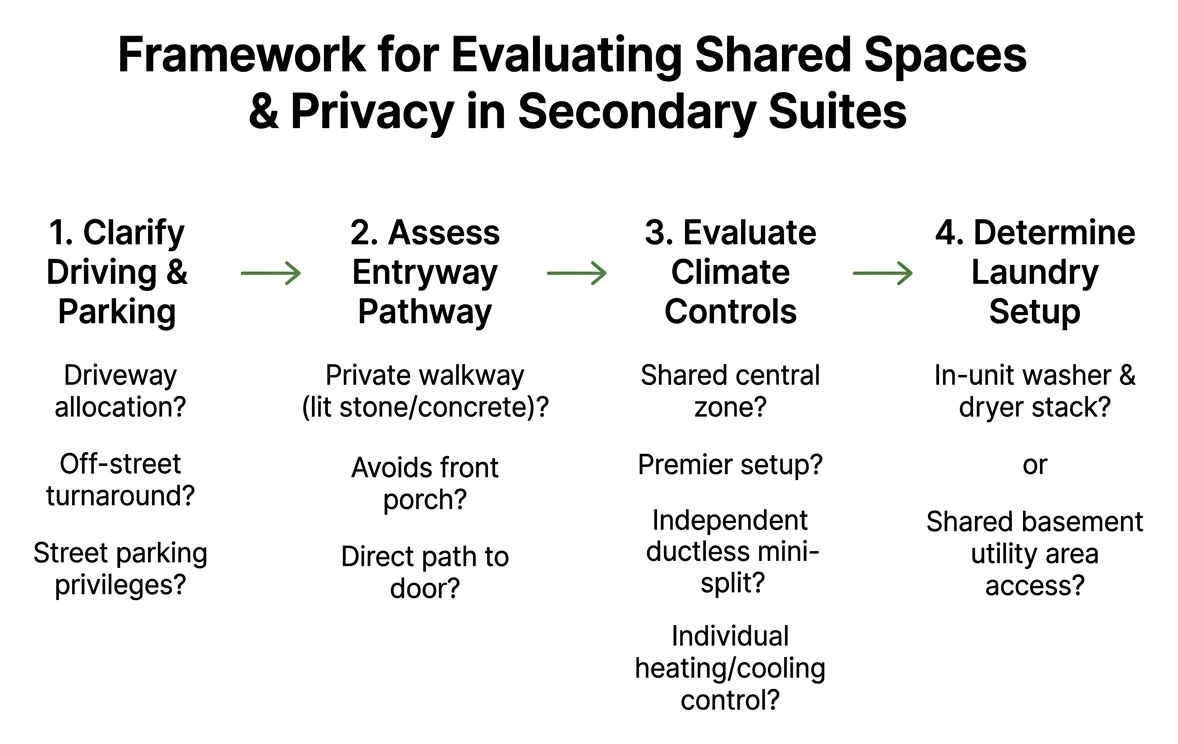
When assessing privacy and daily routines, evaluate the following structural touchpoints:
- Driveway and Parking Allocation: Clarify whether you have a dedicated stall in the driveway, off-street turnaround space, or street parking privileges.
- Entryway Pathways: A well-designed suite provides a lit, private stone or concrete walkway leading around the side of the home directly to your door, avoiding the family's front porch.
- Climate and HVAC Controls: Some suites share a central HVAC zone with the main house, while premier setups feature independent ductless mini-split units allowing you to adjust heating and cooling independently.
- Laundry Setup: Determine whether the suite features an in-unit washer and dryer stack or requires scheduled access to a shared basement utility area.
Typical Costs, Utilities, and Budgeting for Secondary Suites
Renting an in-law suite can be a financially sound strategy because private homeowners frequently price their auxiliary spaces below corporate multi-family rates.
For instance, national rental samples demonstrate the wide financial spectrum of these properties. On the luxury or high-cost suburban end, a spacious Two Bedrooms In-Law Suite in Fairfax provides 1,045 square feet of fully furnished living space at $2,000 per month with all utilities included, which sits notably below the regional market baseline of $2,500 per month for standard units. Similarly, a 2-Bedroom In-Law Suite at 10044 Blake Ln listed at $2,250 per month offers all utilities included, sitting 14% below the median Oakton two-bedroom apartment rate of $2,492 recorded in late 2026.
On the more compact suburban end, an attached 1-Bedroom In-Law Suite in Davenport offers 525 square feet for $1,500 per month with electricity, water, and internet covered, while a compact Brand-New In-Law Suite in Harmony commands $850 per month for 575 square feet of private-entry space.

Understanding All-Inclusive Rent and Utility Packages
The hallmark advantage of an in-law suite is all-inclusive billing. Because many residential homes share unified utility meters, private landlords bundle essential services directly into the base monthly rent.
When reviewing a listing, ensure the rental agreement explicitly spells out which services are covered:
- Electrical Power: Heating, air conditioning, appliance loads, and standard plug power.
- Water, Sewer, and Waste: Municipal water supply, hot water heating, sewer fees, and weekly trash/recycling removal.
- High-Speed Internet & Media: Shared high-speed Wi-Fi network or dedicated guest network access.
- Property Maintenance: Seasonal lawn mowing, leaf clearance, and driveway snow removal handled by the primary resident.
Upfront Fees, Security Deposits, and Lease Terms
Budgeting for an in-law suite involves fewer corporate administrative markups, but standard legal protections still apply:
- Application and Screening Costs: Expect a direct background and credit check fee ranging between $35 and $95 per adult applicant.
- Security Deposit Requirements: In most jurisdictions, security deposits are capped at the equivalent of one to two months' base rent, held in an interest-bearing escrow account.
- Lease Durations: Homeowners typically prefer standard 12-month lease agreements to ensure stable tenancy, though some offer flexible 6-month or month-to-month arrangements for travel nurses or visiting scholars.
Legal, Zoning, and Safety Factors Renters Must Check
Before signing a lease for a secondary suite, verifying that the unit is legally permitted and structurally compliant is essential. Homeowners planning additions often consult architectural resources like a huntington mother suite architect to ensure plans strictly meet local building codes.
A comprehensive mother in law suites guide explains how local municipalities regulate secondary living spaces to maintain neighborhood density standards and fire safety.
What to Look for in a Secondary Suite Rental Agreement
A standard commercial lease form may not address the unique realities of living on a homeowner's personal property. Ensure your agreement includes:
- Defined Quiet Hours: Standard agreements establish baseline quiet periods (e.g., 10:00 PM to 7:00 AM) to maintain mutual comfort.
- Guest Policies: Clear expectations regarding overnight visitors, social gatherings, and extended guest stays.
- Property Access & Notice: Landlords must provide minimum statutory notice (typically 24 to 48 hours) before entering your private suite for inspections or repairs.
- Designated Outdoor Zones: Defined boundaries for yard usage, patio furniture, pet walking zones, and trash bin locations.
Local Building Codes and Tenant Protections
Code compliance directly affects your daily safety and habitability. Exploring construction breakdowns like the long island in law addition cost highlights the significant investment required to install code-compliant plumbing, dedicated ventilation, fire-rated sheetrock, and separate utility metering.
Always verify that basement suites feature egress windows with clear well clearance to ensure a safe escape route during emergencies. Electrical systems must support kitchen appliances without tripping shared residential circuit breakers.
How to Find a Verified In Law Suite for Rent Near Me
Locating high-quality secondary units requires looking beyond commercial apartment syndication websites.
When planning your search strategy, keep the structural principles outlined in our comprehensive house with mother in law suite guide in mind to evaluate whether an available space offers true independent functionality.
Top Online Portals to Search for Secondary Units
- Regional Real Estate MLS Search Portals: Utilize platforms with detailed keyword filtering. Enter specific terms like "accessory dwelling unit", "in-law suite", "carriage house", or "guest apartment".
- Private Landlord Classified Platforms: Portals that feature direct private-owner listings often surface attached suburban flats that never appear on corporate leasing portals.
- Local Neighborhood & Community Groups: Community message boards, university housing forums, and regional social media groups regularly feature homeowners posting private accessory suites for rent.
Red Flags When Browsing Secondary Suites
To protect your finances and personal security, stay vigilant against common rental listing warning signs:
- Demands for Wire Transfers or Untraceable Deposits: Never send funds via wire transfer, digital gift cards, or unregulated peer-to-peer apps prior to touring the property in person.
- Unavailable "Out-of-Country" Landlords: Avoid any listing where the supposed owner claims they cannot meet in person or provide access because they are traveling overseas.
- Unpermitted or Hazardous Living Spaces: Walk away from windowless basement rooms, makeshift kitchens with hotplates plugged into standard extension cords, or low-ceiling utility cellars masquerading as finished living quarters.
- Refusal to Provide a Written Lease: Legitimate homeowners will always supply a formal, signed lease agreement outlining tenancy terms and deposit terms.
Frequently Asked Questions About In-Law Suite Rentals
Are utilities usually included in an in-law suite rental?
Yes. In the majority of attached in-law suite rentals, standard utilities—including electricity, water, heating, municipal trash pickup, and high-speed Wi-Fi—are bundled directly into the flat monthly rent price. Because the accessory unit is often connected to the primary residence's central meters, flat-rate all-inclusive pricing simplifies monthly budgeting for both parties.
How do I verify that an in-law suite is legal to rent?
You can confirm the legal status of an accessory dwelling unit by asking the property owner to show a valid Certificate of Occupancy (CO) or rental registration permit issued by the local municipal building department. A legally permitted suite will comply with local residential zoning ordinances, structural ceiling height minimums, electrical codes, and emergency egress regulations.
What are the main advantages of an in-law suite over a traditional apartment?
An in-law suite offers superior everyday privacy, significantly reduced noise from communal hallways, direct access to peaceful residential neighborhoods, and convenient parking. Furthermore, all-inclusive utility structures and below-market rental pricing often make secondary suites substantially more cost-effective than standard commercial apartment complexes.
Conclusion
Finding a comfortable, private in-law suite allows you to enjoy independent living in a quiet neighborhood setting while keeping your monthly housing expenses manageable. By carefully reviewing rental agreements, verifying municipal safety codes, and confirming utility allocations, you can secure an ideal rental that balances privacy and value.
At Absolute Builders NY Inc, we specialize in precision dormer additions, custom residential construction, and creating compliant secondary living spaces. To explore how quality architectural planning transforms homes into functional secondary spaces, learn more about our custom mother in law suite additions and construction services.