
Ultimate Checklist for Homes with Mother-in-Law Suites

Why More Long Island Homeowners Are Choosing Homes with Mother-in-Law Suites
Homes with mother-in-law suites are purpose-built properties that include a self-contained living space — with a private entrance, bedroom, bathroom, and often a kitchen — either attached to or on the same property as the main home.
Here's a quick snapshot of what makes them different from a standard guest room:
| Feature | Guest Room | Mother-in-Law Suite |
|---|---|---|
| Private entrance | No | Yes |
| Kitchen or kitchenette | No | Usually yes |
| Full bathroom | Shared | Private |
| Independent utilities | No | Often yes |
| Can be legally rented | No | Often yes |
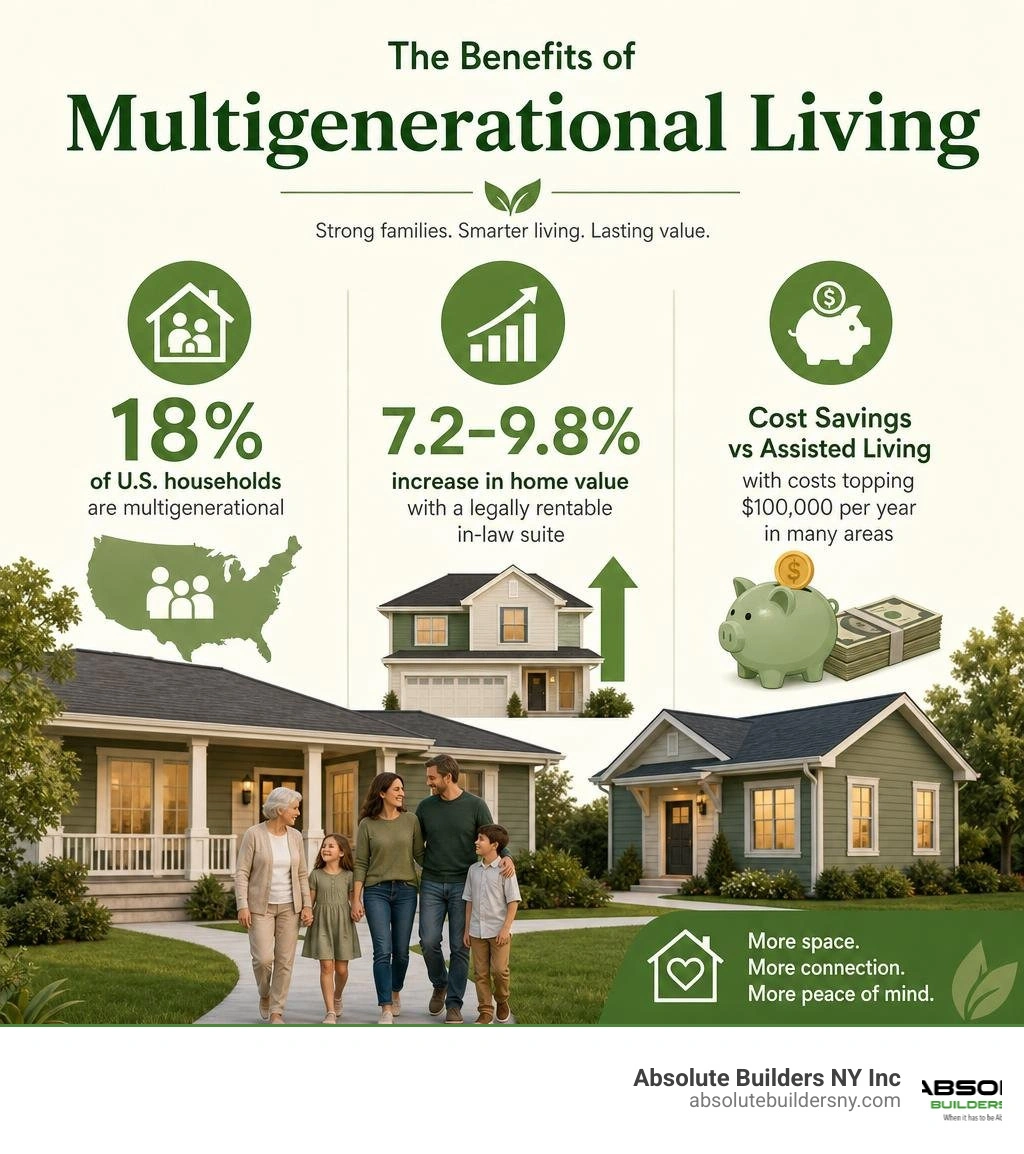
Something big is happening in American housing. Multigenerational living has quadrupled over the last 50 years and now accounts for 18% of U.S. households. Aging parents, rising housing costs, and the need for flexible space are pushing more families to rethink how they live together — without giving up privacy.
For Long Island homeowners, this often means looking at the home they already have and asking: could this work for my family?
The numbers make a strong case. A legally rentable in-law suite can increase a home's appraised value by 7.2% to 9.8%. And with assisted living costs topping $100,000 per year in many areas, having a family member nearby — in their own space — can mean serious financial relief.
This guide walks you through everything: suite types, design must-haves, costs, zoning rules, and how to plan a build that actually works.
I'm Jacolyn Gleason, a Senior Vice President at 5W Public Relations with deep experience researching consumer health, wellness, and lifestyle trends — including the growing demand for homes with mother-in-law suites as a practical solution for multigenerational families. My work across B2C and B2B campaigns has given me a strong foundation for breaking down complex topics like this one into clear, actionable guidance.
Understanding Homes with Mother-in-Law Suites
In residential construction, terminology can get confusing. You might hear these spaces referred to as accessory dwelling units (ADUs), secondary suites, granny flats, or mother-daughter setups. They all serve the same core purpose: providing an independent, fully functional living space on the same property as a single-family home.
This layout allows families to practice close-quarters caregiving while maintaining the boundaries that keep relationships healthy. In 2026, as the cost of living and senior care continue to rise, these spaces have evolved from a luxury trend into a highly practical housing strategy.
Key Differences: Guest Rooms vs. Homes with Mother-in-Law Suites
It is common to confuse a standard guest room or a basic basement room with a true mother-in-law suite. However, the differences are significant when it comes to daily function, privacy, and long-term property value.
A standard guest room is simply an extra bedroom within the main envelope of your house. Guests still share your kitchen, your laundry facilities, and often your main living spaces. A basement apartment or a dedicated suite, on the other hand, operates as an autonomous home-within-a-home. It features a private entrance, dedicated cooking facilities (either a full kitchen or a highly functional kitchenette), and its own full bathroom.
Understanding these differences is essential if you are planning to remodel. To explore how these distinctions impact your building plans, you can read our detailed guide on What is a Mother In Law Suite: The Benefits, Options and Expectations.
Flexible Uses Beyond Housing Aging Parents
While these suites are traditionally designed for aging parents—who make up roughly 14% of adults living in another relative's home—their long-term utility is incredibly diverse. Homeowners across Suffolk County and Nassau County frequently build these spaces with future transitions in mind.
- Short-Term or Long-Term Rental: When unoccupied by family, a legally permitted suite can become a steady stream of secondary income.
- Home Office or Creative Studio: A detached or separate-entrance suite makes an ideal, quiet workspace away from the noise of the main household.
- College Student Housing: Perfect for young adult children who need a "college crash pad" or a stepping stone toward full independence.
- Guest House: A premium space for hosting extended family during the holidays without overcrowding your main living rooms.
Types of In-Law Suites and Layout Options
Choosing the right structure depends entirely on your yard size, existing floor plan, budget, and local zoning codes.
Attached Suites and Basement Conversions
If you want to keep your family close and minimize your construction footprint, an attached suite or a basement conversion is often the most practical route.
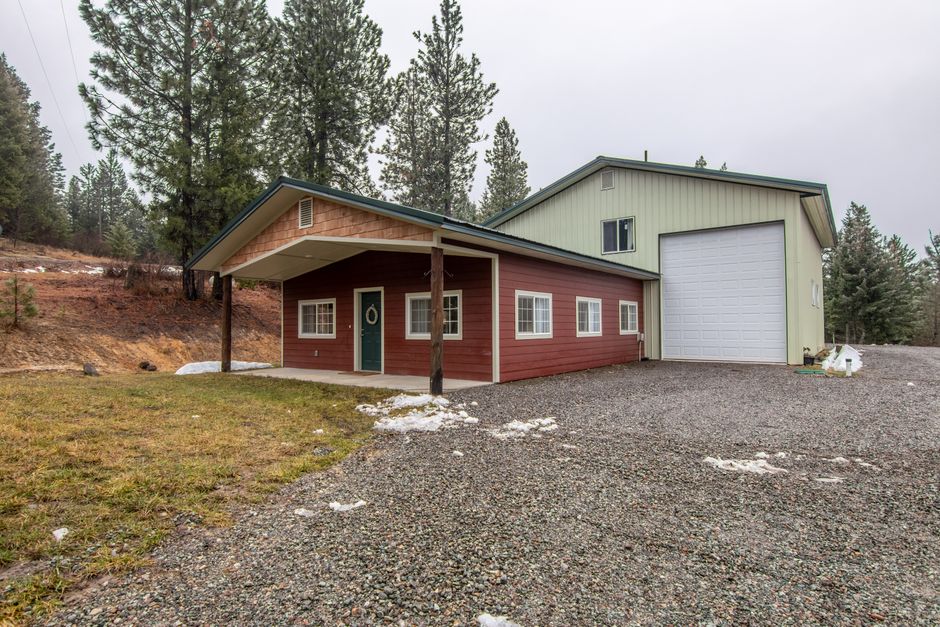
An attached suite typically involves building a ground-level addition or converting an existing space, such as an attached garage or a porch. For homes with sloped lots, a walk-out basement conversion is an exceptional choice. It utilizes existing square footage while providing natural light and a level, step-free private entrance.
When building inside your existing footprint, soundproofing is your best friend. Installing resilient channels, double-layer drywall, and acoustic insulation between the shared walls and floors ensures that late-night TV watching in the suite won't wake up the main house.
If you are considering expanding your home's footprint for this purpose, check out our insights on planning an In-Law Suite Addition. You can also look at real-world examples of ground-level, fully integrated multigenerational layouts, such as the design showcased at 12 Odell St, Greenville, SC 29615, which highlights how independent spaces can be seamlessly woven into a luxury home's floor plan.
Detached ADUs, Casitas, and Above-Garage Apartments
For those who have the backyard space and want maximum privacy, detached accessory dwelling units (ADUs)—often called casitas or carriage houses—are the gold standard.
Building a detached suite or converting the space above a detached garage offers complete structural separation. This layout is perfect for noisy teenagers, long-term tenants, or independent in-laws who prefer having their own distinct address on the property.
To see how detached structures maximize backyard space and offer complete autonomy, you can view the architectural layout of properties like 9709 Avion CV Dripping Springs TX 78620, which illustrates the "home within a home" philosophy using separate outdoor spaces.
Essential Design and Accessibility Checklist
Designing a mother-in-law suite requires balancing immediate needs with future accessibility. A well-designed suite should allow its occupant to age in place comfortably without requiring major structural renovations down the road.
Independence Features: Kitchens, Laundry, and Entrances
True independence relies on having dedicated, functional spaces.
- Private Entrance: A dedicated doorway, preferably with keyless entry, allows occupants to come and go without walking through the main home's living areas.
- Kitchen or Kitchenette: At minimum, include a sink, a small refrigerator, a microwave, and a two-burner cooktop. If space permits, a full kitchen with standard appliances makes the space completely self-sustaining.
- Dedicated Laundry: A stacked washer and dryer tucked into a closet saves the occupant from carrying heavy laundry baskets up and down stairs to the main house.
- Separate Utilities: Zoned heating and cooling (like a ductless mini-split system) allows occupants to control their own thermostat.
Accessibility and ADA Compliance for Aging Parents
If the suite is being built for an aging relative, incorporating Universal Design or ADA-compliant features from day one is highly recommended. Retrofitting a bathroom later is always more expensive than building it right the first time.
Here is your essential accessibility checklist:
- No-Step Entry: Zero-threshold exterior doors and ramp access if the suite is elevated.
- Wide Doorways: All interior and exterior doors should be at least 32 to 36 inches wide to easily accommodate wheelchairs or walkers.
- Curbless Roll-In Shower: A walk-in, curbless shower with a built-in bench and adjustable hand-held showerhead.
- Grab Bars: Professionally anchored grab bars in the shower and next to the toilet.
- Lever-Style Handles: Lever handles on all doors and faucets instead of round knobs, which can be difficult for arthritic hands to turn.
- Rocker Light Switches: Placed at a lower height, with electrical outlets placed slightly higher than standard to reduce the need for bending down.
Financial Considerations: Costs, ROI, and Market Value
Adding a mother-in-law suite is a significant financial investment, but it is also one of the most reliable ways to build long-term home equity.
Construction Costs and Financing Options
The cost to build an in-law suite in 2026 varies widely based on whether you are converting an existing space or building a brand-new addition.
| Project Type | Average Cost Range (2026) | Key Cost Drivers |
|---|---|---|
| Garage Conversion | $20,000 – $45,000 | Plumbing integration, insulation, garage door replacement |
| Basement Conversion | $35,000 – $75,000 | Moisture mitigation, egress windows, ceiling height adjustments |
| Attached Addition | $75,000 – $150,000+ | Foundation work, framing, roofing, utility hookups |
| Detached ADU | $90,000 – $200,000+ | Independent foundation, utility trenching, site prep |
Financing these projects is commonly achieved through Home Equity Lines of Credit (HELOCs), cash-out refinances, or specialized construction loans. If you are trying to establish a realistic budget for your property, read our step-by-step breakdown on Adding a Mother In Law Suite to House to avoid common financial pitfalls.
How Homes with Mother-in-Law Suites Increase Property Value
Does a mother-in-law suite actually pay off at resale? Absolutely. In competitive markets like Long Island, homes with dedicated, legal secondary suites are highly sought after.
Studies show that properties with rentable in-law suites see an appraised value increase of 7.2% to 9.8% compared to their last sales price. Buyers love the flexibility of these spaces, whether they plan to use them for multigenerational living or as an active rental unit.
To see what buyers are looking for and how these homes perform on the market, you can browse current listings of homes with dedicated secondary spaces on In Law Suite - New York Real Estate.
Zoning Laws, Building Codes, and Permitting
Before you buy materials or hire a design team, you must understand the legal landscape. Navigating local town ordinances is often the most complex part of building an in-law suite on Long Island.
Navigating Local Regulations and HOA Rules
On Long Island, zoning laws are determined at the town and village level, and they can vary dramatically from one street to the next. What is perfectly legal in Suffolk County might require a special exception variance in Nassau County.
Many local municipalities have strict regulations regarding "mother-daughter" setups or accessory apartments. These laws are designed to prevent single-family neighborhoods from quietly turning into high-density multi-family zones. For example, some towns require the homeowner to occupy either the main house or the suite, while others prohibit separate gas or electric meters to ensure the home remains classified as a single-family dwelling.
If you live in Massapequa, for instance, you must adhere to specific local codes regarding secondary kitchens. You can review the exact local ordinance framework via Article IX: Mother-Daughter Dwellings - Village of Massapequa Park to see how local municipalities define, permit, and restrict these living arrangements.
Frequently Asked Questions about In-Law Suites
What is the average cost to build an in-law suite in 2026?
In 2026, a basic garage or basement conversion typically ranges from $25,000 to $65,000. If you are building a brand-new, detached accessory dwelling unit (ADU) or a ground-level home addition with high-end finishes, costs generally run between $80,000 and $150,000+, depending on utility connections and structural requirements.
Can I rent out my mother-in-law suite to a tenant?
This depends entirely on your local town or village zoning laws. Some municipalities allow you to legally rent out accessory apartments to non-family tenants, provided you obtain an accessory apartment permit and meet specific parking and safety requirements. Other areas strictly limit these suites to immediate family members.
Does an in-law suite increase property taxes?
Yes, in most cases. Adding square footage, a second kitchen, or a separate bathroom will trigger a reassessment of your property value, which will likely increase your property taxes. However, the added home equity and potential rental income usually far outweigh the moderate tax increase.
Conclusion
Building a mother-in-law suite is more than just a home improvement project—it is an investment in your family's future, comfort, and financial security. Whether you are welcoming an aging parent, creating a launchpad for your college graduate, or building a high-value rental space, planning your project with precision is the key to success.
At Absolute Builders NY Inc, we specialize in transforming architectural visions into high-quality, functional living spaces. Based in Long Island, New York, our team brings precision craftsmanship, dedicated partnership, and deep local expertise to every project—from dormer additions to custom secondary suites. We understand the specific building codes, zoning hurdles, and structural requirements unique to Nassau and Suffolk counties.
Ready to take the next step toward your dream multigenerational home? Explore our dedicated Mother In Law Suite services and let us help you design and build a space that perfectly fits your family's lifestyle.