
The Ultimate Guide to Adding an In-Law Suite
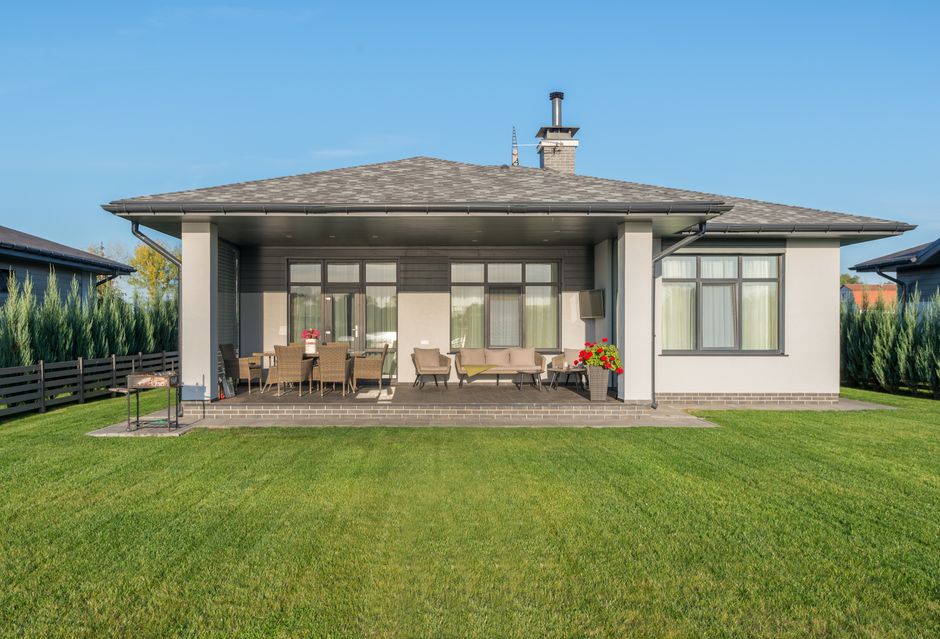
Why Adding a Mother-in-Law Suite to Your House Is One of the Smartest Home Investments You Can Make
Adding a mother-in-law suite to your house doesn't have to be complicated — but it does require the right plan.
Here's a quick overview of how to do it:
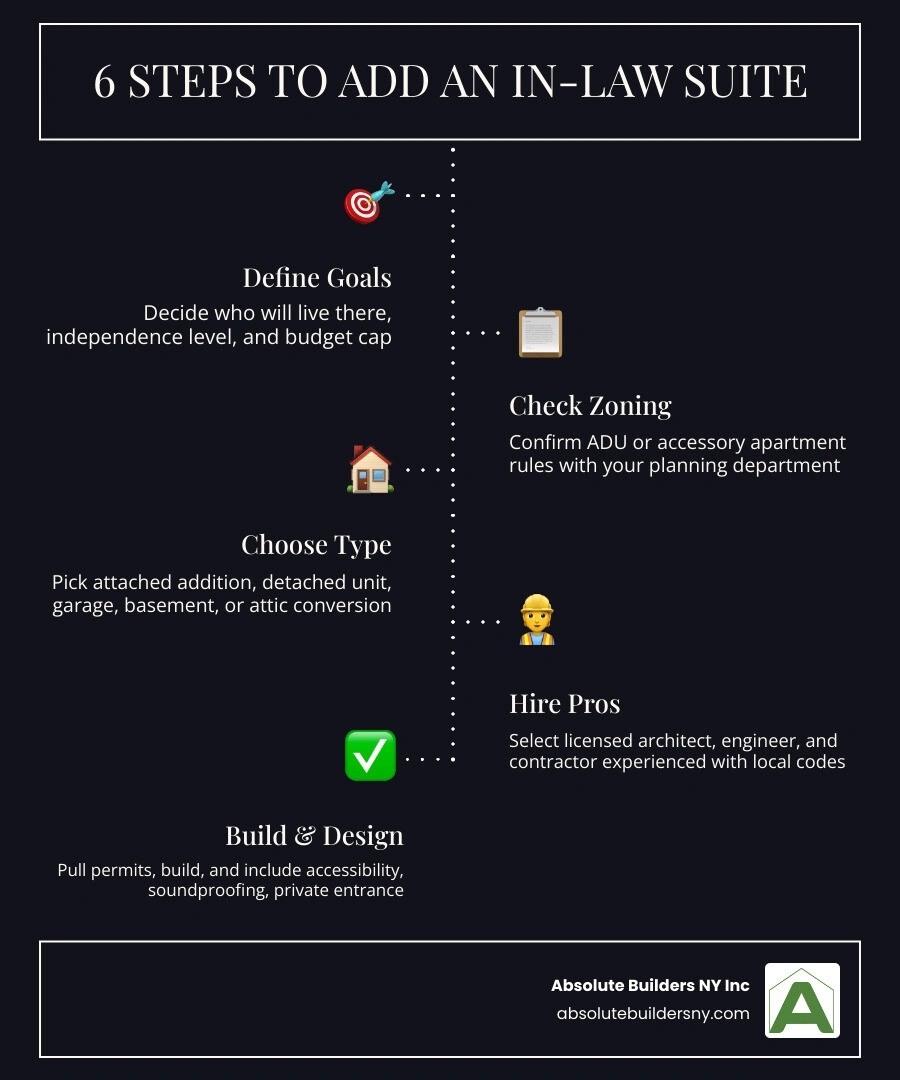
- Define your goals — who will live there, what level of independence they need, and your budget
- Check local zoning — confirm ADU or accessory apartment rules with your local planning department
- Choose your suite type — attached addition, detached backyard unit, garage conversion, basement, or attic
- Hire licensed professionals — architect, engineer, and general contractor familiar with local codes
- Pull permits and build — never skip permits; unpermitted work can cost far more to fix later
- Design for the long term — include accessibility features, soundproofing, and a private entrance from day one
Nearly 60 million Americans now live in multigenerational households — a number that has quadrupled since the 1970s. And it's easy to see why. The average private nursing home room costs over $108,000 per year. A well-built in-law suite, by contrast, is a one-time investment that keeps family close while preserving everyone's privacy and independence.
For Long Island homeowners especially, adding this kind of flexible living space isn't just a family decision. It's a financial one. Homes with in-law suites can sell for up to 35% more than comparable homes without them.
But the gap between a suite that works and one that creates headaches — narrow doorways, a kitchen too small to use, walls that transmit every sound — often comes down to decisions made early in the planning process.
That's what this guide is here to help you get right.
My name is Jacolyn Gleason, and as a communications professional with deep experience in the consumer health and wellness space, I've helped countless families navigate complex decisions — including the practical and emotional journey of adding a mother-in-law suite to a house to support aging loved ones. In the sections ahead, I'll walk you through everything you need to know, from choosing the right suite type to avoiding the mistakes that derail projects and budgets.
What a Mother-In-Law Suite Is and Whether Adding Mother in Law Suite to House Makes Sense
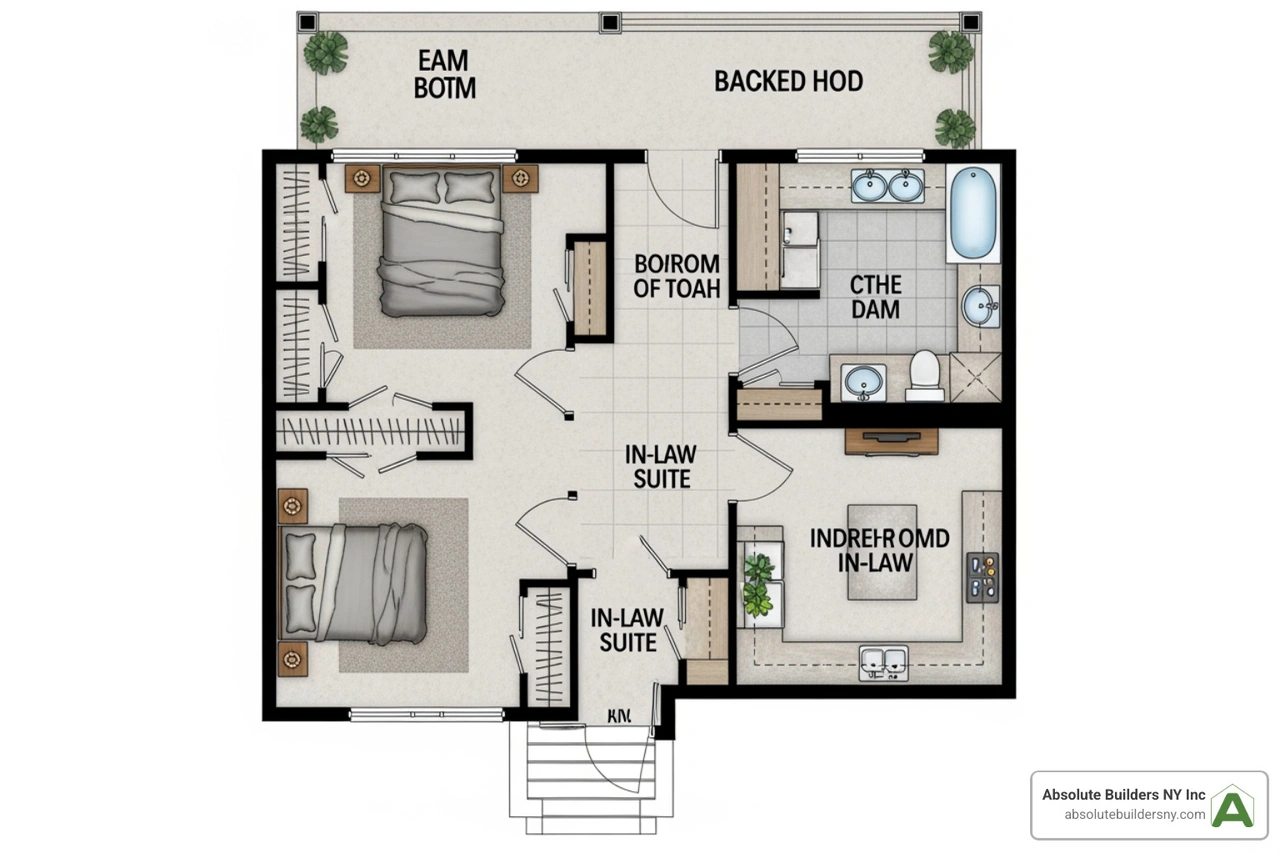
A mother-in-law suite is a private living space on the same property as the main home. It is designed for independent day-to-day living, not just overnight guests. In practical terms, that usually means a sleeping area, a bathroom, some kind of kitchen setup, storage, and a separate or semi-private entrance.
You may also hear it called an in-law suite, granny flat, accessory apartment, or ADU. Those terms overlap, but they are not always legally identical. The important point is this: when we talk about adding mother in law suite to house, we are talking about creating a space that functions like a small home, not just building another bedroom.
For many Long Island families, this makes sense when:
- an aging parent wants to stay close but not underfoot
- an adult child needs temporary independence
- a caregiver needs nearby housing
- you want guest space now and flexibility later
- you want to add resale appeal to your property
What counts as a true in-law suite vs. a standard home addition
A standard home addition might give you more square footage. A true in-law suite gives you more independence.
A real suite typically includes:
- a bedroom or dedicated sleeping area
- a full or partial kitchen, depending on code and intended use
- a private bathroom
- a living area
- legal egress and code-compliant safety features
- privacy from the main house
If you simply add a bedroom and half bath off the hallway, that is not the same thing. It may help your household, but it does not function like a separate living unit.
If you want a deeper overview of layouts and expectations, see what a mother-in-law suite is, plus benefits and options.
In-law suite vs. ADU vs. rental unit
This is where homeowners often get tripped up.
An in-law suite describes how the space is used. ADU, or accessory dwelling unit, is usually the legal and zoning classification. A rental unit is about occupancy and lease use.
A space can be:
- an in-law suite but not a legal ADU
- a legal ADU that is used by family
- a code-compliant accessory apartment that may or may not be rentable
In Long Island, the exact rules depend on your town, lot, zoning district, and whether the unit is attached or detached. Rental use is not automatic just because a space has a kitchenette. Short-term rental rules can be even stricter.
Who uses these spaces today
This trend is not niche anymore. Research shows about 18% of the U.S. population lives in a multigenerational home, and millions of households include three or more generations.
Today, these spaces are used for:
- elderly parents aging in place
- adult children returning home
- long-term guest accommodations
- live-in caregivers
- home offices or studios
- future rental income, where allowed
That flexibility is one reason these projects have become so popular. A well-designed suite can serve your family now and someone else later. Think of it as a home addition with a better second act.
Best Ways of Adding Mother in Law Suite to House: Types, Layouts, and Pros and Cons
There is no single best way to build a suite. The right option depends on your lot, budget, existing house layout, and how independent the occupant needs to be.
Attached additions for adding mother in law suite to house
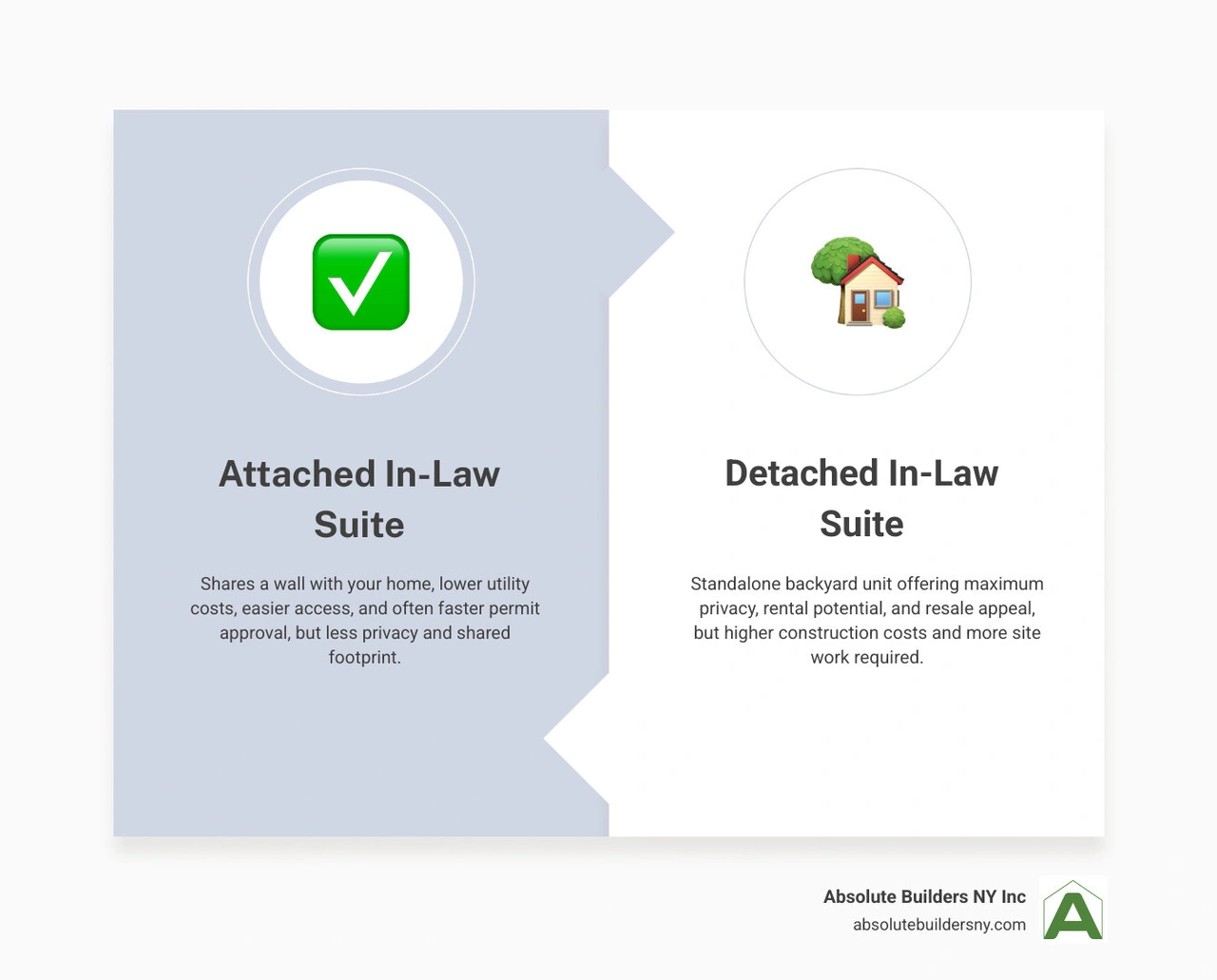
An attached suite shares at least one wall with the main home. This is often the sweet spot for Long Island properties because it balances privacy, cost, and lot constraints.
Pros:
- usually easier to connect plumbing, electrical, and HVAC
- often less expensive than a detached structure
- easier access for aging parents
- can blend seamlessly with the existing home
Cons:
- less privacy than a backyard cottage
- may reduce yard space
- sound transfer must be handled carefully
Attached suites work especially well for first-floor living, which is ideal if stairs may become an issue later. If you are considering a build-out or bump-out, our home addition services are a good place to start.
Detached backyard suites and prefab options
A detached suite offers the most independence because it stands apart from the main house. It is often the best privacy solution, but it also tends to be the most expensive.
Pros:
- maximum separation and quiet
- strong resale appeal
- easiest to use flexibly over time
- less day-to-day friction between households
Cons:
- higher cost due to new foundation, roof, and utility trenching
- tougher zoning review in some areas
- may require more yard area and setbacks
Prefab and kit-based options can shorten build time for the shell. Some systems can get under roof very quickly and may offer strong insulation and good energy performance. But prefab is not a permit shortcut. You still need site work, foundation work, utility connections, and local approvals. For a useful overview of styles and design considerations, see this guide to suite types and design.
Garage, basement, attic, and over-garage conversions
Conversions are usually the most budget-friendly path because the structure already exists. That said, "existing" does not always mean "easy."
Garage conversion:
- good for ground-level access
- lower framing costs
- may affect parking and resale if garage space is valued in your area
Basement conversion:
- often a great use of underused square footage
- may need egress windows, waterproofing, and moisture control
- ceiling height and natural light matter a lot
Attic or loft conversion:
- can work for guests or younger occupants
- usually less ideal for aging parents because of stairs
- may need floor reinforcement, insulation, HVAC, and soundproofing
Over-garage suite:
- preserves parking below
- creates separation from the main house
- usually requires careful structural review and stair planning
For homeowners exploring lower-cost conversions, our guide to basement finishing and maximizing home space is a helpful next read.
How much space you really need
Bigger is not always better. Smarter is better.
A practical range is:
- 300 to 450 square feet for a compact studio-style suite
- 500 to 750 square feet for a comfortable one-bedroom
- 800+ square feet for a more apartment-like feel
For one person, around 400 to 600 square feet is often enough if the layout is efficient. A one-bedroom usually feels more livable than a studio over the long term. Storage also matters more than people expect. If the suite looks nice in photos but has nowhere for coats, linens, medications, or a vacuum, daily life gets annoying fast.
Costs, Budgeting, and Financing for an In-Law Suite

Typical 2026 cost ranges by project type
Costs vary widely by condition, size, finishes, and local labor. Based on 2026 research, these are reasonable national-style planning ranges homeowners often use as a starting point:
- basement conversion: about $15,000 to $50,000 for simple work, higher if major plumbing, egress, or moisture correction is needed
- garage conversion: about $15,000 to $50,000, sometimes more for full apartment-level finishes
- above-garage apartment: about $60,000 to $120,000
- attached addition: about $60,000 to $200,000+
- detached suite: about $80,000 to $200,000+, with custom builds often going well beyond that
- prefab unit shell: lower initial structure cost in some cases, but site prep, permits, utility work, and finishes still add significantly
Permit fees, design fees, and engineering are usually separate. Utility separation can add roughly $5,000 to $20,000 depending on complexity. Labor may account for up to half the total budget.
For a cost-focused reference, see this 2026 in-law suite pricing guide.
What drives the price up or down
Major cost drivers include:
- whether you are building new or converting existing space
- how close the suite is to existing plumbing lines
- whether you need a full kitchen or kitchenette
- foundation work for detached units
- site access and excavation difficulty
- insulation and soundproofing upgrades
- finish level and cabinetry
- electrical service upgrades
- separate HVAC zones or metering
One of the biggest savings opportunities is stacking new plumbing near existing plumbing walls. One of the fastest ways to blow the budget is pretending a detached structure is "basically just a shed with a bathroom." It is not. Your building inspector will not laugh at that joke.
Financing options and tax considerations
Common financing options include:
- HELOC
- cash-out refinance
- renovation loan
- construction loan
- savings or family cost-sharing
The best choice depends on your equity, interest rate, and whether this is an addition or a detached build.
Tax-wise, there are several issues to discuss with your CPA and local assessor:
- property taxes may rise because assessed value increases
- rental income is generally taxable if you legally rent the unit
- some expenses may be treated differently if the suite is used as a rental versus family housing
- your homeowners insurance likely needs updating after the project
Property value, resale appeal, and payback
Homes with in-law or ADU-style spaces may command significantly higher prices in strong housing markets. Research often cites value increases in the 20% to 35% range, though actual resale impact depends on legality, quality, and buyer demand.
The value story is not just resale. It can also be cost avoidance. If a private nursing home room costs over $108,000 per year, a well-planned suite may compare favorably over time, especially if it supports family care and long-term flexibility.
Zoning, Permits, Utilities, and Rules to Check Before You Build
This is the section nobody dreams about and everybody needs.
The approvals homeowners should verify first
Before design gets too far, verify:
- whether accessory apartments or ADUs are allowed on your lot
- required setbacks and lot coverage limits
- maximum size rules
- parking requirements
- owner-occupancy rules
- fire separation and life-safety requirements
- sewer or septic capacity
- whether a variance may be required
For Huntington homeowners, a good starting point is the Town of Huntington accessory dwelling unit information page.
Also check whether your neighborhood has HOA or private covenant restrictions. Town approval does not automatically override private rules.
Utility planning: plumbing, electrical, HVAC, and separate metering
Utility planning should happen early, not after the drywall is up and everyone is pretending it will "probably be fine."
Think through:
- water supply and drain routing
- whether sewer tie-in is straightforward
- electrical load and whether you need a subpanel or service upgrade
- separate HVAC zone with its own thermostat
- gas line capacity, if applicable
- separate metering or sub-metering if future billing matters
- sound isolation around plumbing walls and mechanicals
In many suites, a dedicated mini-split or separate zone makes comfort much better. Nobody wants thermostat wars between the main house and the suite.
Common legal and planning mistakes that delay projects
The most common delays come from:
- starting without confirming local rules
- building unpermitted kitchens or bathrooms
- forgetting required egress
- ignoring low basement ceiling heights
- not accounting for parking needs
- setback violations on additions or detached units
- underestimating permit timelines
- designing a "suite" that is not legal for the intended use
Our 2026 home addition plans guide explains why planning details upfront save money later.
Design for Aging in Place, Privacy, and Long-Term Flexibility
A good in-law suite should work for today's occupant and tomorrow's unknowns.
Accessibility features that should be built in from day one
If the suite is for an older adult, future-proofing matters even if they are fully mobile now.
Key features include:
- 36-inch doors where possible
- wider hallways for easier mobility
- zero-threshold or low-threshold shower
- blocking in walls for future grab bars
- lever door handles and faucet controls
- non-slip flooring
- comfort-height toilet
- bright, even lighting
- minimal level changes
- first-floor layout whenever possible
These details are much cheaper to include during framing than after someone needs them.
Privacy and comfort features families often forget
The most common complaints are not glamorous. They are practical.
Do not overlook:
- acoustic insulation between units
- a truly private entrance
- dedicated outdoor space, even a small patio
- blackout shades for rest and comfort
- exterior pathway lighting
- a nearby parking space
- in-unit or dedicated laundry access
- enough storage for daily life
- strong bathroom ventilation and kitchen odor control
Privacy is not a luxury feature. It is often what keeps multigenerational living peaceful.
Design choices that let the suite change over time
The smartest suites are flexible.
Good future-proof choices include:
- a one-bedroom layout instead of an oversized studio
- neutral finishes that appeal to future buyers
- a kitchen layout that supports real meal prep
- enough closet storage for full-time living
- a plan that can become a guest suite, office, caregiver room, or adult-child apartment later
This long-view approach is one reason we recommend reading these five planning questions before building an in-law suite.
Step-by-Step Plan for Adding Mother in Law Suite to House Without Regrets
Step 1: Define the occupant, goals, and must-haves
Start with the person, not the floor plan.
Ask:
- Who will live there?
- Are stairs okay now and in five years?
- Do they need a full kitchen or just light cooking?
- How much privacy matters?
- What is the budget ceiling?
- Is rental use part of the long-term plan?
Must-haves usually include bathroom safety, first-floor access, storage, and an entrance that does not make the occupant feel like a permanent houseguest.
Step 2: Choose the best location and create a realistic plan
Walk the property and evaluate:
- yard space and setbacks
- proximity to utilities
- basement ceiling height
- garage usefulness
- stair limitations
- parking impact
- how the suite will affect the main home's flow
This is where attached versus detached versus conversion becomes clearer. If you want inspiration for location options, see these ideas for where an in-law suite can go.
Step 3: Finalize drawings, permits, and construction details
Once the concept is sound, move into detailed planning:
- architectural drawings
- structural engineering if needed
- code-compliant layout
- kitchen and bath selections
- HVAC and electrical design
- accessibility details
- permit submission
- contingency budget, ideally 10% to 20%
For a closer look at the planning process, visit our page on in-law suite additions.
Step 4: Avoid the most common build mistakes
The most common problems are painfully predictable:
- kitchen too small to function
- bathroom without aging-in-place safety
- narrow doors and tight turns
- poor soundproofing
- inadequate heating and cooling
- no private entry
- no dedicated storage
- designing only for one short-term use
The fix is simple in theory, harder in practice: plan honestly. Build for daily life, not just for move-in day.
Conclusion
Adding an in-law suite is one of the most practical ways to create flexible living space for family, future needs, and long-term value. The right solution might be an attached addition, a basement conversion, or a detached backyard suite. What matters most is that it is legal, comfortable, accessible, and designed for real life.
At Absolute Builders NY Inc, we help Long Island homeowners turn these ideas into well-planned, well-built spaces with precision craftsmanship and a true partnership approach. If you are considering adding mother in law suite to house in Long Island, West Babylon, or Huntington, the best next step is to start with a realistic plan for your property and your family.
Learn more about our mother-in-law suite services and contact us to start planning a custom space that works now and still makes sense years from now.