
Inspiring Dormer Painting Ideas for Every Room with Awkward Angles

Dormer Painting Ideas That Make Awkward Angles Work
For a brighter, more open dormer room, try a soft white or warm neutral on the walls and sloped ceiling. Painting both the same color makes the angles less noticeable. For a cozier look, use a deep green-gray or charcoal in a window nook, or paint built-in shelves a contrasting color to make them stand out.
I'm Jacolyn Gleason, a public relations professional with experience turning creative consumer and lifestyle ideas into clear guidance. Here, I'll share Dormer painting ideas you can use to make a room with tricky angles feel more inviting and useful.

Learn more about Dormer painting ideas:
Transformative Dormer Painting Ideas to Maximize Space and Light
Dormers bring abundant architectural character, distinct rooflines, and extra daylight into top-floor rooms. Yet, their complex interior planes—featuring sharp knee walls, angled collar ties, and deep window recesses—often produce visual clutter when painted haphazardly. When we plan the dormer interior design for homes across Long Island, our primary goal is to turn those awkward structural transitions into balanced, expansive design assets.
With over 8,400 design photos tagged under painted dormers on platforms like Houzz, it is clear that homeowners everywhere are rethinking how color interacts with sloped architecture. Choosing the right paint scheme establishes symmetry, guides incoming natural light, and tricks the eye into seeing taller ceilings and wider footprints.
Brightening Dormer Bedrooms with Crisp Reflective Neutrals
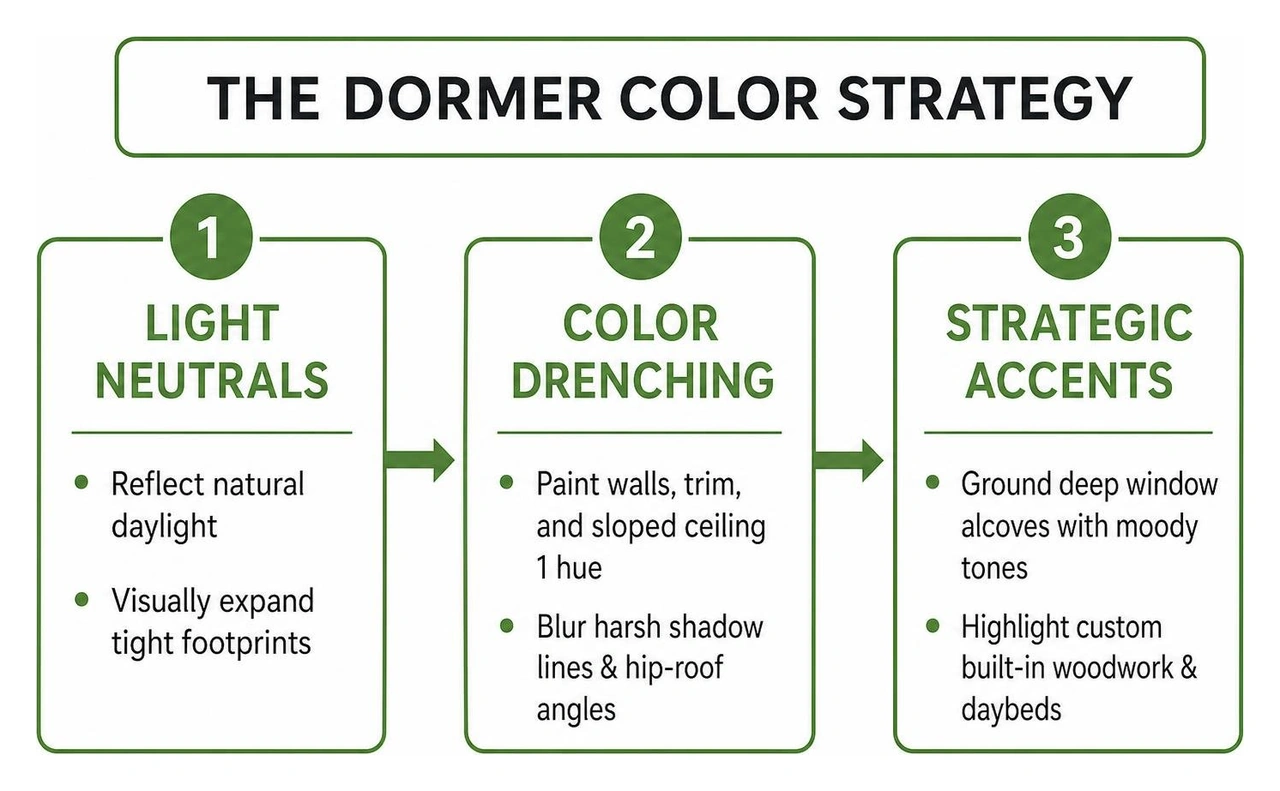
Attic bedrooms and cape-style upper floors often wrestle with limited natural light because windows are recessed inside architectural alcoves. To make these areas feel open and airy, designers lean heavily on high-reflectance whites and warm off-whites. Understanding what are dormers on a house helps explain why light behaves so uniquely in these rooms: the recessed roof cutouts create directional shadows that absorb brightness.
Using crisp tones like Benjamin Moore’s Chantilly Lace or Cloud Cover reflects both morning and afternoon light deep into the bedroom corners. If you prefer a warmer, historic cottage ambiance, soft creamy whites such as Swiss Coffee offer a radiant glow without looking sterile. According to interior design research, using light, reflective neutral base colors can make a compact room appear up to 20% larger by eliminating dark corners and bouncing ambient sunshine across sloped ceiling planes.
Softening Sloped Ceilings with Color Drenching Techniques
The traditional painting rule—white ceilings paired with tinted walls—often fails in dormer rooms. When a stark white ceiling collides with a colored knee wall at a 45-degree angle, the sharp line chops the room into geometric fragments, exaggerating how low the ceiling actually sits.
Color drenching is the practice of painting the vertical walls, sloped ceiling facets, and flat overhead drywall in one continuous shade. By wrapping the entire space in a single hue, the harsh shadows along hip-roof junctions soften and virtually disappear. The eye glides across the angles without stopping at high-contrast boundaries, yielding a seamless, peaceful sanctuary.
Creating Cohesive Depth with Monochromatic Trim and Walls
To elevate color drenching even further, extend your chosen shade across all window casings, baseboards, closet doors, and interior eaves. Taking inspiration from classic British design palettes—such as using sophisticated shades like Farrow & Ball's Moles Breath across both walls and woodwork—unifies the room's surfaces into a cohesive, tailored envelope.
When baseboards and window frames match the wall tone, the visual breaks that normally highlight uneven eaves vanish. If you want subtle depth without high contrast, paint the millwork in a satin or semi-gloss finish while keeping the surrounding walls in a flat or eggshell sheen of the exact same color.
Creative Color Palettes and Accent Techniques for Dormer Spaces
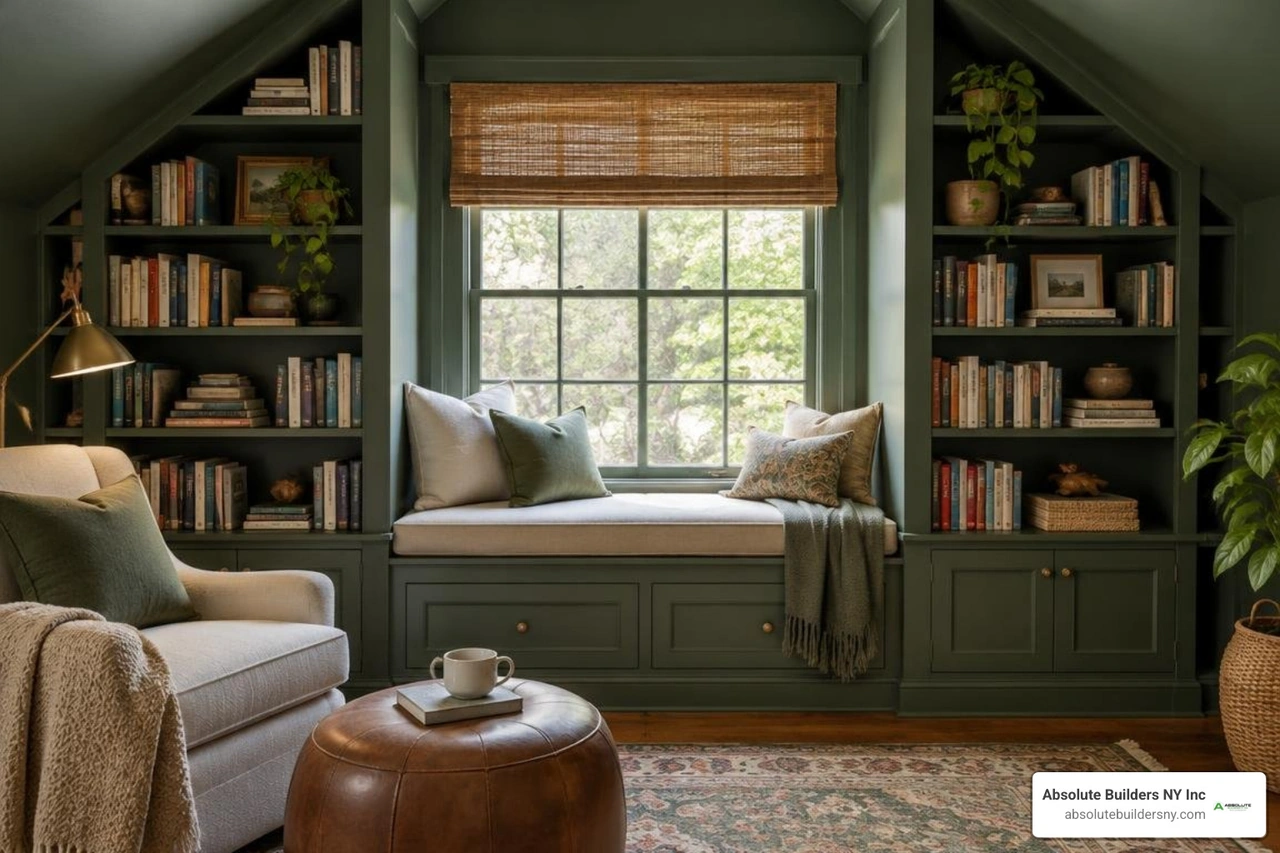
While airy neutrals remain a classic choice, dormers are naturally suited for rich, dramatic palettes. Rather than fighting the compact, tucked-in feeling of an attic alcove, lean into the architecture to build an inviting, functional hideaway. Incorporating functional dormer transformations like reading niches, compact workstations, and meditation areas makes every square foot of an upper-level floor work harder.
Moody Dormer Painting Ideas for Cozy Bedrooms and Reading Nooks
Deep, saturated tones turn quirky architectural alcoves into cozy retreats. Applying designers' favorite moody paint colors—such as Sherwin Williams' Rock Bottom (a rich dark green-gray) or Benjamin Moore's Kendall Charcoal—creates an intimate, cocooning atmosphere.
Darker shades perform exceptionally well in guest bedrooms, home libraries, and study nooks tucked beneath gable roofs. Because deep tones absorb harsh shadows, the awkward slopes recede into the background, providing a grounded, restful backdrop that feels intentional and sophisticated.
Artistic Dormer Painting Ideas: Limewash, Murals, and Geometric Accents
For spaces that need tactile warmth, specialized painting techniques work wonders on sloped drywall:
- Limewash & Mineral Paint: Limewash adds a suede-like, chalky texture with natural tonal movement. Its mottled appearance diffuses direct sun glare from dormer skylights and windows, creating an Old-World, European aesthetic.
- Geometric Color Blocking: Use painters tape to trace crisp, diagonal accent bands that follow or counterbalance the ceiling slope, adding modern energy to a playroom or teen bedroom.
- Ombre Horizon Walls: Painting a vertical gradient on the flat end wall—transitioning from deep navy or terracotta at the baseboard to soft cream at the ceiling peak—draws the eye upward and visually lifts low eaves.
- Nature-Inspired Murals: Explore aesthetic wall painting ideas like botanical silhouettes, forest tree lines, or delicate celestial patterns on the angled ceiling face above a daybed to create a whimsical focal point.
Highlighting Built-In Storage and Window Seats with Contrast Paint
Every dormer niche is an opportunity to add smart storage. Painting your custom carpentry a contrasting accent shade immediately defines the area as a dedicated zone. If your room features a deep window bay, turn the sill into a cozy daybed finished in a soothing contrast color like slate blue, sage, or soft taupe.
Pair this with our favorite dormer storage ideas by painting built-in low bookcases, open shelving, and under-eave drawers in an accent color that complements the frame of your dormer window. A contrasting window nook breaks up long rooms, drawing the eye straight toward the outdoor view.
Choosing the Right Paint Finishes and Application Techniques for Sloped Angles
Angled ceilings receive light from multiple directions, making paint sheen selection just as important as the color itself. An incorrect sheen can highlight tape joints, nail pops, and drywall seams across your sloped surfaces.
Matte vs. Satin: Selecting Sheens for Angled Ceilings and High-Traffic Nooks
| Surface Location | Recommended Sheen | Why It Works | Maintenance Level |
|---|---|---|---|
| Sloped Ceiling & Collar Ties | Flat / Dead Matte | Absorbs directional window glare and conceals drywall imperfections along slope joints | Low wipeability; best for untouched overhead areas |
| Vertical Knee Walls (Low Walls) | Eggshell / Matte | Offers a soft, glare-free look with just enough resin to allow gentle cleaning | Moderate; handles light contact from beds and furniture |
| Window Nooks & Bench Seats | Satin | Resists scuffs, shoe marks, and daily friction from cushions and sitting | High; easily wiped down with a damp cloth |
| Window Trim, Sashes & Built-Ins | Semi-Gloss | Blocks moisture penetration, highlights wood craftsmanship, and resists chipping | Maximum durability; scrubbable and hard-wearing |
Step-by-Step Tips for Painting Hard-to-Reach Dormer Windows and Trim
Painting inside a narrow dormer alcove requires careful prep to navigate tight clearances and unusual angles:
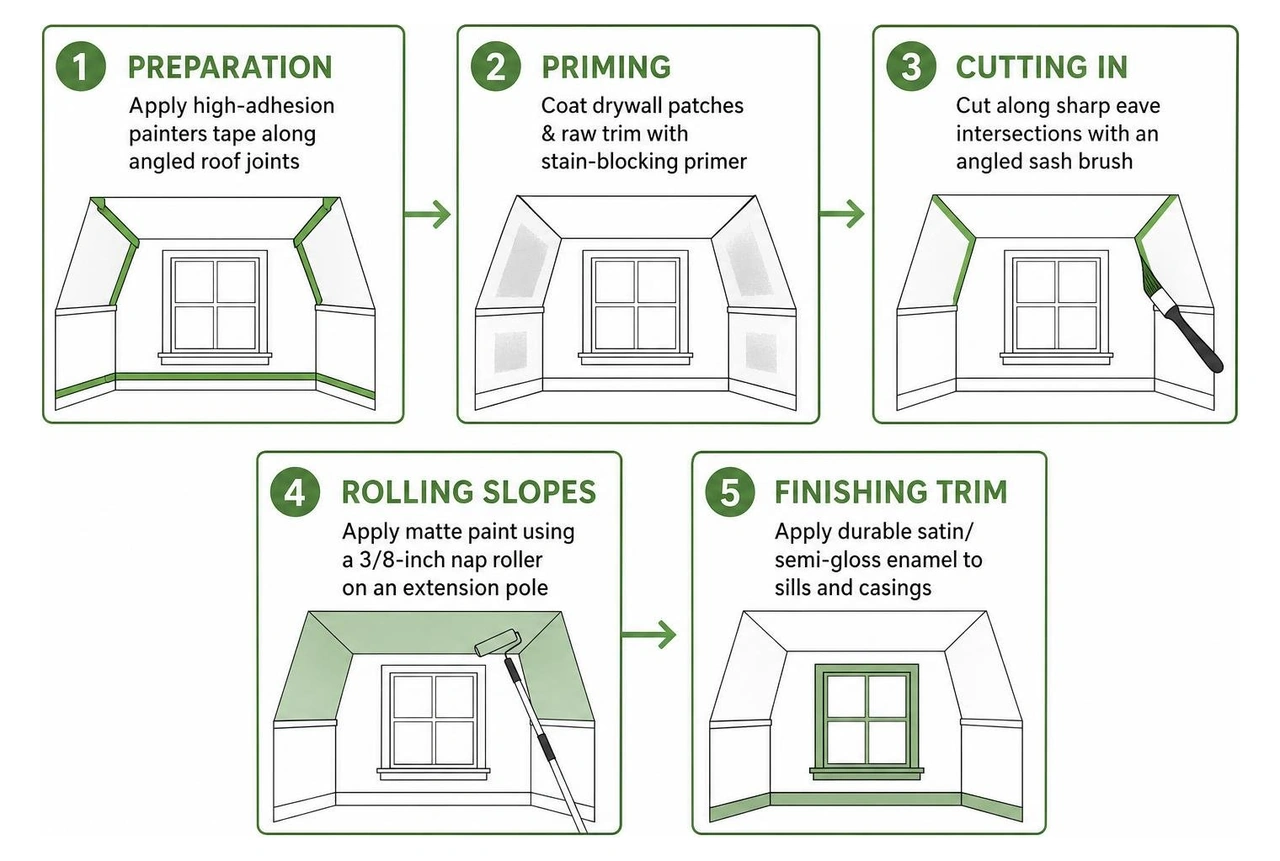
- Seal and Prime All Seams: Roof-adjacent walls experience subtle thermal movement between seasons. Caulk trim seams with flexible acrylic sealant and apply a high-adhesion primer over any plaster repairs.
- Use an Angled Sash Brush: Cut in along tricky corner angles where the sloped ceiling meets the vertical knee wall using a 2-inch or 2.5-inch angled brush for sharp, clean lines.
- Invest in an Extension Pole and Corner Roller: Eliminate unstable ladder positions inside tight dormer recesses by using an adjustable telescoping pole fitted with a low-splatter, 3/8-inch microfiber roller nap.
- Work from Top to Bottom: Always paint the flat ceiling first, followed by the sloped roof facets, the vertical knee walls, and finally the window trim and baseboards.
Exterior Dormer Painting: Enhancing Curb Appeal and Architectural Harmony
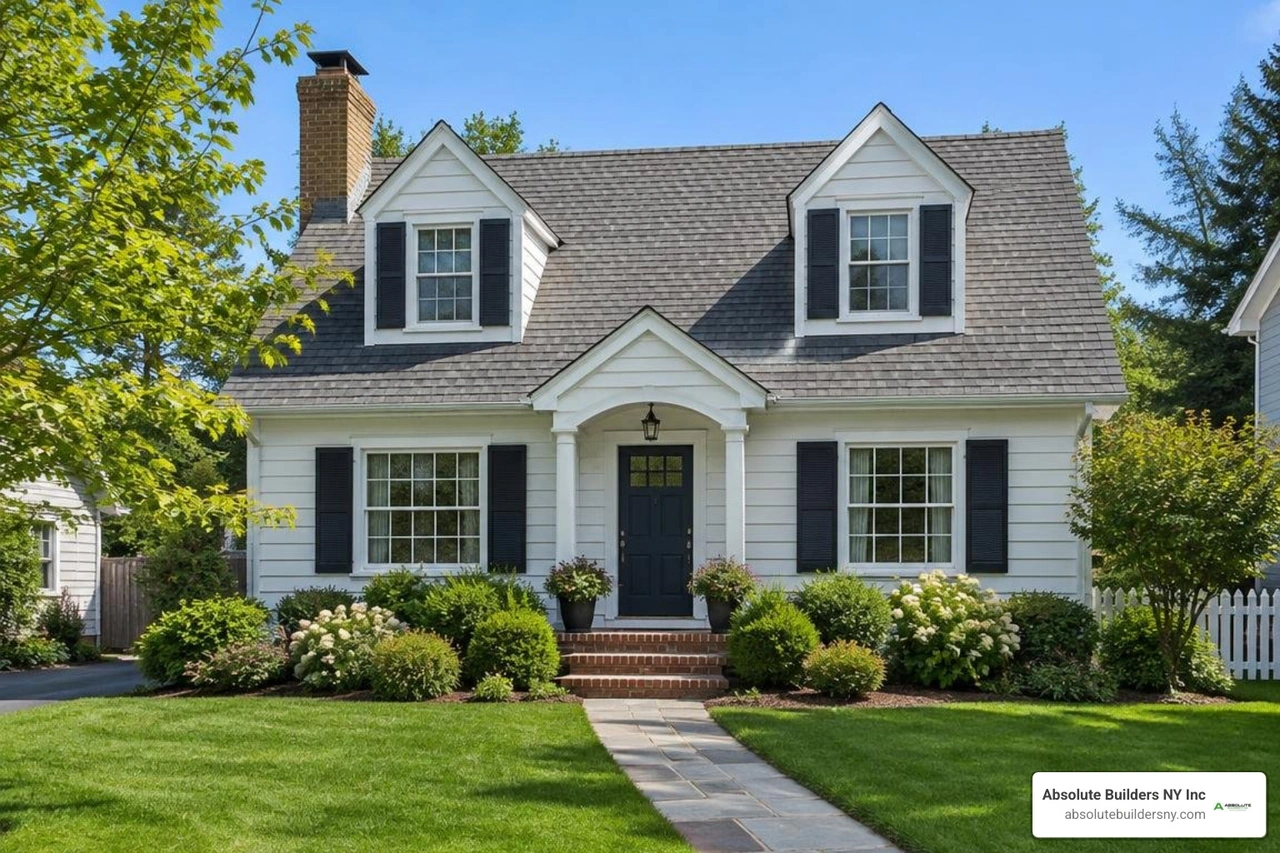
Updating your dormers from the outside refreshes your entire home's façade. Whether you live in a coastal Cape Cod, a stately center-hall colonial, or an expanded split-level, the exterior color palette of your dormers must balance the main roof color, home siding, and window trim. For a deeper look at structural styles, explore our dormer house complete guide and see how roof profiles compare in our breakdown of dormer vs gable.
Matching Dormer Siding and Trim to the Main Façade
When deciding on exterior paint colors, balance architectural harmony with visual interest:
- Integrated Harmony: Painting dormer cheeks and face trim in the exact same color as the first-floor siding creates a balanced, grounded elevation, making upper-level additions look original to the home.
- Roofline Blending: If your dormers sit on a steep, prominent roof, painting their siding cheeks a tone that coordinates with your asphalt shingles (such as slate gray, charcoal, or weathered wood) prevents the roof from feeling top-heavy.
- Accent Character: On Dutch Colonial and Cape Cod homes, painting dormer window trim in a crisp white while coordinating accent shutters in classic black, forest green, or coastal navy draws focus to beautiful window symmetry. For tips on pairing materials, check out our guide on shed dormer exterior siding.
Weatherproofing and Exterior Paint Durability
Because exterior dormers sit exposed at the highest points of your roofline, they face intense sun exposure, driving rain, and winter freeze-thaw cycles. Exterior paint applications should always use premium, 100% acrylic latex formulas that retain flexibility and resist UV fading.
Before applying topcoats, scrape away all peeling paint, clean surfaces to remove airborne salt and mildew, and seal exposed end-grain cedar or pine trim with an exterior oil-based or acrylic bonding primer. Selecting high-grade, breathable coatings protects your structural framing against moisture intrusion and wood rot for decades.
Frequently Asked Questions About Painting Dormers
What paint color makes a small dormer bedroom look bigger?
High-reflectance, warm off-whites—such as Benjamin Moore Chantilly Lace, Cloud Cover, or Sherwin Williams Alabaster—are the most effective colors for expanding small dormer bedrooms. When paired with continuous ceiling coloring, these shades maximize ambient daylight, reduce harsh corner shadows, and visually push sloped walls outward.
Should dormer ceilings be painted the same color as the walls?
Yes. In rooms with sloped ceilings and hip-roof geometry, painting the walls, angled ceiling planes, and flat overhead drywall the same color is highly recommended. This "color drenching" technique blurs awkward intersection lines, softens visual clutter, and makes the ceiling feel taller by creating one unbroken plane.
What sheen is best for sloped attic ceilings?
A flat or dead-matte sheen is ideal for sloped dormer ceilings. Angled surfaces catch natural light from nearby windows at sharp angles, which causes higher-gloss finishes (like satin or semi-gloss) to produce harsh glare while accentuating drywall seams, nail heads, and surface textures.
Conclusion
Transforming an attic room or upper-story addition with creative paint choices turns tricky, sloped architecture into your home’s most memorable feature. Whether you choose to open up an alcove with light-reflecting neutrals, embrace cozy intimacy with dark green-gray hues, or highlight custom daybeds with contrast paint, strategic color placement solves awkward angles with ease.
When you are ready to expand your living space or build custom architectural additions, partner with experienced professionals who understand structural balance. At Absolute Builders NY Inc, we bring dedicated partnership, precision craftsmanship, and deep construction expertise to homeowners throughout Long Island—including West Babylon, Huntington, Westhampton, Bayville, Massapequa, and across Nassau and Suffolk counties.
Explore how a custom dormer addition can transform your home's layout, square footage, and curb appeal today.