
How to Choose the Best Attic Insulation in Huntington and Beyond
Why Attic Insulation on Long Island Affects Your Home More Than You Think
If you're looking for attic insulation Long Island services, here's a quick snapshot of what you need to know:
| What You Need to Know | Quick Answer |
|---|---|
| Recommended R-value | R-49 to R-60 (Climate Zone 4A) |
| Best materials | Blown-in cellulose, spray foam, fiberglass |
| Typical cost (2,000 sq ft home) | $2,500 – $6,500 before rebates |
| NYSERDA rebates available | $1,000 – $3,000 (up to 100% for income-qualified) |
| Biggest local challenges | Ice dams, coastal humidity, summer attic heat |
| First step | Schedule a BPI home energy audit |
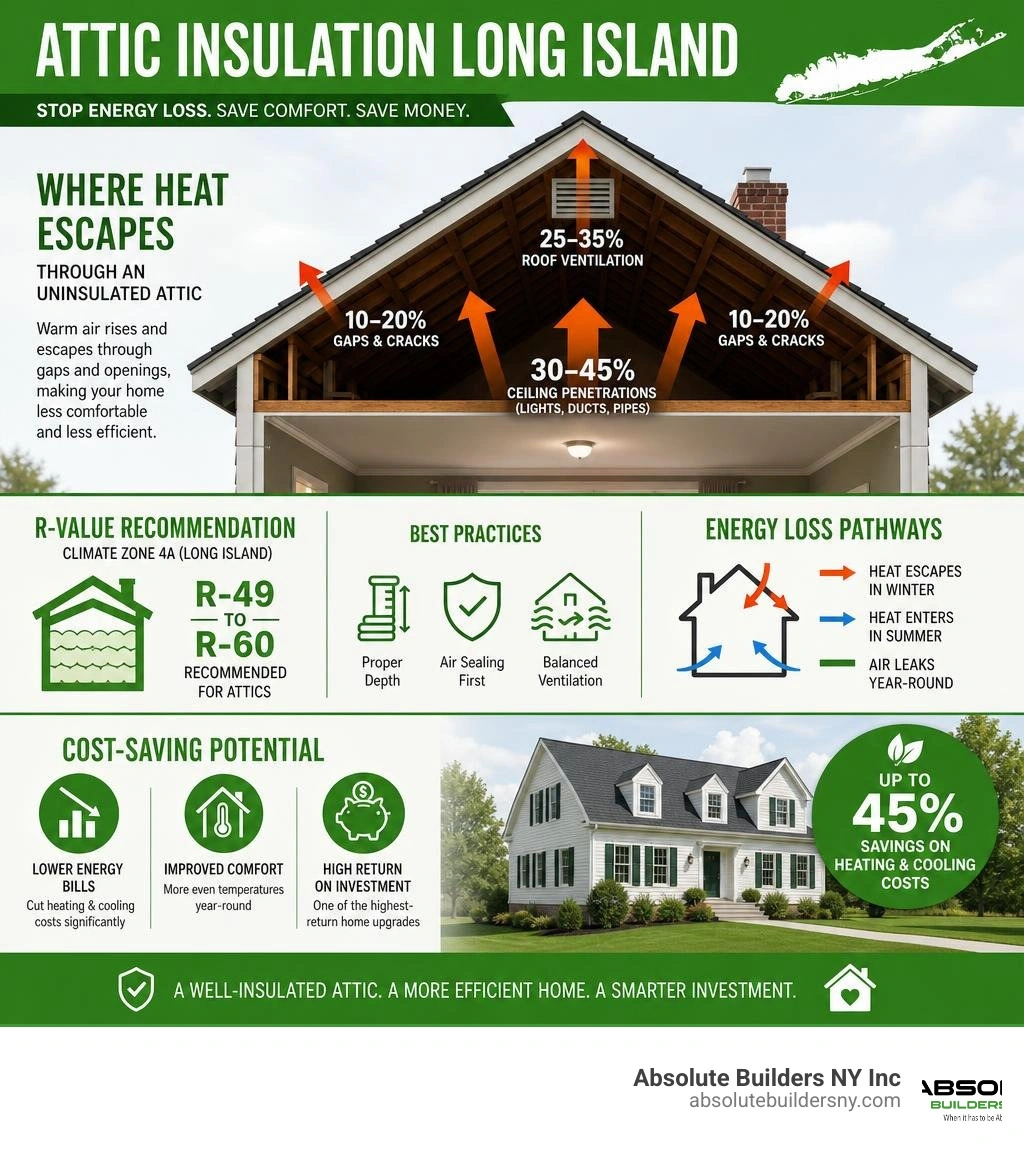
Long Island homes face a tough combination of winter cold, summer heat, and year-round coastal humidity. Without proper insulation, attic temperatures can climb to 140–160°F in summer — driving up your air conditioning bills and making upper floors unbearable. In winter, warm air escaping through an under-insulated attic melts rooftop snow, which refreezes at the edges and causes destructive ice dams.
The good news? A well-insulated attic is one of the highest-return upgrades you can make as a homeowner. Studies show it can cut heating and cooling costs by up to 45%.
This guide walks you through everything — materials, costs, rebates, and how to find the right contractor in Nassau or Suffolk County.
I'm Jacolyn Gleason, a Senior Vice President at 5W Public Relations with deep experience translating complex home improvement and wellness topics into clear, actionable guidance for consumers. My work covering energy-efficient home upgrades — including attic insulation Long Island projects — gives me a practical lens for helping homeowners make smarter, better-informed decisions. Read on for everything you need to plan your attic insulation project with confidence.
Understanding Attic Insulation Long Island Climate Challenges
Living on Long Island means enjoying gorgeous summers near the water and bracing for brisk, moisture-heavy winters. Geographically situated between the Atlantic Ocean and the Long Island Sound, our homes are subject to a unique coastal microclimate. This brings rapid temperature swings, high humidity, and intense weather patterns that put our homes' thermal boundaries to the test.
To keep your home comfortable year-round, you must understand how this environment interacts with your roofline. As you plan your seasonal home maintenance, reviewing resource guides like Preparing Your Home for Winter: Tips for Comfort and Savings can help you establish a solid foundation for year-round energy efficiency.
Coastal Humidity and Ice Dams in Nassau and Suffolk Counties
In places like West Babylon, Huntington, and Westhampton, coastal humidity is a constant presence. When warm, moist air from your living spaces escapes into a cold, uninsulated attic, it collides with the cold underside of your roof deck. This temperature differential causes condensation, which can lead to wood rot, compromised roof structures, and mold growth.
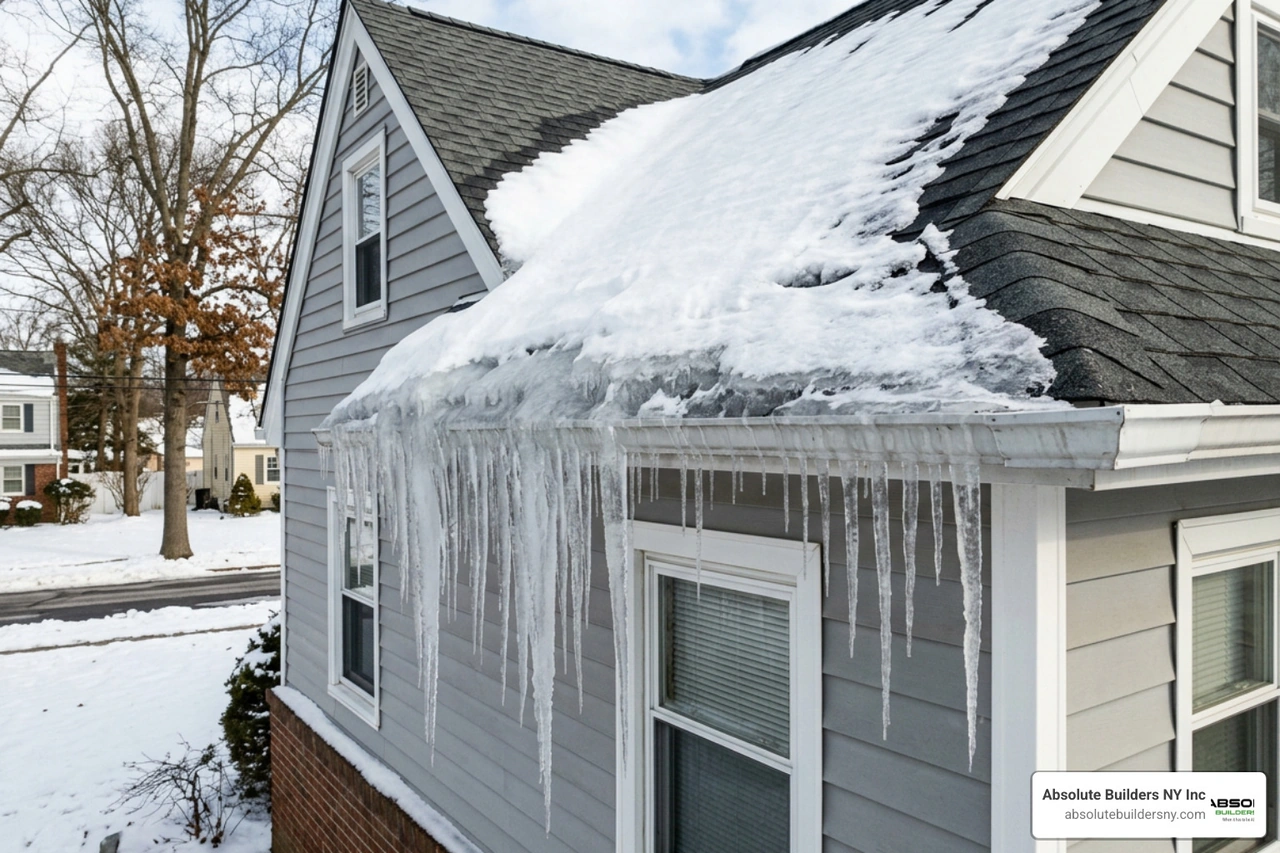
Winter brings another major structural hazard: ice dams. When heat leaks from your living room or bedrooms into the attic, it warms the roof deck, melting the snow sitting on top of your shingles.
This melted snow runs down the slope of your roof until it reaches the colder eaves and gutters, where it refreezes. Over time, this ice backs up under your shingles, allowing water to seep directly into your ceiling and walls.
To prevent this, you need a continuous thermal barrier and proper ventilation. This ensures your roof deck remains at a consistent, cold temperature matching the outdoors.
Summer Heat Gain and Attic Temperatures
In July, the sun beats down relentlessly on our roofs. Without high-quality attic insulation Long Island homes essentially turn into giant ovens. Uninsulated attic spaces can easily reach a sweltering 140°F to 160°F.
This extreme heat radiates downward through your ceilings, forcing your air conditioning system to run constantly to keep the second floor habitable. By installing a robust layer of insulation, you create a shield that blocks this heat transfer, lowering your cooling bills and reducing wear and tear on your HVAC equipment.
For a deeper dive into how this protection works, explore The Benefits of Building an Energy Efficient Home.
Comparing Insulation Materials for New York Homes
Choosing the right insulation material is key to achieving long-term energy savings. While some homeowners prefer traditional options, others opt for modern alternatives that double as air barriers.
To find the best fit, it helps to consult local specialists who understand regional building styles and can assess your home's specific needs.
Spray Foam vs. Blown-In Cellulose and Fiberglass
Each material has its own advantages, installation requirements, and price points. Here is how the three most popular attic insulation materials compare:
| Feature | Spray Foam (Closed-Cell) | Blown-In Cellulose | Fiberglass Batts / Blown-In |
|---|---|---|---|
| R-Value per Inch | R-6.5 to R-7.0 | R-3.2 to R-3.8 | R-2.2 to R-3.4 |
| Air Sealing | Excellent (Built-in) | Moderate (Needs manual sealing) | Poor (Requires separate air sealing) |
| Moisture Resistance | Highly resistant (Vapor barrier) | Moderate (Borate-treated) | Low (Can hold moisture) |
| Lifespan | 30+ Years (No settling) | 20-30 Years (May settle slightly) | 15-25 Years (Subject to sagging) |
| Relative Cost | High | Moderate | Budget-Friendly |
- Spray Foam: Available in open-cell and closed-cell varieties, spray foam is highly effective because it expands to fill every crack, crevice, and bypass path. Closed-cell foam provides a high R-value per inch and acts as a built-in vapor barrier, which is ideal for the coastal humidity of Bayville or Massapequa.
- Blown-In Cellulose: Made from recycled paper treated with borate for fire and pest resistance, blown-in cellulose is an eco-friendly option. It fills tightly around attic joists and is excellent at dampening sound.
- Fiberglass: Available in batts or blown-in loose-fill, fiberglass remains a popular budget-friendly option. However, traditional fiberglass batts can leave gaps if not cut precisely around pipes and wiring. If you choose fiberglass, professional installation is highly recommended to prevent performance loss from compression.
Recommended R-Values for Attic Insulation Long Island Homes
Long Island falls within Climate Zone 4A of the International Energy Conservation Code (IECC). For optimum energy efficiency and to comply with modern building codes, Nassau and Suffolk County attics should be insulated to R-49 or R-60.
If your current insulation is only a few inches thick (yielding an R-11 to R-19 rating), upgrading to R-60 can reduce your heating bills by 20% to 30%. When planning a larger home renovation or structural update, keeping these R-values in mind is essential.
Learn more about local standards in our guide to Residential Construction Long Island.
Cost, Rebates, and Installation Process in 2026
Upgrading your attic insulation is a smart investment that pays for itself over time. However, understanding the upfront costs, available incentives, and the installation process will help you budget effectively.
Typical Costs for Attic Insulation Long Island Projects
In 2026, the cost of attic insulation on Long Island typically ranges from $2,500 to $6,500 for a 2,000-square-foot residence. The final price depends on several factors:
- Attic Size and Geometry: Complex rooflines with dormers, cathedral ceilings, or hard-to-reach crawl spaces require more labor and specialized equipment.
- Material Selection: Blown-in cellulose is generally more affordable ($1.40 to $2.20 per square foot), while spray foam insulation is a premium option ($3.00 to $5.00 per square foot) due to its superior air-sealing properties.
- Preparation Work: If your existing insulation is wet, moldy, or contaminated by pests, it must be completely removed and disposed of safely before new material is installed.
NYSERDA Rebates and Energy Incentives
To help offset these costs, New York State offers excellent financial incentives through the New York State Energy Research and Development Authority (NYSERDA). Homeowners can review current eligibility details directly through the official NYSERDA Comfort Home Program before scheduling work.
- Comfort Home Program: This program provides rebates ranging from $1,000 to $3,000 for attic insulation and air sealing upgrades, depending on the scope of the project and the resulting energy savings.
- EmPower+ Program: For income-qualified households on Long Island, the EmPower+ program can cover up to 100% of the project costs for insulation and weatherization.
- Federal Tax Credits: Under the Energy Efficient Home Improvement Credit, homeowners can claim a federal tax credit of up to 30% of the project cost (up to $1,200 annually) for insulation upgrades.
To qualify for these programs, the work must be performed by a BPI-certified (Building Performance Institute) contractor. Many local companies will handle the rebate paperwork for you, deducting the incentive amount directly from your final invoice.
Frequently Asked Questions about Long Island Attic Upgrades
To help you make the best decision for your home, we've compiled answers to some of the most common questions we hear from local homeowners.
What are the signs my home needs new attic insulation?
If your home is suffering from poor thermal boundaries, it will let you know. Keep an eye out for these common warning signs:
- Fluctuating Room Temperatures: If your second floor feels like a sauna in the summer and your ground floor feels like an icebox in the winter, your attic insulation is likely failing.
- Spiking Utility Bills: Unexplained increases in your winter heating or summer cooling bills point to an overworked HVAC system trying to compensate for lost air.
- Drafts and Cold Spots: Cold drafts coming from recessed lights or attic hatches indicate that your ceiling plane isn't properly air-sealed.
- Rapid Snowmelt on the Roof: If snow melts off your roof much faster than your neighbors' roofs—or if you notice ice dams forming along your gutters—heat is escaping through your attic.
How long does the attic insulation installation process take?
For a standard 2,000-square-foot home, a professional attic insulation upgrade typically takes 1 to 2 days.
- Day 1 (Preparation and Air Sealing): The crew protects your living spaces with drop cloths, removes old insulation if necessary, and seals all bypass paths (chimney chases, wire penetrations, and light fixtures) using expanding foam or caulk.
- Day 2 (Insulation Blow-In/Spray): The team installs the selected insulation material to the target R-value, ensures proper ventilation with rafter vents (baffles), and performs a final cleanup.
How do I find a reputable contractor in Nassau or Suffolk County?
Because attic insulation is a highly technical trade, it is crucial to hire a licensed and insured professional. Here is what to look for when vetting local contractors:
- BPI Certification: Ensure the company's auditors and installers are certified by the Building Performance Institute (BPI).
- Local Licensing: Verify their home improvement license with Nassau County or Suffolk County.
- Comprehensive Energy Audits: A reputable contractor will perform a diagnostic home energy audit—including a blower door test and thermal imaging—to pinpoint exactly where your home is losing energy.
- Detailed Written Estimates: Look for a contractor who provides transparent, itemized quotes detailing material types, R-values, and estimated NYSERDA rebate savings.
Conclusion
Upgrading your attic insulation is one of the most effective ways to lower your energy bills, improve indoor air quality, and keep your family comfortable through every season. Whether you are living in a historic home in Huntington, a classic split-level in Massapequa, or a beautiful coastal property in Westhampton, proper insulation is a cornerstone of smart home maintenance.
At Absolute Builders NY Inc, we bring precision craftsmanship and dedicated partnership to every residential construction project. If you are considering expanding your living space with a dormer or home addition, integrating high-performance insulation from the start is key to maximizing your investment.
To explore more ways to add value to your property, check out our guides on Basement Finishing and Beyond: Maximizing Space and Value in Your Home and our comprehensive Home Addition Guide 2026.
Ready to transform your home with a beautiful, energy-efficient dormer or structural upgrade? Schedule a Dormer Addition Consultation with Absolute Builders NY Inc today, and let's bring your architectural vision to life.