
The Great Roof Debate Between Gables and Dormers
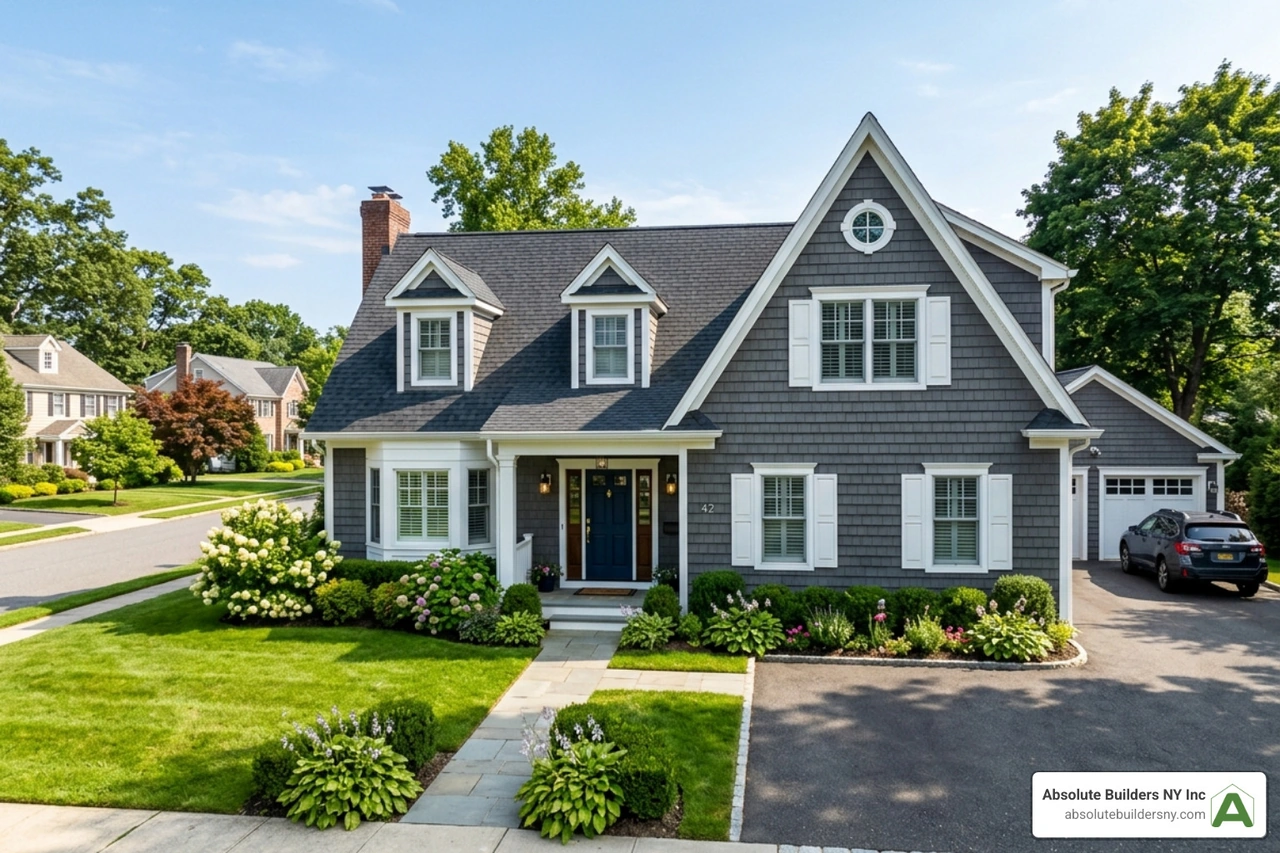
You've Seen Them on Every Block — But Do You Know the Difference?
If you've ever wondered what is the difference between a gable and a dormer, here's the short answer:
| Feature | Gable | Dormer |
|---|---|---|
| What it is | Triangular section of wall at the end of a pitched roof | A structure that projects outward from a sloping roof |
| Where it sits | At the end of the roof, flush with the wall | On the slope of the roof, protruding outward |
| Has its own roof? | No | Yes |
| Contains a window? | Sometimes (optional) | Almost always |
| Adds interior space? | No | Yes |
| Primary purpose | Structural and decorative | Light, ventilation, and usable space |
In short: a gable is part of the wall. A dormer is a room-like bump that grows out of the roof itself.
This distinction matters more than most Long Island homeowners realize. Whether you're trying to add a bedroom in your attic, improve natural light on the upper floor, or simply boost your home's curb appeal, choosing between — or combining — these two features can completely change the outcome of your renovation.
And yet, the terms get mixed up constantly. Even experienced writers and designers confuse them.
I'm Jacolyn Gleason, a Senior Vice President at 5W Public Relations with years of experience translating complex industry topics — including home improvement and design — into clear, actionable content; understanding what is the difference between a gable and a dormer is exactly the kind of detail that separates a well-planned renovation from a costly misstep. In this guide, we'll break it all down so you can make the smartest decision for your home.
Defining the Basics: What is a Gable vs. a Dormer?
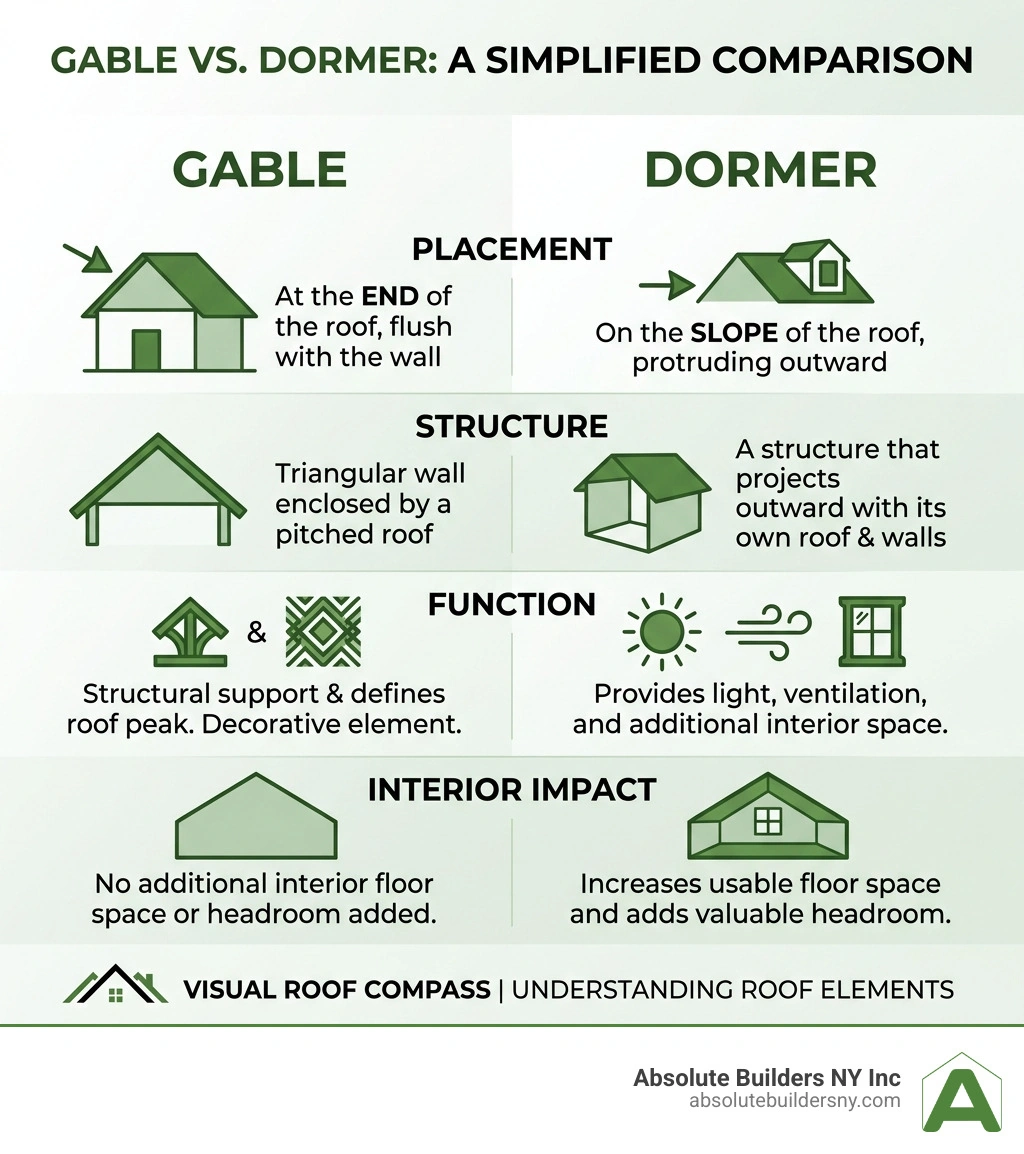
To truly understand our rooflines here in West Babylon or Huntington, we have to look at the "bones" of the house. A gable is essentially the triangular portion of the exterior wall that is enclosed by the edges of a dual-pitched roof. When you look at a classic A-frame house, that big triangle at the front or side is the gable. It provides structural support and helps define the peak of the roof.
On the other hand, a dormer is a structural element that protrudes vertically from the plane of a sloping roof. Think of it as a "bump out" that has its own miniature roof, walls, and usually a window. While a gable is a flat part of your home’s existing wall, a dormer is an addition that breaks the roofline to create something new.
For a deeper dive into these structural definitions, you can explore Gable vs. Dormer: Unpacking the Nuances.
The history of these features is just as fascinating. The word "dormer" actually comes from the Middle French word dormeor, which means "sleeping room." Historically, they were designed to turn dark, cramped attic spaces into livable bedrooms by adding light and air. You can read more about the dormer history and etymology to see how they evolved from 16th-century ventilation vents to the beautiful architectural features we see today in 2026.
What is the difference between a gable and a dormer?
The easiest way to remember the difference is to think about placement and protrusion.
A gable is located at the end of a ridged roof. It is flush with the rest of the house wall. It doesn't "stick out" of the roof; it is the wall that the roof sits on. A dormer, however, is a mid-slope feature. It sits right on top of the shingles and juts out toward the street or the backyard.
In terms of framing, gables are built as part of the main house frame. Adding a dormer is more complex because it requires "major surgery" on your roof—we have to cut into the existing rafters, install structural headers to support the weight, and then build the new dormer frame on top.
| Feature | Gable | Dormer |
|---|---|---|
| Structural Role | Supports the roof peak and end-walls | Expands usable floor area and headroom |
| Placement | Ends of the building | Sloping sides of the roof |
| Framing | Integrated into main wall framing | Requires cutting and reinforcing rafters |
| Primary Function | Weather protection and aesthetics | Light, ventilation, and attic expansion |
Exploring the Gable Dormer: A Hybrid Solution
Now, here is where it gets a little tricky: the gable dormer. Often nicknamed the "dog-house dormer" because of its distinctive shape, this is a dormer that features its own little gable roof.
It is the most popular type of dormer on Long Island because it offers a perfect marriage of form and function. It has two sloping sides that meet at a ridge, creating a miniature version of a standard gable. This design is incredibly effective at shedding rain and snow—a must-have for our New York winters—and it adds a sense of symmetry and "charm" that flat-roof dormers sometimes lack.
If you are considering expanding your home's footprint without moving outward, more info about dormer additions can help you visualize how these structures integrate with your current roofline.
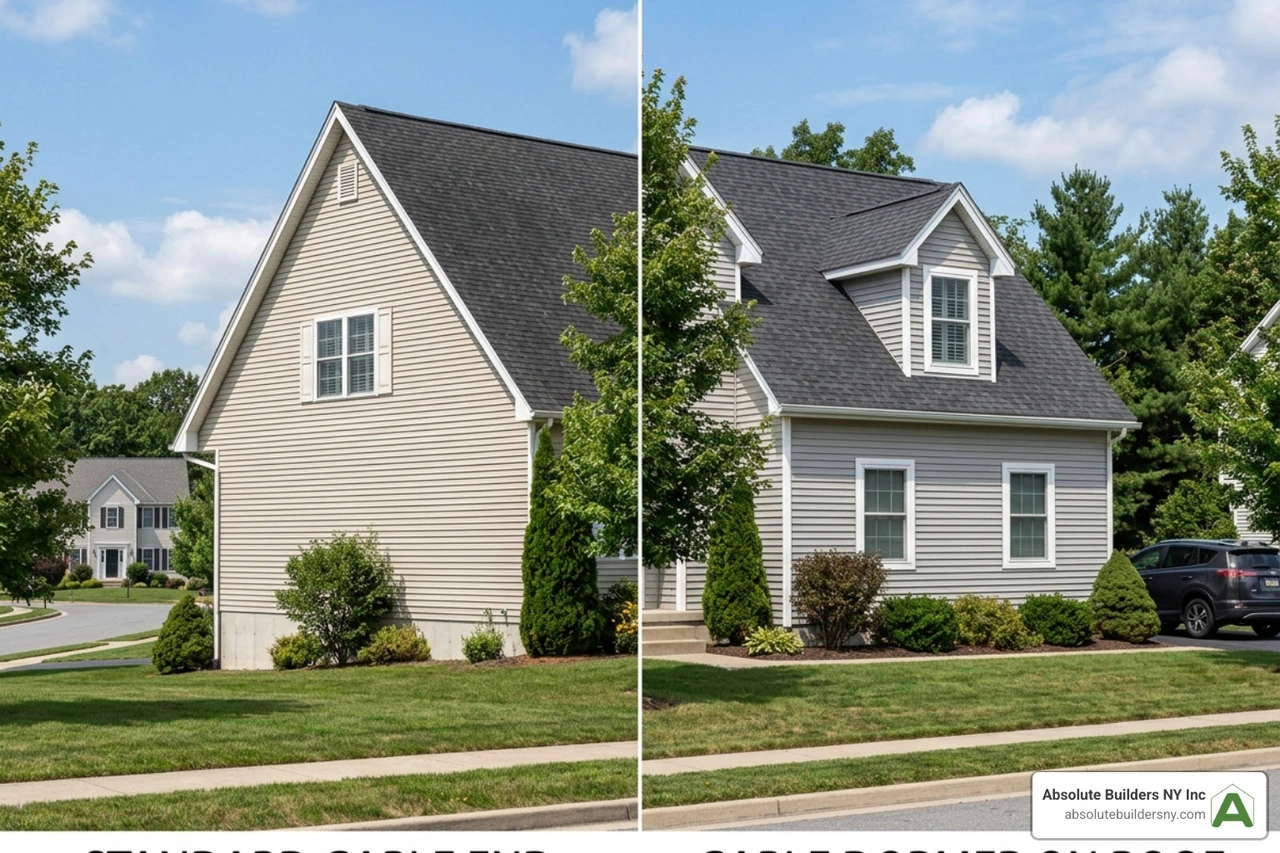
How a gable dormer differs from a standard gable
While they share the same triangular face, a gable dormer is a "light-grabber." It is much smaller than a standard gable and is positioned on the slope of the roof rather than at the end of the house.
The mechanics are also different. A standard gable is part of the house's foundation-to-roof wall system. A gable dormer is a protrusion that must be carefully flashed and waterproofed at the "valleys" where the dormer walls meet the main roof. It’s about aesthetic balance—adding a few gable dormers can break up a long, boring roofline and make a house look much more sophisticated.
Functional and Aesthetic Comparisons for Homeowners
Impact on interior space and natural light
One of the biggest reasons we see homeowners in West Babylon and Huntington requesting dormers is the desperate need for more space. A standard gable window can provide light, but it doesn't change the shape of the room. A dormer, however, creates headroom.
By pushing the roofline out, a dormer allows you to stand upright in areas where you would otherwise be crouching under a sloped ceiling. This is why dormers are the king of loft conversions. They can turn a dusty attic into a master suite, a home office, or a cozy reading nook.
Beyond space, they offer superior ventilation. Because dormers sit upright, the windows can be opened to catch cross-breezes that a skylight simply can't manage. For those looking to maximize their property's potential, our guide to adding space and value covers how these additions can transform a home's utility.
In 2026, energy efficiency is also a major factor. Modern dormers are built with high-performance insulation and flashing kits that prevent the "hot attic" syndrome of the past, keeping your upper floors comfortable year-round.
Understanding what is the difference between a gable and a dormer in construction costs
Let's talk numbers. Adding a gable is usually part of the initial build, but adding a dormer is a significant renovation project.
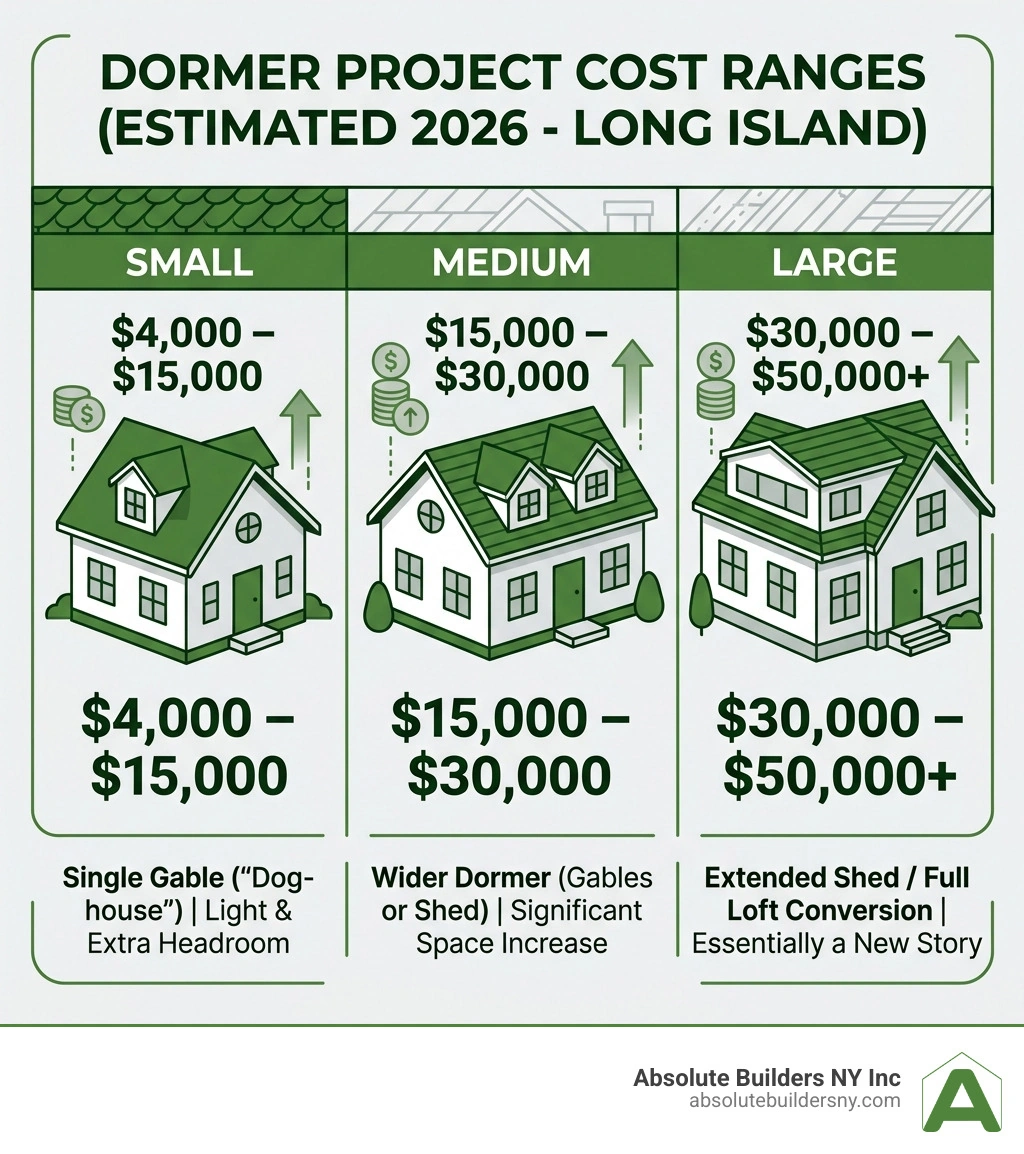
Based on current 2026 market data for Long Island:
- Small Gable Dormer: $4,000 – $15,000. This is typically a single "dog-house" style dormer intended for light and a bit of extra headroom.
- Medium Dormer: $15,000 – $30,000. This might involve a wider shed dormer or multiple gabled units.
- Large Loft Conversion: $30,000 – $50,000+. This usually involves an "extended shed dormer" that spans nearly the entire width of the house, essentially adding a full half-story of living space.
The cost is driven by the structural complexity. We aren't just "plugging in" a window; we are reinforcing the rafters, installing heavy-duty horizontal beams called headers, and ensuring the new roof valleys are 100% watertight.

Choosing the Right Feature for Your Architectural Style
The architectural landscape of Long Island is diverse, and your choice between a gable and a dormer should respect your home's original design.
- Cape Cod: These homes are the natural habitat of the gable dormer. Symmetrical "dog-houses" on the front of a Cape Cod are a classic look that never goes out of style.
- Victorian: These often feature steep roof pitches and ornate gables with decorative trim. Adding an eyebrow or a flared gable dormer can enhance that "fairytale" aesthetic.
- Craftsman/Bungalow: These styles often favor the shed dormer. A shed dormer has a single flat roof plane that slopes in the same direction as the main roof. It’s a "space-grabber" that provides maximum interior square footage.
- Colonial: Traditional Colonials use gables at the ends of the house to maintain a stately, balanced appearance.
For more on how window placement affects these styles, see The Difference Between Dormer and Gable Windows.
Adding a dormer changes your home's footprint and height, which means you'll need to navigate Long Island zoning laws and building permits. Whether you're in Huntington or West Babylon, local municipalities have specific rules about how high your roof can go and how close a dormer can be to your neighbor's property line.
Frequently Asked Questions about Roof Features
Can you install a window in a gable?
Absolutely! In fact, most traditional homes have windows in their gable ends. Because the gable is a flat, vertical wall, installing a window there is relatively straightforward. It doesn't require the complex roofing work that a dormer does. Gable windows are great for providing natural light to an attic without the high cost of a structural protrusion.
Do dormers always add usable square footage?
Most do, but not all. "Blind dormers" or "false dormers" are built purely for curb appeal. They look like a dormer from the street, but they don't actually open into the house. However, if you are looking for a functional upgrade, a shed dormer is your best bet for maximizing floor area, while a gable dormer is better for adding a specific "nook" or spot for a desk or bed.
What is the difference between a gable and a dormer window?
A gable window is set into the existing, flat triangular wall at the end of the house. It is flush with the siding. A dormer window is part of a separate structure that "juts out" from the roof. The dormer window has its own little side walls (called cheeks) and its own roof above it.
Conclusion
Understanding what is the difference between a gable and a dormer is the first step toward a successful home transformation. Whether you want the structural elegance of a classic gable or the space-expanding power of a new dormer addition, the right choice depends on your budget, your architectural style, and your goals for your interior space.
At Absolute Builders NY Inc, we specialize in helping Long Island homeowners navigate these choices. From the initial design to the final shingle, we bring precision craftsmanship and a dedicated partnership to every project. Whether you are in West Babylon, Huntington, or anywhere else across Long Island, we are here to turn your attic into your favorite room in the house.
Ready to see what a dormer can do for your home? Start your dormer addition project today and let us help you elevate your living space.