
Raising the Roof with Affordable Long Island Rear Dormers

Why So Many Long Island Homeowners Are Adding Rear Dormers
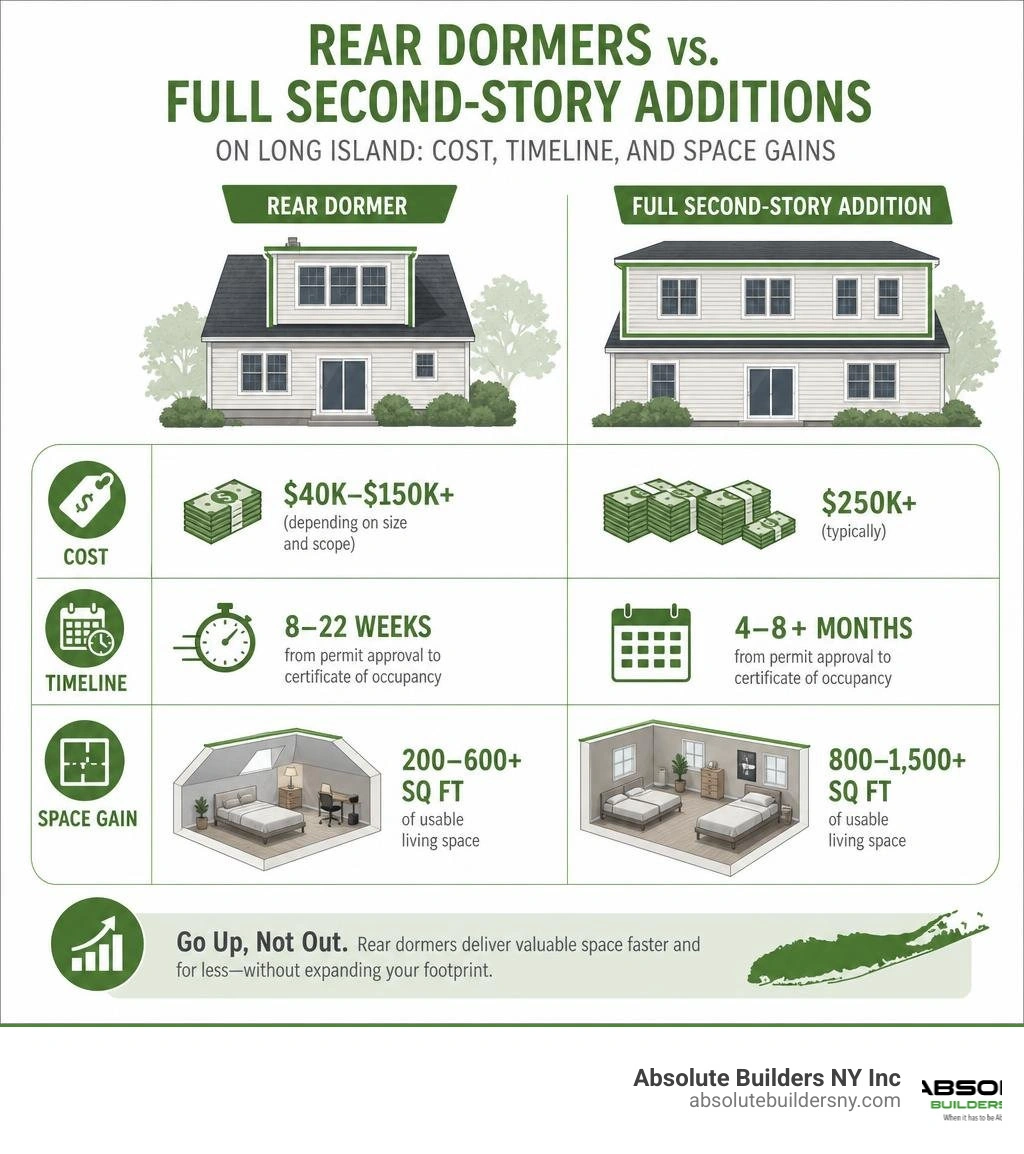
Long island rear dormers are one of the most cost-effective ways to add livable square footage to your home — without moving, without touching your foundation, and without losing your backyard.
Here's a quick overview of what you need to know:
| Question | Quick Answer |
|---|---|
| What is a rear dormer? | A vertical addition that projects from the back slope of your roof, creating usable headroom and floor space in the attic |
| Average cost on Long Island (2026) | $40,000–$150,000+ depending on size, home type, and scope |
| Best home types | Cape Cod, ranch, and split-level homes |
| Do you need a permit? | Yes — required in every town in Nassau and Suffolk County |
| How long does it take? | Typically 8–22 weeks from permit approval to certificate of occupancy |
| Does it increase home value? | Yes — research from the Nationwide Building Society shows a loft room addition can increase property value by up to 22% |
Long Island's housing stock is packed with post-war Capes, ranches, and split-levels — homes with low rooflines that waste enormous potential on the second floor. Families are growing, remote work is here to stay, and moving to a bigger house in this market is expensive and disruptive. A rear dormer solves all of that by going up instead of out.
The catch? Not all dormers are built equal. The right design, contractor, and permit strategy make the difference between a seamless addition and a costly mistake.
I'm Jacolyn Gleason, a Senior Vice President at 5W Public Relations with extensive experience guiding home improvement and construction brands — including contractors serving the Long Island rear dormers market — through complex consumer communications. In this guide, I've partnered with Absolute Builders NY Inc to break down everything you need to know before you build.
Long island rear dormers further reading:
Planning Your Project: A Guide to Long Island Rear Dormers
When you start feeling the squeeze in your current home, your first instinct might be to browse local real estate listings. But in Nassau and Suffolk counties, high interest rates, steep property taxes, and limited inventory make moving a stressful and expensive endeavor. That is why vertical expansion has become the go-to strategy for savvy homeowners.
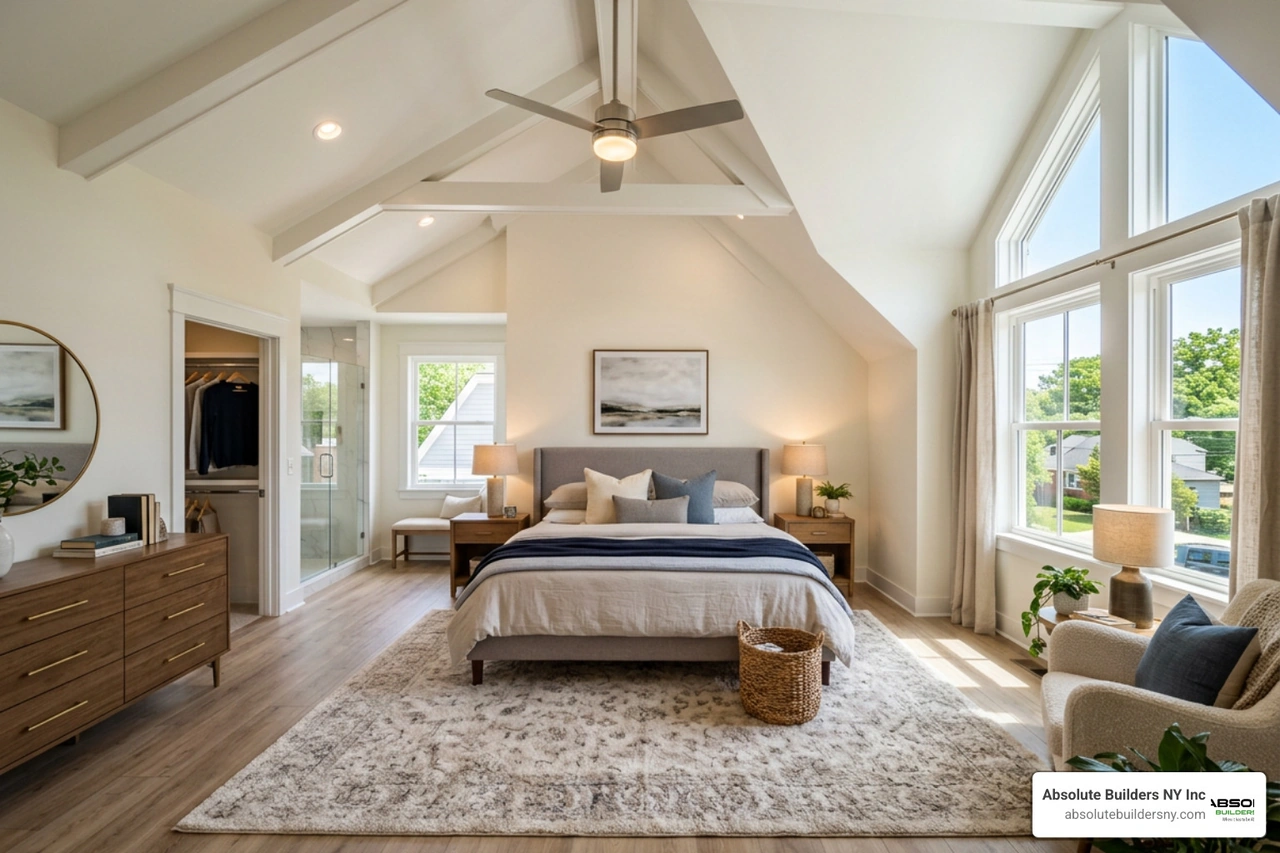
By utilizing a rear dormer, we can help you unlock the hidden potential already sitting right above your head. Footprint preservation is the key advantage here. Unlike a traditional ground-floor extension that eats up your precious yard space, a rear dormer expands your living area upward. This means you keep your lawn, your patio, and your privacy while gaining the square footage you desperately need.
Beyond simply adding space, a rear dormer completely transforms the atmosphere of your upper level. By replacing a cramped, dark attic ceiling with vertical walls and large windows, you introduce:
- Abundant Natural Light: Sunlight pours into what used to be a dusty storage space, making the new rooms feel bright and airy.
- Improved Ventilation: Dual-aspect windows or strategic placement allows for excellent cross-breezes, keeping your second story comfortable.
- Full Headroom: No more ducking under sloped rafters. You get standard ceiling heights that make the space feel like a true second story.
To better understand how these structures function and the overall value they bring to your property, check out our comprehensive guide on What Are Dormers: A Guide to Adding Space Value and Functionality.
How Long Island Rear Dormers Maximize Attic Space
The secret to maximizing your attic space lies in the design of the dormer itself. While there are several varieties, the shed dormer is the absolute king of space creation.
Unlike a gable dormer—which features a peaked, triangular roofline that adds visual interest but limited floor space—a shed dormer features a single, low-pitched roof plane that rises from the main roofline. This flat roofline allows the dormer to run nearly the entire width of your home.
By pulling the roofline up and out at the back of the house, you create a Full Rear Dormer. This design maximizes your usable square footage, allowing us to easily fit:
- A spacious primary bedroom suite with a walk-in closet.
- One or two additional bedrooms for growing kids.
- A full second-story bathroom (saving everyone from morning hallway traffic).
- A dedicated, quiet home office.
To visualize what this looks like in real life, you can browse through our gallery of attic transformations in our Attic Dormer Before and After showcase. If you prefer a more traditional look for the front of your home while keeping the rear open, you might also consider combining a rear shed dormer with a classic Gable Dormer on the front facade to boost your home's curb appeal.
Typical Costs for Long Island Rear Dormers in 2026
Budgeting is the most crucial part of planning your home expansion. In 2026, the cost to build a rear dormer on Long Island reflects regional labor rates, strict municipal codes, and material logistics. While smaller, targeted dormer additions can start lower, a full-scale rear dormer project is a major structural undertaking.
To help you plan, we have broken down the typical pricing ranges we see across Nassau and Suffolk counties. For a deep dive into the specific variables that influence these numbers, read our detailed guide on the Cost to Dormer a House Long Island.
| Dormer Type & Size | Typical 2026 Price Range | Best Suited For | Key Inclusions |
|---|---|---|---|
| Small Gable / Doghouse Dormer (25–50 sq. ft.) | $25,000 – $65,000 | Adding a bathroom, window seat, or small office nook | Basic framing, single window, exterior matching |
| Partial Rear Shed Dormer (150–250 sq. ft.) | $40,000 – $95,000 | Creating one large bedroom or a home office + half bath | Mid-size framing, insulation, basic electrical, 2-3 windows |
| Full Rear Shed Dormer (300–700 sq. ft.) | $80,000 – $150,000+ | Full Cape Cod upper-floor conversion (2 beds, 1 bath) | Heavy structural steel, full rough mechanicals, insulation, drywall |
| Complete Second-Story Ranch Conversion (800+ sq. ft.) | $250,000 – $600,000+ | Turning a single-story ranch into a grand two-story home | Entire roof removal, new floor joists, primary suite, multiple baths |
Note: Adding a full bathroom to your dormer project typically adds $40,000 to $60,000 to the total cost due to the complexity of running new plumbing lines, venting, and high-end tile finishes.
Comparing Rear Dormers to Full Second-Story Additions
When you need more space, you will likely weigh the pros and cons of a rear dormer versus a full second-story addition. While both options elevate your home's living capacity, they differ significantly in cost, complexity, and structural impact.
- Cost-Effectiveness: A rear dormer is highly efficient because it works with your existing roof structure. We do not have to tear off your entire roof; instead, we open up the back slope, frame the new vertical wall, and tie the new roofline back into the existing ridge. This saves a massive amount of money on framing, roofing materials, and labor.
- Foundation Load & Structural Engineering: A full second-story addition adds tremendous weight to your home. This often requires reinforcing your first-floor wall studs and, in some cases, pouring additional concrete to strengthen the foundation. A rear dormer distributes weight more evenly and rarely requires foundation modifications, though we always secure PE-stamped structural plans to ensure safety.
- Yard Space Preservation: Both options keep your backyard intact, unlike horizontal extensions. However, the rear dormer does so at a fraction of the price and with far less disruption to your daily life.
If you are ready to explore how we can customize a vertical expansion for your property, take a look at our specialized Dormer Addition service page to see how we manage these complex structural projects. For additional perspectives on structural design, you can also consult external structural engineering considerations and general home renovation planning guides.
Architectural Suitability: Cape Cod, Ranch, and Split-Level Homes
The post-war housing boom of the 1940s and 1950s shaped much of Long Island’s suburban landscape. Towns like Levittown, Hicksville, and Massapequa were built rapidly to accommodate returning veterans and their families. While these homes have stood the test of time, their original low-slope rooflines and compact footprints are no longer practical for modern living.
Fortunately, these classic architectural styles are incredibly well-suited for rear dormers. By keeping the front of the house untouched, you maintain your home's original curb appeal and neighborhood character while quietly doubling your square footage out of sight from the street.
Cape Cod Conversions: The Long Island Classic
If you own a Cape Cod-style home in West Babylon, Huntington, or surrounding areas, you are sitting on a goldmine of unused space. Thousands of these homes were originally built with unfinished attics—accessible only by a pull-down staircase and used solely for holiday decoration storage.
A long island rear dormers project on a Cape Cod is the ultimate home transformation. By framing a full-width rear shed dormer, we can convert a cramped 3-bedroom, 1-bathroom house into a spacious 4-bedroom, 2.5-bathroom home.
This "category change" dramatically increases your home's resale value and makes your property stand out on real estate search engines, where four-bedroom homes are in incredibly high demand.
Ranch and Split-Level Adaptations
Ranch and split-level homes also present fantastic opportunities for rear dormers, though they come with distinct structural considerations.
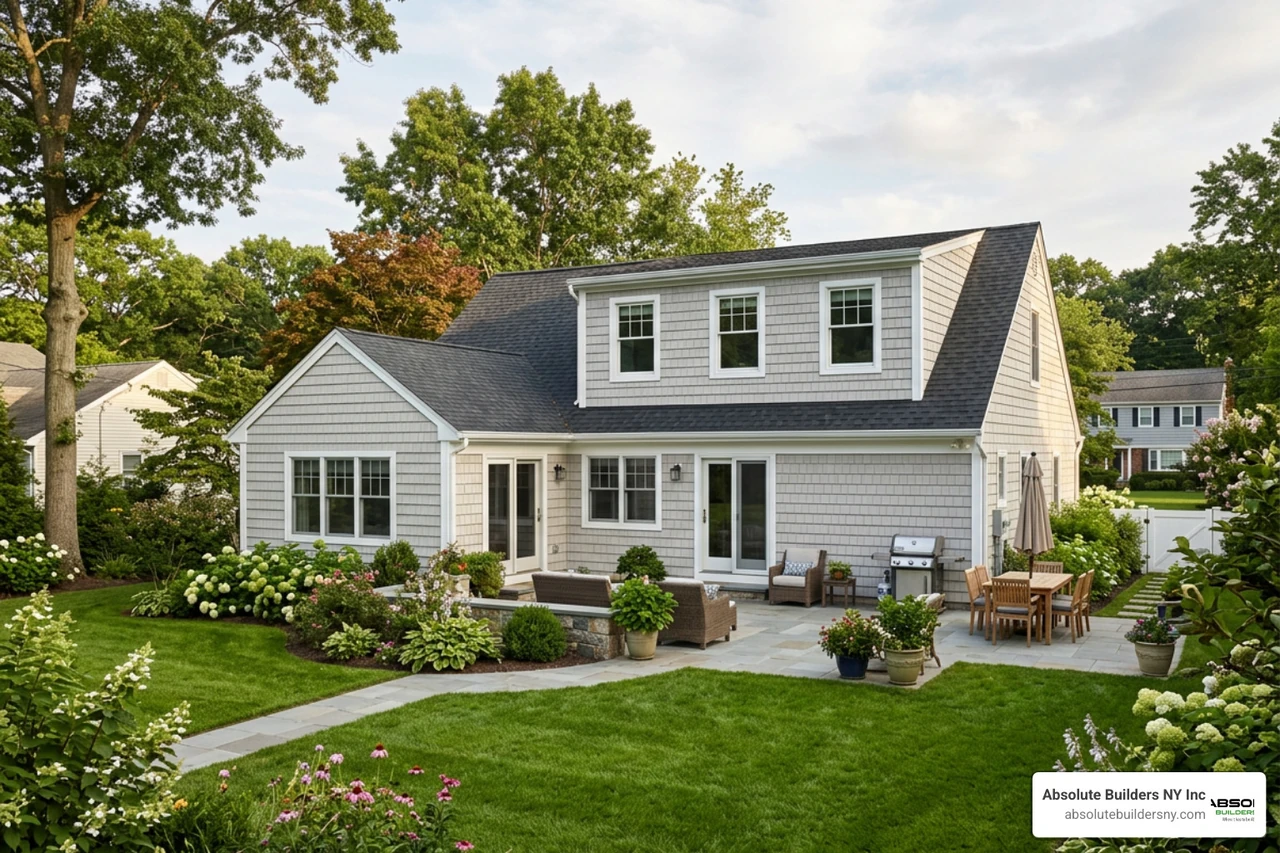
- Ranch Homes: Because ranches have a wide horizontal footprint, adding a rear dormer can create a stunning, loft-style second floor. It breaks up the long roofline, adding visual height and architectural interest. To learn more about how we adapt these single-story layouts, read our guide on the Dormer Ranch Style House.
- Split-Level Homes: Split-levels are famously tricky due to their staggered floor elevations. Adding a dormer here requires highly precise roofline tie-ins and complex framing to ensure the new stairs transition smoothly between levels. Our engineering team specializes in calculating these exact load paths so your new space feels cohesive and structurally sound.
Permitting, Zoning, and Construction Timelines
One of the biggest mistakes a homeowner can make is assuming they can skip the permit process. On Long Island, municipal building departments are notoriously strict. Any project that alters your roofline, changes structural framing, or adds livable square footage requires a building permit.
Failing to secure the proper permits can result in heavy fines, stop-work orders, and major headaches when you eventually try to sell your home, as title searches will flag any unpermitted work.
Nassau vs. Suffolk County Building Codes
Navigating the local bureaucracy requires experience. Building codes and zoning laws vary significantly depending on your exact township:
- Nassau County (Town of Hempstead, Town of North Hempstead, Town of Oyster Bay): These municipalities often have strict Floor Area Ratio (FAR) limits, setback requirements (how close you can build to your property lines), and height restrictions. Many villages also require approval from local Architectural Review Boards (ARB) to ensure the design matches the neighborhood aesthetic.
- Suffolk County (Town of Huntington, Town of Babylon): While zoning laws are slightly different, they still require rigorous structural engineering reviews, energy code compliance (ResCheck), and multiple safety inspections throughout the build.
At Absolute Builders NY Inc, we take the stress out of this process by providing full permit management. We handle everything from drafting PE-stamped structural plans to submitting paperwork and securing the final Certificate of Occupancy (CO). To understand how we back up our work through this rigorous process, read about our dormer addition warranties ny standards. You can also review local municipal planning guidelines to see how regional zoning codes impact design.
The Step-by-Step Construction Timeline
A successful dormer build is a highly coordinated dance. Here is the step-by-step timeline you can expect when you partner with us:
- Design & Engineering (2–4 weeks): We collaborate with you to design a layout that meets your needs. A licensed structural engineer stamps the plans to ensure safety.
- Permit Submission & Approval (6–12 weeks): We submit the plans to your local building department (e.g., Town of Babylon or North Hempstead) and navigate the review process.
- Site Preparation & Roof Cut-Open (1–2 days): Once permits are in hand, we prep the site. We carefully cut open the rear section of your roof.
- Framing & Weatherproofing (2–4 days): We frame the new vertical walls and install the new roof rafters. Our goal is to make the structure completely watertight within 48 hours to protect your home from the elements.
- Rough Mechanicals (2–3 weeks): Licensed plumbers, electricians, and HVAC technicians run new lines, wires, and ductwork through the framed walls.
- Insulation & Drywall (1–2 weeks): We install high-efficiency insulation to meet NY energy codes, followed by drywall hanging and taping.
- Interior & Exterior Finishes (2–4 weeks): We install siding, roofing shingles, windows, trim, doors, flooring, and paint.
- Final Inspections & CO (1–2 weeks): The town inspector signs off on the work, and we secure your official Certificate of Occupancy.
Frequently Asked Questions about Attic Conversions
Embarking on a major home renovation naturally brings up a lot of questions. Here are some of the most common inquiries we receive from Long Island homeowners.
Do rear dormers increase property taxes on Long Island?
Yes. Because you are adding livable square footage and potentially increasing the number of bedrooms and bathrooms in your home, your local municipality will likely reassess your property. This reassessment will result in a modest increase in your annual property taxes.
However, this increase is a direct reflection of the substantial equity you are adding to your home. According to research conducted by the Nationwide Building Society, adding a highly functional loft room or second-story space can increase your property's overall market value by up to 22%. The long-term return on investment (ROI) and the immediate lifestyle upgrade far outweigh the tax adjustment.
Can I stay in my home during dormer construction?
In most cases, yes! Many of our clients live in their homes through nearly the entire construction process.
Because we utilize a rapid "strip-and-frame" protocol, we open up your roof and get the new structure framed and completely weatherproofed within just 24 to 48 hours. This minimizes your home’s exposure to the elements.
Once the shell is sealed, our crew accesses the second story from the outside via scaffolding, meaning there is minimal disruption to your daily life downstairs. However, if we are doing extensive first-floor renovations to accommodate a new staircase, a brief 1-to-2-week temporary relocation during the heavy framing phase might make things more comfortable for your family.
How do contractors match the dormer to my existing roofline?
Achieving architectural continuity is one of our top priorities. A poorly designed dormer looks like an awkward box glued onto the back of a house. We prevent this by ensuring absolute design harmony:
- Siding Matching: We source vinyl or cedar siding that perfectly matches the color, texture, and profile of your existing first-floor siding.
- Roofing Shingles: We match the manufacturer, style, and color of your current shingles so the new roof blends seamlessly into the old one.
- Window Symmetry: We align the new second-story windows with your first-floor windows and doors to maintain a balanced, natural look.
Additionally, we advise against shortcuts. Some homeowners ask about decorative options to save on costs, but as we explain in our guides on Fake Dormers on Roof and the associated fake dormer cost, investing in a real, functional dormer is always the smarter choice for long-term value.
Conclusion
Adding a rear dormer is one of the smartest, most rewarding investments you can make in your Long Island home. It allows you to stay in the neighborhood you love, keep your backyard, and gain the beautiful, sunlit space your family needs to thrive.
At Absolute Builders NY Inc, we bring precision craftsmanship, dedicated partnership, and deep Long Island expertise to every single project. From our initial design consultation to the moment we hand over your new Certificate of Occupancy, we treat your home as if it were our own.
Are you ready to raise the roof and unlock your home’s true potential? Contact us today to schedule your consultation, and let's start planning your custom Dormer Addition together!