
Custom Kitchen Design Secrets for a Perfect Remodel

Why Custom Kitchen Design Is Worth Understanding Before You Remodel
Custom kitchen design means building a kitchen that fits your exact space, habits, and style — not forcing standard cabinet sizes into a room that was never built for them.
If you're trying to quickly understand what this means for your remodel, here's the short version:
| Question | Quick Answer |
|---|---|
| What is it? | Cabinets and layout built to your exact room dimensions and needs |
| How is it different from stock? | No filler panels, no wasted corners, no compromises on size |
| How much does it cost? | Cabinets: $4,000–$24,000; Full remodel: $75,000–$200,000+ |
| How long does it take? | 3–6 months from design to completion |
| Is it worth it? | Yes — especially in older homes, unique layouts, or Long Island expansions |
For Long Island homeowners adding a dormer or expanding their footprint, the kitchen is often the room that makes or breaks the whole project. Older homes come with sloped ceilings, odd corners, and layouts that were never designed for modern cooking or entertaining. Standard cabinets rarely solve those problems well.
That's exactly why understanding the custom kitchen design process — before demolition starts — saves time, money, and a lot of frustration.
I'm Jacolyn Gleason, a communications professional with years of experience translating complex home improvement and lifestyle topics — including custom kitchen design — into clear, actionable guidance for homeowners. In this guide, I'll walk you through everything you need to know to make confident decisions before your remodel begins.
What Custom Kitchen Design Really Means
When we talk about custom kitchen design, we aren't just talking about choosing a fancy paint color. Real custom design is a "design-first" approach where the cabinetry adapts to your room, rather than your room adapting to the cabinets.
In a standard remodel, you might see "filler panels"—those awkward strips of wood used to bridge the gap between a standard 30-inch cabinet and your actual wall. In a custom build, those disappear. Every inch is utilized because the cabinets are made-to-fit your exact measurements. This allows for seamless appliance integration, where refrigerators and dishwashers can be hidden behind panels that match your cabinetry perfectly.
Custom kitchen design vs. stock and semi-custom cabinets
Understanding the tiers of cabinetry is the first step in budgeting. Here is how they break down:
| Feature | Stock Cabinets | Semi-Custom | Custom Kitchen Design |
|---|---|---|---|
| Sizing | Fixed increments (usually 3") | Limited modifications to depth/width | Unlimited; built to the 1/16th inch |
| Materials | Often particle board/MDF | Plywood options available | High-grade plywood and solid hardwoods |
| Lead Time | 1–2 weeks | 4–8 weeks | 10–16+ weeks |
| Fit | Uses fillers for gaps | Fewer fillers | Zero fillers; exact fit |
Stock cabinets are pre-manufactured in standard sizes. Semi-custom gives you a bit more wiggle room with finishes and some sizing tweaks. However, only custom kitchen design allows us to navigate odd corners, sloped ceilings, or built-in features that make your kitchen unique.
When custom kitchen design is worth the investment
Is it worth the extra cost? In our experience in Long Island, custom work is almost always the right choice for older homes. If you have a house in Huntington or West Babylon with architectural quirks, standard cabinets will leave wasted space.
Custom design is also a "must" if you plan on staying in your home for the next 10 to 20 years. It maximizes storage in ways stock options can't, and the resale value of a high-end, custom-fitted kitchen is significantly higher than a "cookie-cutter" remodel.
Buy or build: is custom cabinetry more affordable?
A common question we hear is whether it’s cheaper to build your own cabinets. Unless you are a professional woodworker with a shop full of specialized tools, the answer is usually no. Between the cost of high-grade lumber, the time required, and the precision needed for soft-close hardware and dovetail joinery, buying custom-manufactured cabinets is more efficient.
Furthermore, factory-applied finishes are often more durable than anything a local shop or DIYer can produce. Many high-end custom lines use "baked-on" finishes that resist moisture and grease far better than standard paint.
Planning Your Layout, Features, and Must-Haves
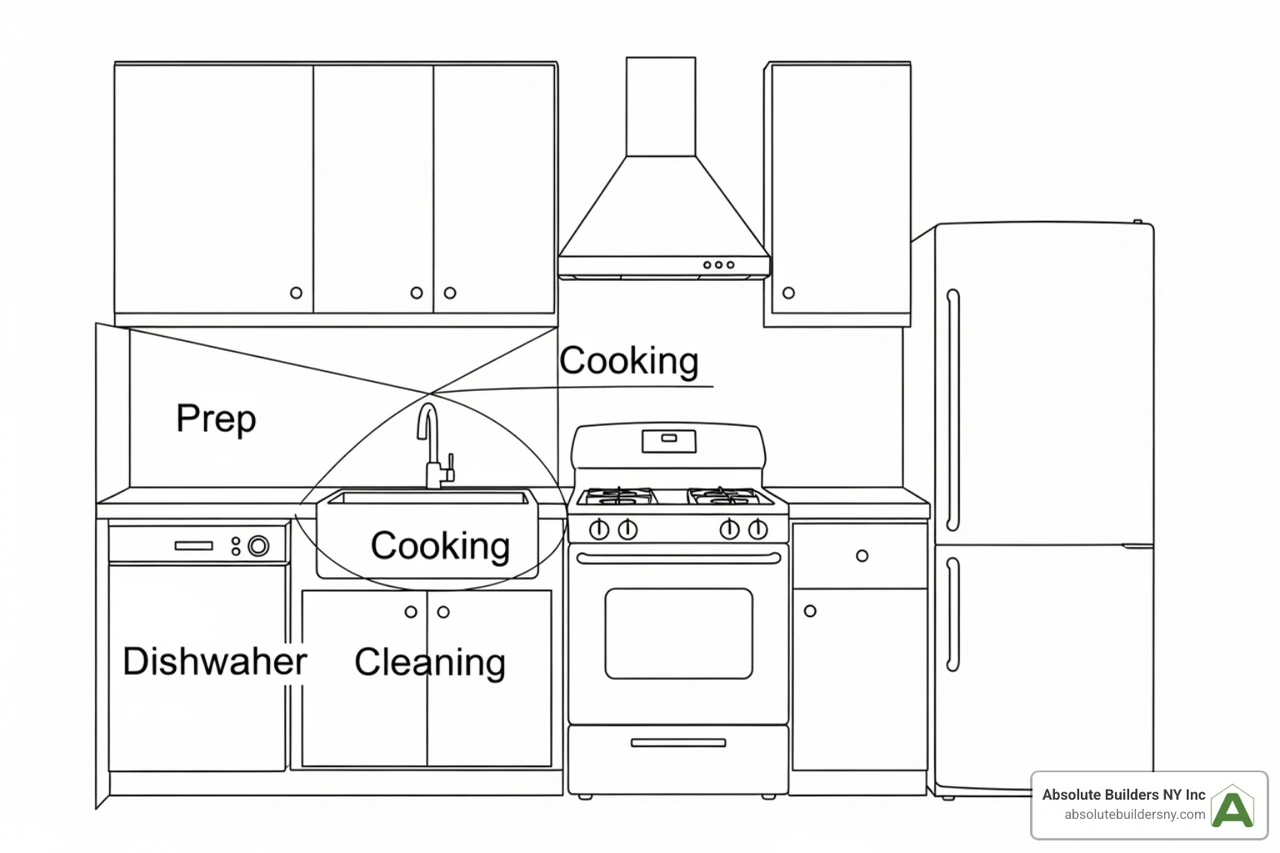
The layout is the "skeleton" of your kitchen. If the bones aren't right, no amount of expensive marble will make the space functional. We focus on creating "zones" for prep, cooking, and cleaning, ensuring that family traffic doesn't collide with the person holding a hot pan.
Best kitchen layouts for a custom remodel
- L-Shaped: Great for open-concept homes and adding a central island.
- U-Shaped: Ideal for the "solo chef" who wants everything within arm's reach.
- Galley: The most efficient for narrow spaces, often found in smaller Long Island cottage-style homes.
- Island/Peninsula: These are the social hubs of the 2026 kitchen, often featuring "waterfall" counters or integrated seating.
What to include in a full custom kitchen remodel
A comprehensive remodel isn't just about the boxes on the wall. We look at the entire ecosystem:
- Cabinetry: The foundation of your storage.
- Countertops & Backsplash: Think quartz or quartzite for 2026 durability.
- Lighting: Layered lighting (ambient, task, and accent) is non-negotiable.
- Appliances: High-end integrated units that sit flush with the cabinets.
- Ventilation: A powerful, quiet hood is essential for open-plan living.
How custom design improves storage, workflow, and daily function
Custom design allows us to solve specific frustrations. Do you hate your "blind" corner cabinet? We can install a "Lazy Susan" or a "Magic Corner" pull-out. Do you have a massive collection of spices? A custom 6-inch pull-out rack next to the stove solves that. We also utilize tall cabinets for pantry storage and appliance garages to keep your counters clutter-free.
How to plan a kitchen upgrade as part of a larger home expansion
If you are planning a home addition, the kitchen is often the anchor. When we build dormers or extensions, we have the unique opportunity to change the kitchen's footprint entirely. This might involve moving structural walls to create an open concept or adding a "butler's pantry." For more details on how we integrate these spaces, check out our Kitchens & Bathrooms service page.
The Custom Kitchen Design Process Step by Step
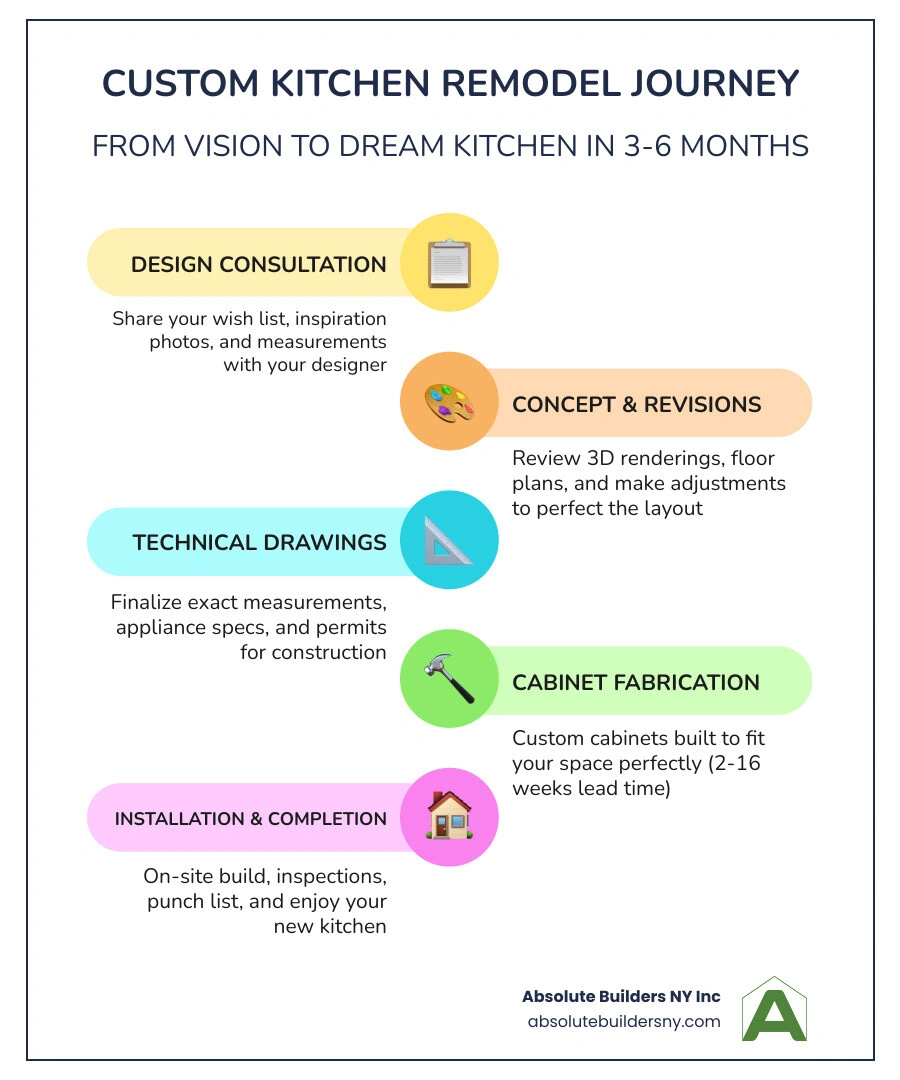
We believe in a "design-first" process. This means we separate the planning from the building to ensure there are zero "surprises" once the walls come down.
Custom kitchen design from first meeting to final approval
The journey starts with a wish list. We talk about how you use your kitchen. Do you host big Thanksgiving dinners? Do the kids do homework at the island?
- Consultation: Defining goals and budget.
- Site Measurement: Laser-accurate measuring of every wall, window, and pipe.
- Concept Design: First 3D drafts.
- Revisions: Usually 2 to 3 rounds to get the details perfect.
- Technical Drawings: The "blueprints" for the cabinet makers and installers.
How to visualize and approve your design before construction
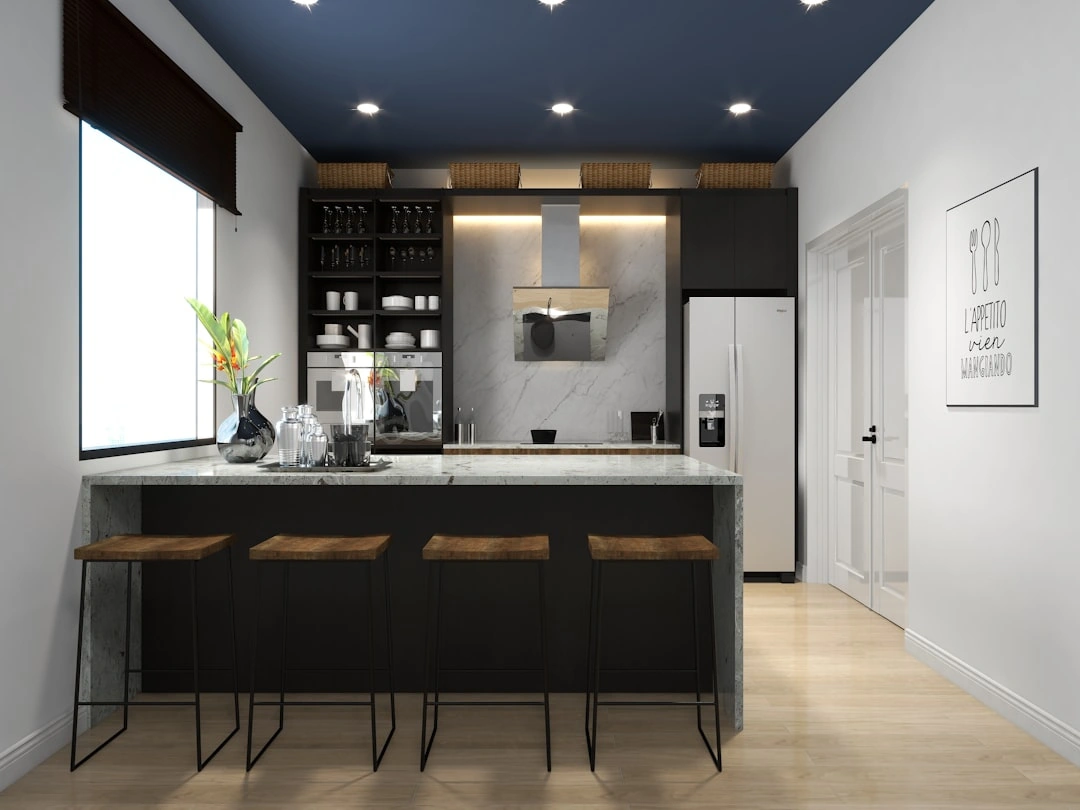
Gone are the days of trying to imagine what a tiny wood sample will look like on 20 cabinets. We use photorealistic 3D renderings that show you exactly how your finishes, lighting, and appliances will interact. You can see your kitchen from a "bird's eye view" to check the flow or an eye-level view to check the backsplash. For more inspiration on how these designs come to life, Kitchen Design Services And Solutions offers great expert guidance.
Permits, codes, and local factors that affect the project
In Long Island, permits are a major part of the timeline. Whether you are in Nassau or Suffolk County, electrical and plumbing changes must be permitted. If we are moving a sink or adding a gas line for a pro-grade range, we handle the filing with local building departments. Expect permit reviews to take anywhere from 4 to 8 weeks depending on your specific town's backlog.
How to choose the right kitchen designer or contractor
Don't just hire the lowest bidder. Look for:
- Licenses & Insurance: Specific to NY and your local county.
- Portfolio: Have they done custom kitchen design before, or just "box-store" installs?
- Communication: Do they provide itemized estimates or just a single "lump sum" number?
- Project Management: You should have one point of contact from demo to the final "punch list."
Timeline and Budget: What to Expect in 2026
Typical custom kitchen design and build timeline
A full remodel typically takes 3 to 6 months.
- Design Phase: 3–6 weeks.
- Cabinet Lead Times: 8–16 weeks (this is why we order early!).
- Construction: 8–16 weeks. The actual "kitchen is offline" phase is usually about 2 months of that total time.
Main cost factors in custom cabinets and full remodels
Cabinetry typically accounts for about 29% of your total budget. Other major factors include:
- Labor: Skilled trades in the New York area are a significant investment.
- Materials: Natural stone slabs (quartzite) and custom-finish wood.
- Structural Changes: Moving walls or plumbing lines adds cost but often provides the best ROI.
Average price ranges for custom cabinets and remodels
Nationwide, custom cabinets can range from $4,000 to $24,000, with most high-quality setups landing between $6,000 and $20,000. For a full, "gut" remodel in the Long Island area, budgets usually start at $75,000 and can easily exceed $200,000 for high-end estate homes with professional-grade appliances and custom inset cabinetry.
Why regional costs can change your kitchen budget dramatically
Living in the New York metro area means higher labor and permit costs than the national average. However, the return on investment (ROI) is also higher here. A well-executed kitchen in Huntington or West Babylon significantly boosts home equity. For a deeper dive into how these costs break down, see this Custom kitchen process, timeline, and cost guide.
Choosing Materials, Finishes, Hardware, and 2026 Trends
How to select cabinet materials, finishes, and hardware
For the best durability, we recommend plywood cabinet boxes over particle board. For the fronts, solid wood or high-density MDF (for painted finishes) are the standards.
- Finishes: In 2026, we are seeing a shift toward "warm" stains and matte paints.
- Hardware: Soft-close hinges and dovetail drawer joints are "must-haves" for a quality feel.
Matching countertops, backsplash, flooring, and appliances
Your countertop is your primary work surface. Quartz remains popular for its low maintenance, but "natural" quartzite is the 2026 favorite for those who want the look of marble with more durability. We suggest matching your backsplash to your counter (using the same slab) for a clean, modern look.
Custom kitchen design trends for 2026
- Wellness Design: Integrated herb gardens and advanced water filtration.
- Concealed Storage: "Appliance towers" that hide your toaster, blender, and coffee station.
- Layered Lighting: Using LED strips under cabinets and inside drawers for better visibility.
- Sustainable Materials: Reclaimed woods and eco-friendly finishes are becoming standard.
Common custom kitchen mistakes to avoid
- Poor Clearances: Forgetting how far a dishwasher door sticks out when open.
- Weak Lighting: Relying only on overhead "can" lights.
- The "Too Big" Island: If you can't reach the middle of the island to clean it, it's too big!
- Late Appliance Selection: Always pick your appliances before finalizing cabinet drawings.
Frequently Asked Questions about Custom Kitchen Design
How long will I be without a working kitchen during a remodel?
Usually, your kitchen will be "offline" for 8 to 12 weeks. We always recommend setting up a temporary kitchen in another room with a microwave, hot plate, and a temporary sink if possible.
Are custom kitchen cabinets always better than semi-custom?
Not always—if your room is perfectly square and you don't have unique storage needs, semi-custom can save you money. However, for 90% of the homes we work on in Long Island, the "perfect fit" of custom is worth the extra 15-20% in cost.
What should I finalize before construction starts?
Everything! Your appliance models, cabinet drawings, hardware choices, and electrical plan should be locked in. This is how we ensure "zero change orders" and keep the project on schedule.
Conclusion
A successful custom kitchen design is a blend of art and engineering. By focusing on a "design-first" approach, you eliminate the guesswork and ensure that your new kitchen isn't just beautiful, but a joy to use every single day.
Whether you are expanding your home with a new addition or transforming your existing footprint, the right partnership makes all the difference. At Absolute Builders NY Inc, we specialize in making these complex transitions seamless. Ready to start your journey? Learn more about our Kitchens & Bathrooms services and let’s build something amazing together.